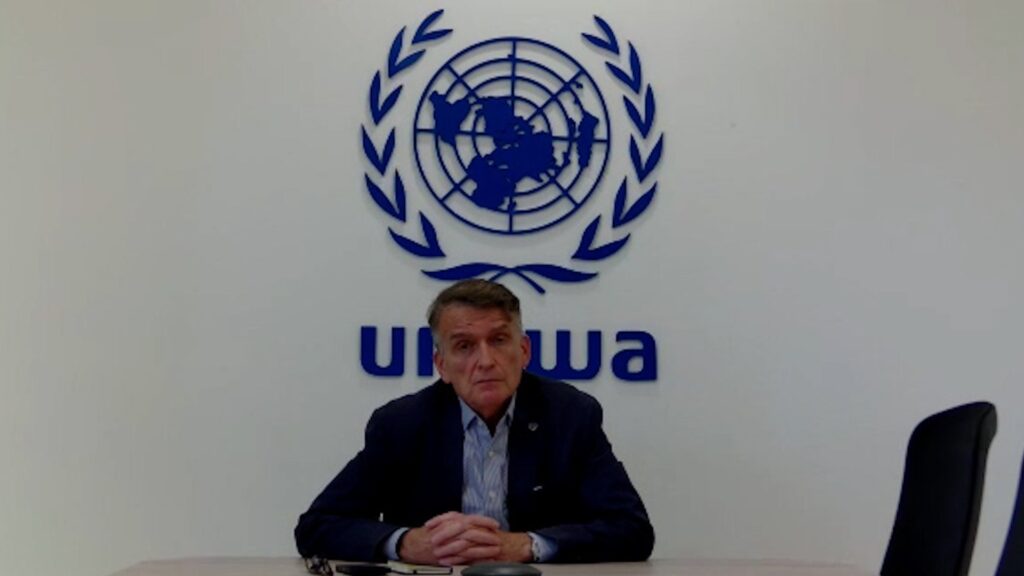
The United Nations Relief and Works Agency (UNRWA) chief has made a strong accusation against Israel, stating that the seizure of its training centre is part of a broader strategy by Israel to eliminate the agency and erase the Palestinian refugee issue. UNRWA, which has been providing humanitarian assistance, education, and support to Palestinian refugees since its establishment, is facing unprecedented challenges amidst the ongoing conflict in the region.
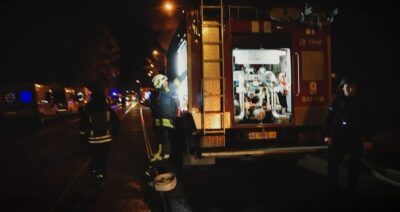
The recent takeover of the training centre, a critical facility used for staff development and refugee assistance programs, has sparked outrage within the international community and among Palestinians who rely heavily on UNRWA’s services. The agency’s head emphasized that this act is not an isolated incident but reflects a systematic attempt to dismantle UNRWA’s operational capacity.
According to the UNRWA chief, the elimination of the agency would have far-reaching consequences for millions of Palestinian refugees who depend on its services for education, healthcare, and social welfare. The agency was created in 1949 to address the acute needs of Palestinians displaced by the 1948 Arab-Israeli conflict, and its mandate has been extended repeatedly over the decades.
The seizure of UNRWA facilities and attempts to curtail its operations come amid broader political tensions in the region. Israel’s government has been criticized for policies that many view as aimed at undermining Palestinian rights and territorial claims. International bodies and human rights organizations have called for protecting UNRWA’s neutrality and ensuring that it can continue its mission without interference.
UNRWA’s chief also warned that eliminating the agency would not solve the Palestinian refugee issue but rather exacerbate regional instability. The refugee issue remains a central and sensitive component of the Israeli-Palestinian conflict, involving questions of national identity, displacement, and the right of return.
The international community remains divided on how to address the refugee problem, with many countries supporting UNRWA’s work while others question its role. The agency’s funding has been a contentious issue, with some donor countries reducing contributions, citing political pressures.
Despite these challenges, UNRWA has continued its efforts to provide critical services, including education for hundreds of thousands of children and healthcare for vulnerable populations. The agency’s staff are dedicated to maintaining a lifeline for Palestinian refugees amid hostile conditions.
The recent incident of the seizure of the training centre represents a significant escalation and a direct challenge to the agency’s mandate. UNRWA’s chief has urged the international community to condemn these actions and to support efforts to safeguard the rights and dignity of Palestinian refugees.
In conclusion, the UNRWA chief’s statement highlights a troubling development in the Israeli-Palestinian conflict, where humanitarian institutions like UNRWA face existential threats. Protecting such agencies is crucial to ensuring that millions of displaced Palestinians receive the aid and protection they need. The coming months will likely see continued tensions around this issue, underscoring the complexity and sensitivity of the refugee question in achieving a lasting peace in the region.