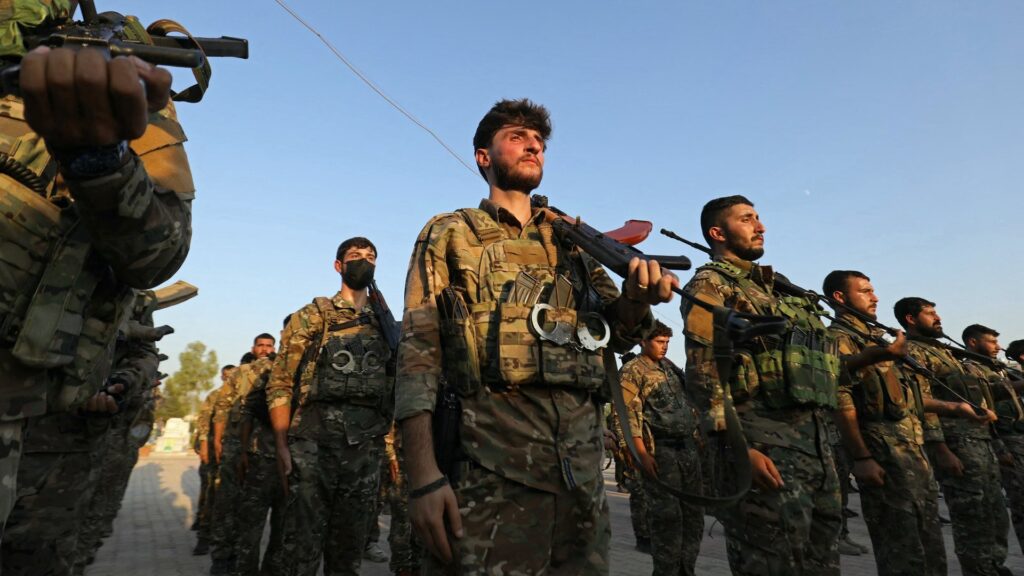
The Syrian Democratic Forces (SDF) have recently announced their dissolution, marking a significant development in the ongoing conflict and power dynamics within Syria. Founded as an alliance of Kurdish, Arab, Assyrian, and other ethnic groups, the SDF emerged as a powerful and diverse coalition primarily focused on combating the Islamic State of Iraq and the Levant (ISIL), also known as ISIS.
Since their formation, the Syrian Democratic Forces have played a crucial role in the fight against ISIL, securing key territories in northeastern Syria and significantly weakening ISIS’s territorial control. With the support of the United States and the international coalition, the SDF successfully liberated many towns and cities, including the de facto ISIL capital Raqqa. This military success helped to dismantle the extremist group’s stronghold and reduce its threat in the region.
The SDF’s unique composition of various ethnic and religious groups set it apart from other factions in the Syrian civil war. It prioritized establishing a form of democratic governance and multi-ethnic cooperation in areas under its control, aiming to create a stable and inclusive political framework in a war-torn region.
Despite these achievements, the SDF has faced numerous challenges that contributed to its decision to dissolve. One major factor is the complex geopolitical pressures from surrounding countries, including Turkey, which views parts of the SDF—especially its Kurdish elements—as a security threat and has launched military operations against them. Additionally, shifting alliances and diplomatic tensions, particularly the changing stance of the United States and other international actors, have weakened the coalition’s position.
Internally, there were growing difficulties in maintaining cohesion among the diverse factions within the SDF, along with logistical and political struggles in administering liberated territories. Economic hardships, security threats, and limited international support further strained the organization.
The dissolution of the Syrian Democratic Forces signals a reshaping of power in northeastern Syria, potentially impacting the stability and political future of the region. It opens questions about which groups or authorities will fill the vacuum left by the SDF’s absence and how the fight against extremism, particularly the remnants of ISIL, will continue.
This announcement also highlights the complex and fluid nature of Syria’s ongoing conflict, where alliances and power structures frequently evolve in response to internal and external pressures. Observers and policymakers will be closely monitoring how this development affects broader regional security and the prospects for a lasting resolution in Syria.