Skip to content
August 25, 2026
  • Facebook
  • Twitter
  • Instagram
  • Youtube
  • tiktok
MILLENNIUM NEWS 24/7

MILLENNIUM NEWS 24/7

Bridging The Community’s World Wide

  • Home
  • IP TV LIVE
  • U.S.News
  • LOCAL ELECTION
  • State News
    • Alabama
    • Alaska
    • Arizona
    • Arkansas
    • California
    • Colorado
    • Connecticut
    • Delaware
    • Florida
    • Georgia
    • Hawaii
    • Idaho
    • Illinois
    • Indiana
    • Iowa
    • Kansas
    • Kentucky
    • Louisiana
    • Maryland
    • Massachusetts
    • Michigan
    • Maine
    • Minnesota
    • Mississippi
    • Missouri
    • Montana
    • Nebraska
    • Nevada
    • New Hampshire
    • New Jersey
    • New Mexico
    • New York
    • North Carolina
    • North Dakota
    • Oregon
    • Pennsylvania
    • Rhode Island
    • South Carolina
    • South Dakota
    • Tennessee
    • Texas
    • Virginia
    • Washington
    • West Virginia
    • U.S. Virgin Islands
  • Politics
  • World News
  • Sports
  • Entertainment
  • Weather
  • Business
  • Health News
  • Urban Cultural Programs
  • ADVERTISEMENT
  • About Us
  • Contact us
Live TV

Sanctions or Missiles? Why Gulf States May Not Embrace Trump’s New Iran Approach

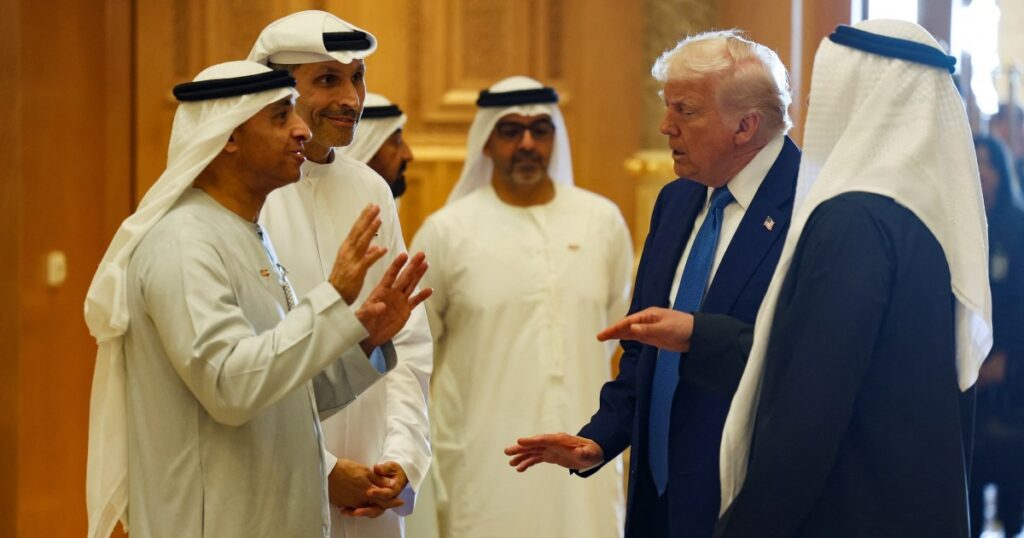
The Trump administration’s renewed focus on Iran, marked by a stronger stance and increased pressure, has stirred significant debate among Gulf Cooperation Council (GCC) countries. These states, situated close to Iran and historically wary of its regional ambitions, are now faced with a complex dilemma: should they align fully with Washington’s call for harsher sanctions, risking economic and security backlash, or brace for potential military escalation?

Since President Trump’s decision to withdraw from the Iran nuclear deal in 2018, U.S.-Iran relations have rapidly deteriorated. Washington has introduced stringent sanctions targeting vital sectors of Iran’s economy, aiming to cripple its nuclear ambitions and diminish its influence across the Middle East. These measures include limitations on oil exports, financial restrictions, and sanctions on entities linked to Iran’s military and intelligence operations.

Gulf states such as Saudi Arabia, the United Arab Emirates, and Bahrain have traditionally supported a hardline approach against Iran. They perceive Tehran’s expanding reach — including its support for proxy groups in Yemen, Lebanon, and Iraq — as a direct threat to their security and regional stability. However, the prospect of an intensified U.S. campaign raises new concerns.

Economically, Gulf countries are highly integrated with global markets, including ties with Iran’s economy. Heightened sanctions could disrupt trade flows and investment, affecting their own financial interests. Moreover, the Gulf economies are already navigating the challenges of energy market fluctuations and diversification efforts, making cautious policy decisions essential.

From a security standpoint, Gulf leaders fear that escalating pressure on Tehran might provoke military retaliation or proxy conflicts, destabilizing the region further. The risk of missile attacks, particularly against Saudi oil infrastructure and urban centers, has intensified since recent escalations in Iran-U.S. tensions. Such outcomes could undermine Gulf governments’ internal stability and threaten vital energy exports.

Diplomatic efforts are often emphasized by Gulf states seeking to avoid open conflict. They advocate for dialogue and negotiations, including possibly reviving talks on Iran’s nuclear program. Yet, this approach is complicated by mutual distrust and persistent regional rivalries.

In addition, Gulf countries are carefully balancing their relationships with global powers. Aligning too closely with Washington may alienate economic partners like China and Russia, which maintain diplomatic ties with Tehran and have vested interests in the region.

Analysts suggest that Gulf nations may prefer a middle path, supporting sanctions where feasible but urging restraint to prevent military confrontations. They may also push for multilateral frameworks that include diplomatic solutions alongside security assurances.

The Trump administration’s Iran policy has undeniable implications for Gulf security and economic interests. As these states navigate between Washington’s demands and regional realities, the question remains whether sanctions will be the preferred tool or whether the specter of missiles and conflict will cast a long shadow over the Gulf’s future stability.

Ultimately, the dynamic interplay of sanctions, diplomacy, and military deterrence will shape the Gulf’s response to the evolving Iran challenge, underscoring the delicate balance of power and the high stakes involved in the Middle East’s geopolitical landscape.


About Author

admin

See author's posts

Post navigation

Previous US Launches ‘Operation Economic Outcast’ to Intensify Economic Pressure on Iran
Next US Launches Economic War on Iran with ‘Operation Economic Outcast’

Related Stories

Syria’s Economy Poised for Improvement After US Sanctions Removal

Syria’s Economy Poised for Improvement After US Sanctions Removal

Syria Removes from US Terror List, Opening Door to Sanctions Relief and Reconstruction

Syria Removes from US Terror List, Opening Door to Sanctions Relief and Reconstruction

Sanctions or Missiles? How Gulf States Are Reacting to Trump’s New Approach on Iran

Sanctions or Missiles? How Gulf States Are Reacting to Trump’s New Approach on Iran

Entertainment

France and Saudi Arabia to Invest $7 Billion in Amusement Parks Near Paris Including Dragon Ball Z Theme Park 1

France and Saudi Arabia to Invest $7 Billion in Amusement Parks Near Paris Including Dragon Ball Z Theme Park

Macron and MBS Attend Esports World Cup Closing Ceremony as Saudi Arabia Aims for Global Gaming Dominance 2

Macron and MBS Attend Esports World Cup Closing Ceremony as Saudi Arabia Aims for Global Gaming Dominance

Kennedy Center Board Delays Restoration of Trump’s Name Amid Court Order Controversy 3

Kennedy Center Board Delays Restoration of Trump’s Name Amid Court Order Controversy

Angelique Kidjo Makes History with Hollywood Walk of Fame Star 4

Angelique Kidjo Makes History with Hollywood Walk of Fame Star

Tupac Shakur Murder Trial Begins Thirty Years After His Death 5

Tupac Shakur Murder Trial Begins Thirty Years After His Death

‘Truth or fiction’: US trial of Tupac Shakur’s accused killer begins 6

‘Truth or fiction’: US trial of Tupac Shakur’s accused killer begins

The Trial of Duane ‘Keffe D’ Davis: Three Decades Since Tupac Shakur’s Death 7

The Trial of Duane ‘Keffe D’ Davis: Three Decades Since Tupac Shakur’s Death

Top News

US Launches ‘Operation Economic Outcast’ to Intensify Economic Sanctions on Iran

US Launches ‘Operation Economic Outcast’ to Intensify Economic Sanctions on Iran

Syria’s Economy Poised for Improvement After US Sanctions Removal

Syria’s Economy Poised for Improvement After US Sanctions Removal

US Launches Economic War on Iran with ‘Operation Economic Outcast’

US Launches Economic War on Iran with ‘Operation Economic Outcast’

Syria Removes from US Terror List, Opening Door to Sanctions Relief and Reconstruction

Syria Removes from US Terror List, Opening Door to Sanctions Relief and Reconstruction

  • Home
  • About Us
  • Facebook
  • Twitter
  • Instagram
  • Youtube
  • tiktok
Editor: Nur M Tofader, Office: 250 Park Avenue, 7th Floor, New York, NY 10177 & Tell: 718 893 0002 (Office), 7188441300, +1212 401 6266, e-mail: Info@millenniuamtv24.com, e-mail: Info@millenniuamnews24.com, Copyright © Millennium News 24/7 | DarkNews by AF themes.