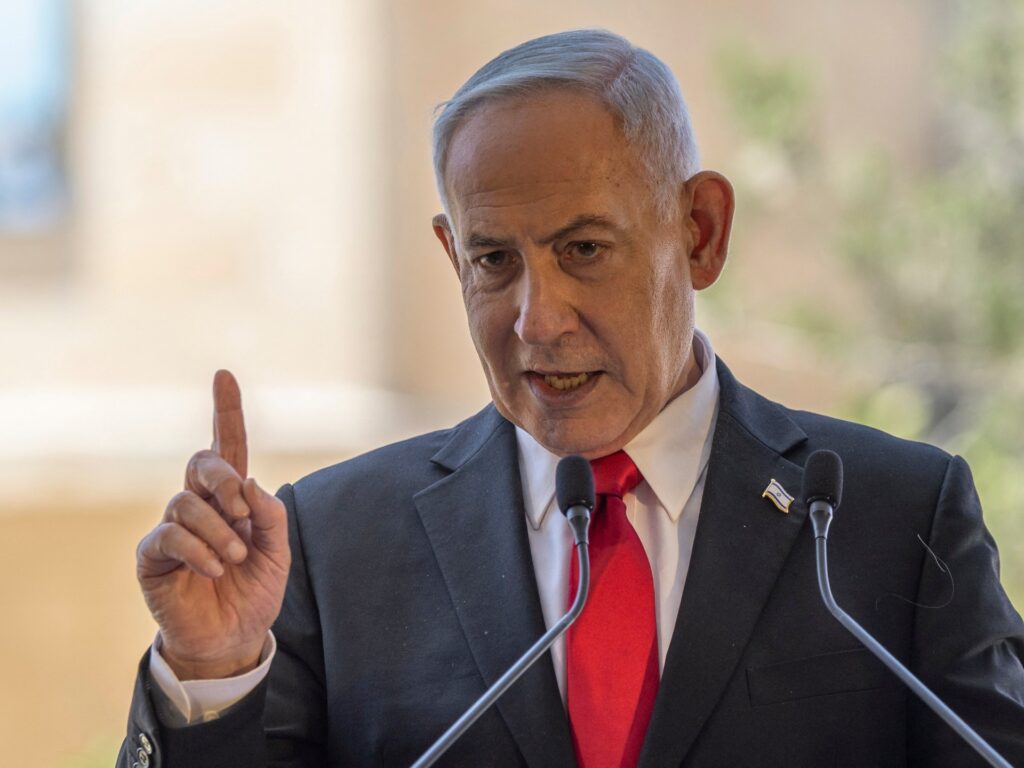
Israeli Prime Minister Benjamin Netanyahu has increasingly incorporated ancient religious texts into his war rhetoric, a move that has significant implications for both domestic and international audiences. By invoking religious narratives, Netanyahu seeks to justify pre-emptive military action and sidestep international legal norms.
Netanyahu’s rhetoric taps into deep-rooted historical and biblical imagery, framing the conflict as not only a political or security challenge but a divine mandate. This approach helps solidify domestic support among religious constituents by portraying Israel’s military actions as fulfilling a sacred duty.
This use of religious legitimacy serves several strategic purposes. Firstly, it provides moral justification for aggressive tactics, including pre-emptive strikes, which often face criticism on the global stage. By positioning these actions in a religious context, Netanyahu attempts to elevate them beyond mere geopolitical maneuvers to acts of existential necessity.
Furthermore, this framing aims to circumvent international law, which generally prohibits pre-emptive warfare except under imminent threat. By invoking divine authority, Netanyahu’s government signals that it does not see itself bound solely by secular legal constraints.
Critics argue that this blending of religion and statecraft risks inflaming sectarian tensions and undermines efforts for peaceful resolution. The weaponisation of religious narratives also complicates diplomatic efforts, as it entrenches positions that are framed as non-negotiable due to their spiritual significance.
The international community has expressed concern that this rhetoric contributes to escalating conflict and hinders the prospects for dialogue. Moreover, using religious texts to justify military action raises ethical questions about the role of faith in governance and conflict.
Historically, Netanyahu’s incorporation of biblical references is part of a broader trend in Israeli politics, where religion and nationalism often intertwine. However, the current intensity and explicitness of such rhetoric mark a notable shift towards a more ideological and faith-based justification for war.
In conclusion, Netanyahu’s weaponisation of religion in his war rhetoric represents a powerful tool to galvanize internal support and justify contentious military strategies. Yet, it simultaneously poses risks of exacerbating conflict and marginalizing the role of international norms and diplomacy in conflict resolution.