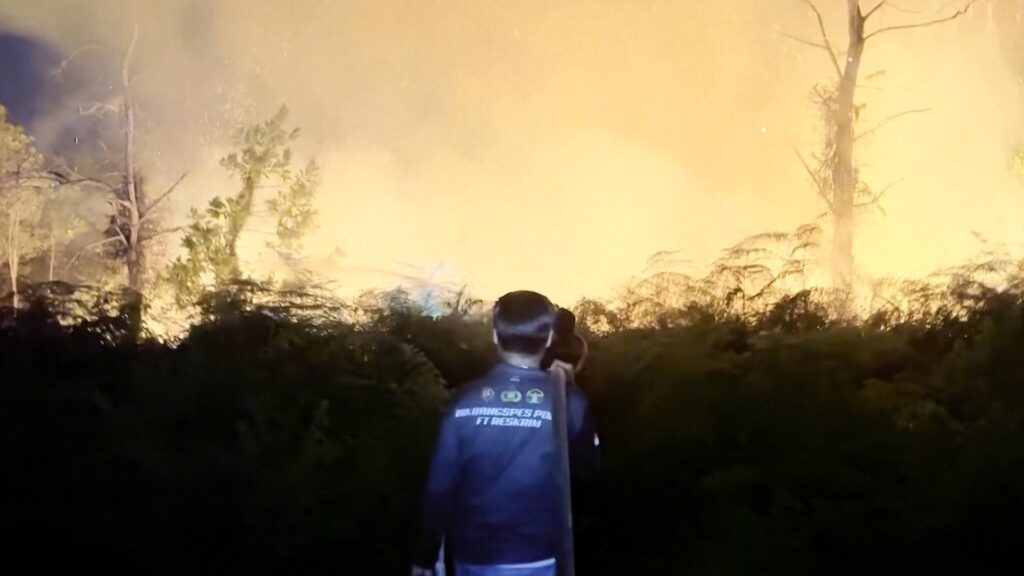
Indonesia is currently grappling with a severe wildfire crisis that has engulfed at least 10 provinces, creating an urgent environmental and public health emergency. The wildfires, fueled by dry conditions and exacerbated by human activity such as land clearing for agriculture, have spread rapidly, blanketing communities in thick, hazardous haze.
The relentless blazes have made breathing difficult for millions of Indonesians, prompting widespread outcries as people struggle to cope with the deteriorating air quality. Health officials warn that the smoke poses severe risks, particularly to children, the elderly, and those with respiratory conditions. Hospitals across affected regions are witnessing an increase in patients suffering from respiratory issues, eye irritation, and other related ailments.
Officials from the Indonesian government and disaster response teams are working tirelessly to control the fires, deploying firefighters and military personnel to the hardest-hit areas. Despite these efforts, the fires continue to rage, propelled by dry weather and strong winds spreading embers across vast swaths of forest and peatlands.
The thick haze has severely impacted daily life, disrupting transportation and school activities and forcing authorities to issue multiple health advisories urging people to stay indoors and use masks when outside. Visibility has dropped significantly, complicating firefighting efforts and endangering road and air travel safety.
Environmental groups have criticized ongoing land-clearing practices, including slash-and-burn techniques, which contribute heavily to the scale and intensity of these wildfires. They call for stronger regulations and enforcement to prevent future incidents and mitigate one of Southeast Asia’s most recurrent environmental threats.
This year’s wildfires come amid Indonesia’s dry season, which typically increases the risk of such disasters. Climate change is also believed to be intensifying these events by altering weather patterns and increasing temperatures, making prevention and management even more challenging.
On the international stage, the haze has crossed borders, affecting neighboring countries like Malaysia and Singapore, leading to regional discussions about cooperative firefighting efforts and sustainable land management practices.
Indonesian citizens, meanwhile, are mobilizing networks of volunteers and community groups to assist those affected and raise awareness about the dangers of the haze and the urgent need for preventative measures.
The current wildfire crisis in Indonesia underscores the urgent need for coordinated action at local, national, and regional levels to address not only the immediate firefighting efforts but also the long-term environmental policies aimed at protecting forests, peatlands, and the health of millions living in vulnerable areas.
As the situation develops, attention remains focused on the balance between economic activities such as agriculture and the imperative to safeguard the environment and public health in one of the world’s most fire-prone regions.