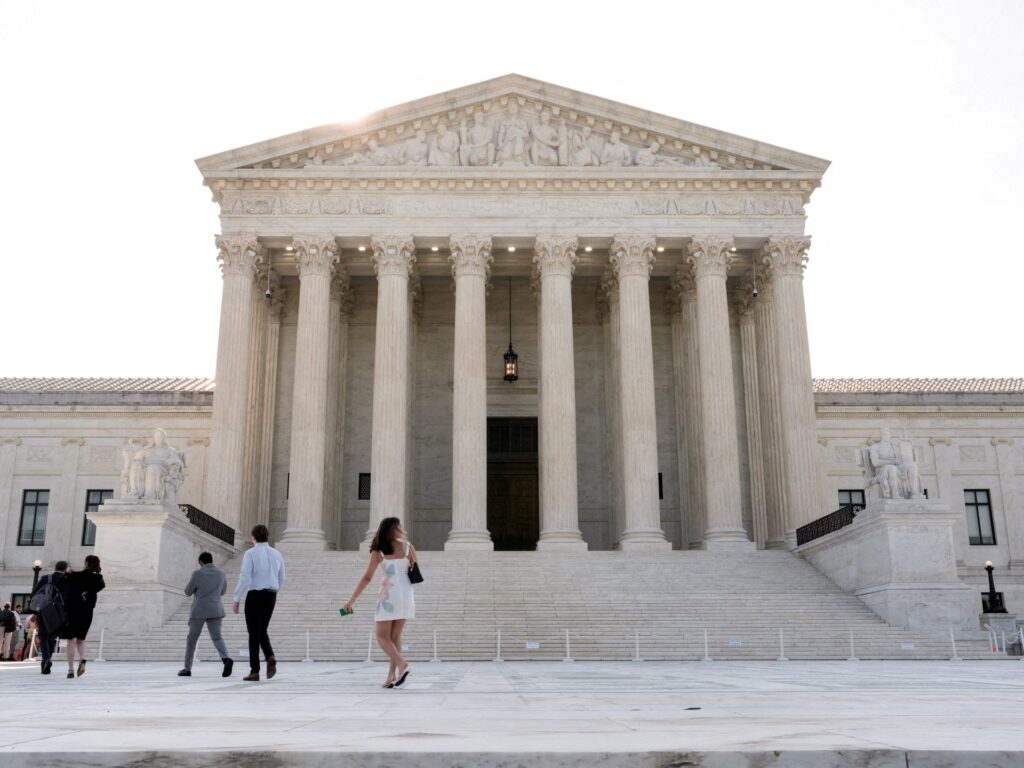
The US Supreme Court has recently delivered a significant ruling allowing certain mail voting restrictions advocated by former President Donald Trump to proceed. Mail-in voting has been a contentious issue in American politics, particularly during and after the 2020 Presidential Election, where it played a pivotal role due to the COVID-19 pandemic. President Trump, throughout his tenure and beyond, expressed strong opposition to mail balloting, claiming without substantial evidence that it leads to widespread voter fraud. This latest decision by the highest court in the United States marks a critical step in the ongoing battle over election protocols and voter access.
Historically, mail voting has been a common method for many Americans, especially those who are elderly, disabled, or live in remote areas. The pandemic saw a surge in mail-in ballots as states sought to protect voter safety while maintaining democratic processes. However, opponents of mail voting, including Trump and his allies, argue that it increases the risk of fraud and undermines the integrity of elections.
The Supreme Court’s ruling allows specific restrictions previously challenged by voting rights advocates to move forward. These restrictions vary by state but generally include tighter rules on ballot harvesting, stricter signature verification requirements, and reduced deadlines for requesting and submitting mail ballots. Critics argue that these measures disproportionately affect minorities, the elderly, and low-income voters, potentially suppressing voter turnout.
Supporters of the restrictions claim they are necessary to strengthen election security and public confidence in the electoral system. The Court’s conservative majority, known for its cautious stance on expanding voting rights, found that the lower courts had erred in blocking these limitations. This decision not only impacts upcoming elections but also signals a broader judicial philosophy favoring state control over election administration.
Political analysts suggest that the ruling could have profound implications for future US elections, particularly in battleground states where mail voting constitutes a significant portion of ballots cast. The decision may influence campaign strategies, voter outreach efforts, and the overall dynamics of electoral competition.
In response to the ruling, civil rights groups have vowed to continue their fight in other legal venues and through legislative means to ensure voting accessibility. They emphasize the importance of balancing election security with the fundamental democratic right to vote.
Meanwhile, the Trump administration and its supporters celebrate the decision as a victory for election integrity. They believe that restoring confidence in mail voting processes is essential to the legitimacy of election outcomes.
This ruling reflects the polarized nature of American politics surrounding voting methods, highlighting the ongoing debate between expanding voter access and safeguarding election security. The Supreme Court’s decision underscores the critical role the judiciary plays in shaping the landscape of American democracy.
As the nation prepares for upcoming elections, the intersection of law, politics, and voter rights remains a focal point of public discourse. Stakeholders from all sides are expected to closely monitor the implementation and consequences of these mail voting restrictions. The debate over mail balloting and election integrity promises to continue shaping the American political climate for years to come.