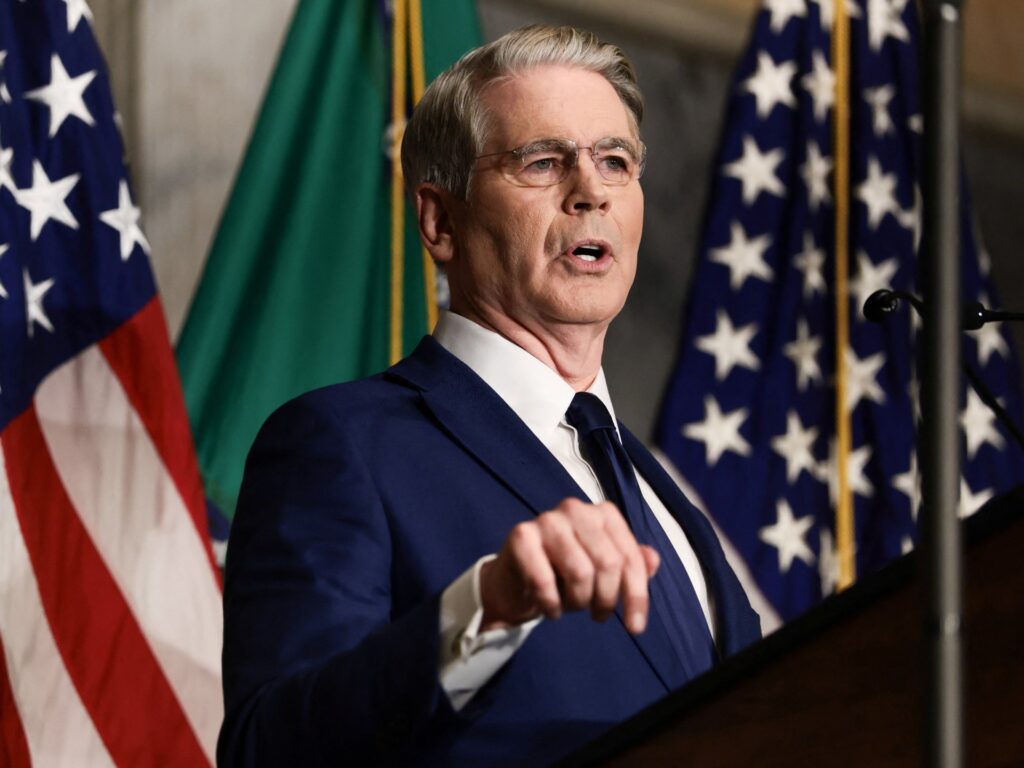
The Trump administration has unveiled a new wave of stringent economic sanctions, termed as ‘economic D-day’, aimed at Iran. This move was announced by U.S. Treasury Secretary Scott Bessent, emphasizing the administration’s commitment to intensify pressures on Iran. The sanctions are strategically designed to choke off Iran’s revenues, thereby severely limiting the country’s financial and economic activities on the global stage.
According to Secretary Bessent, the intent behind these sanctions is to isolate Iran economically and diplomatically, restricting its ability to fund activities that the U.S. deems destabilizing to the region and beyond. The U.S. government has long criticized Iran’s nuclear ambitions and its role in supporting militant groups across the Middle East. These new measures are part of a broader strategy to compel Iran to alter its behavior.
The sanctions regime targets key sectors of Iran’s economy, particularly oil exports, which constitute a significant portion of the country’s revenue. The U.S. is working closely with international partners to enforce these sanctions and ensure compliance by all governments and companies globally. Any entity found violating the sanctions risks severe penalties including denial of access to the U.S. financial system.
Treasury Secretary Bessent underscored that the sanctions represent a coordinated and comprehensive approach, labeled as ‘economic D-day’, reflecting a calculated effort akin to a major military operation but executed through economic means. The goal is to create maximum economic pressure within the shortest possible time frame.
These sanctions are expected to have profound implications on Iran’s economy, potentially leading to increased inflation, currency devaluation, and a downturn in domestic production and employment. Iranian officials have condemned the U.S. actions, calling them unjust and counterproductive, but have yet to signal any willingness to engage in negotiations under these latest pressures.
The international community remains divided on the effectiveness and consequences of the U.S. approach. Some allied nations support the efforts citing the need to curb Iran’s provocative activities, while others express concern about the humanitarian impact and the increased risk of regional instability.
In summary, the Trump administration’s ‘economic D-day’ sanctions represent a decisive escalation in the U.S. campaign against Iran, aiming to strangle its economic lifelines and isolate the country in hopes of influencing Tehran’s policies. The coming months will reveal the full impact of these measures on Iran and the broader geopolitical landscape.