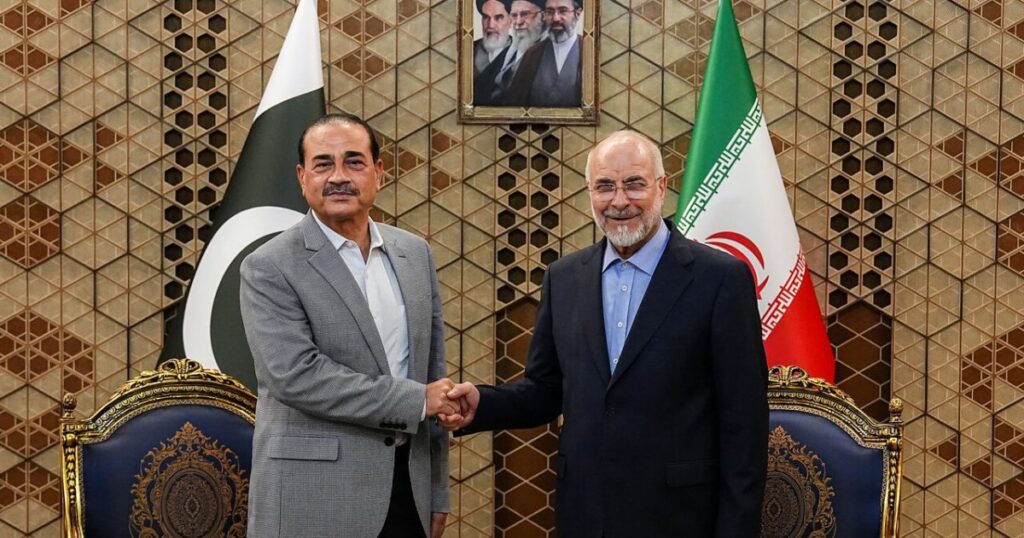
Pakistan’s Army Chief General Munir has once again returned to Iran, sparking discussions about his potential role in easing tensions between Tehran and Washington. This visit comes at a time when the stalemate over US war policies and Iran’s regional activities remains a critical issue in global geopolitics.
Pakistan has positioned itself as a possible mediator between Iran and the United States, claiming it can serve as a communication channel to bridge the widening divide. Since Pakistan shares historical, cultural, and geographic proximity with Iran, it arguably holds a unique diplomatic rapport that could be leveraged to reduce hostilities.
However, experts and regional analysts express mixed opinions regarding Pakistan’s actual influence in this complex international stand-off. Some analysts argue that Pakistan’s military leadership, under General Munir, possesses significant regional sway due to Pakistan’s strategic partnerships and its role in South Asian security matters. These analysts believe General Munir’s visit could initiate fresh dialogue and potentially pave the way for backdoor diplomacy between Washington and Tehran.
On the other hand, skeptics caution against overestimating Pakistan’s ability to sway the situation. They point out that the entrenched mistrust between the US and Iran, compounded by competing geopolitical interests, will not be easily resolved by third-party mediation. Some note Pakistan’s own strategic priorities, which at times may conflict with a balanced mediation role.
General Munir’s trip also highlights Pakistan’s broader foreign policy goals of maintaining regional stability, particularly given the volatile dynamics in the Middle East and South Asia. Pakistan has experienced various pressures to take sides amidst ongoing conflicts, and its engagement with Iran indicates a nuanced approach aiming to keep diplomatic channels open.
Further complicating the scenario is the fact that relations between Iran and the US have been strained for decades, with recent escalations involving sanctions, proxy conflicts, and disagreements over nuclear programs. Any breakthrough would likely require significant compromises from both Washington and Tehran, beyond the scope of Pakistan’s direct influence.
Nevertheless, Pakistan claims its military-to-military contacts with Iran provide a confidential platform to relay messages and build trust. General Munir’s visit reportedly included discussions on security cooperation and regional issues, which may serve as groundwork for broader diplomatic engagement.
The international community is cautiously optimistic but remains watchful of actual progress. Observers are closely monitoring developments to see if Pakistan can transcend its role as a peripheral actor and become an effective intermediary in this high-stakes geopolitical challenge.
In conclusion, while General Munir’s visit to Iran represents a hopeful diplomatic effort, the path to breaking the US-Iran deadlock is fraught with significant challenges. Pakistan’s role, though potentially important, is contingent on the willingness of both Tehran and Washington to engage earnestly and make concessions. Whether or not this initiative will yield tangible results remains to be seen, but it underscores the intricate nature of regional diplomacy and the ongoing quest for peace in the region.