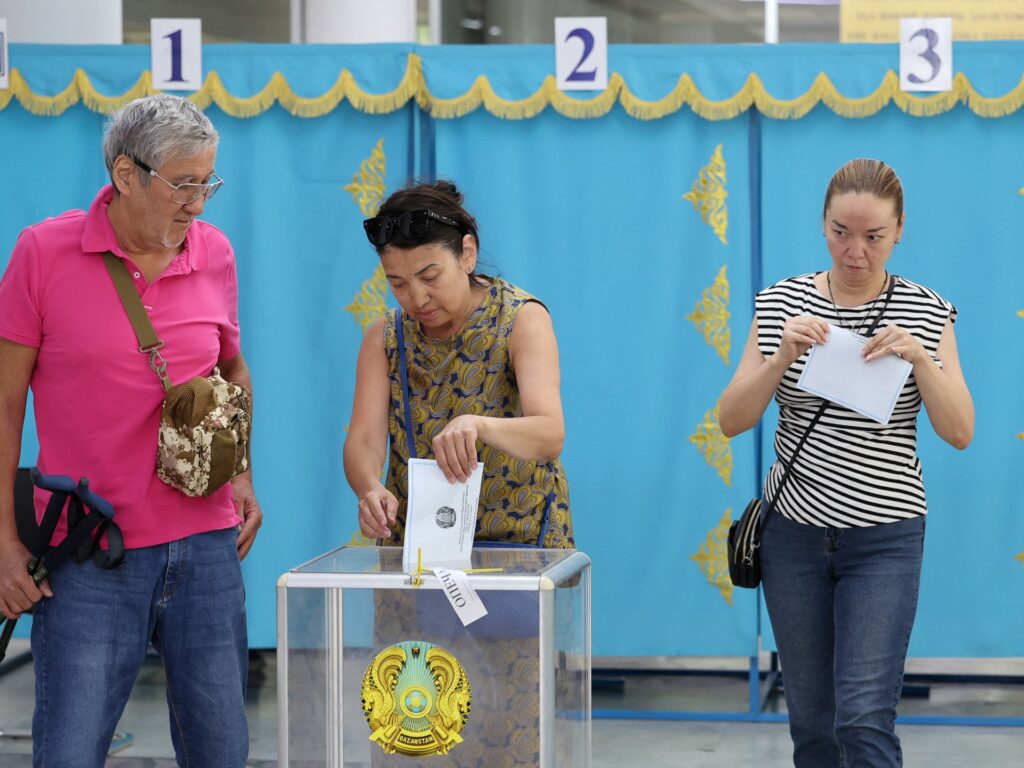
Kazakhstan recently conducted its parliamentary election, an event viewed as pivotal in solidifying President Kassym-Jomart Tokayev’s grip on power. In a tightly controlled political environment, only state-approved parties that demonstrate loyalty to President Tokayev were permitted to participate in the election. This exclusion of opposition forces has raised concerns about the pluralism and democratic nature of the electoral process.
The election took place amidst sweeping constitutional changes that further enhance presidential authority, signaling a significant reshaping of the country’s political landscape. The overhaul is perceived as a strategic move by President Tokayev to consolidate power and reduce potential challenges to his leadership.
Observers note that the absence of independent and opposition parties from the electoral race effectively diminishes the representative nature of the parliament, making it a mechanism more for endorsing existing power than for genuine legislative debate or balance.
The election results, expected to favor loyalist parties overwhelmingly, will likely cement President Tokayev’s control over the legislative branch. This consolidation impacts not only domestic governance but also Kazakhstan’s broader international positioning as it navigates relationships with neighboring countries and global powers.
Critics argue that the electoral environment limits citizens’ political choices and undermines democratic principles, potentially leading to increased political apathy or unrest among segments of the population looking for greater political freedom and reform.
Supporters of the current administration contend that the constitutional reforms and controlled electoral process are necessary for maintaining stability and continuing national development.
As Kazakhstan moves forward with this new parliamentary composition, the long-term effects on governance, civil society, and political freedoms will be closely monitored by international observers and human rights organizations alike.
This election marks a crucial chapter in Kazakhstan’s post-Soviet political evolution, reflecting broader regional trends towards centralized control and raising important questions about the future of democracy and governance in the country.