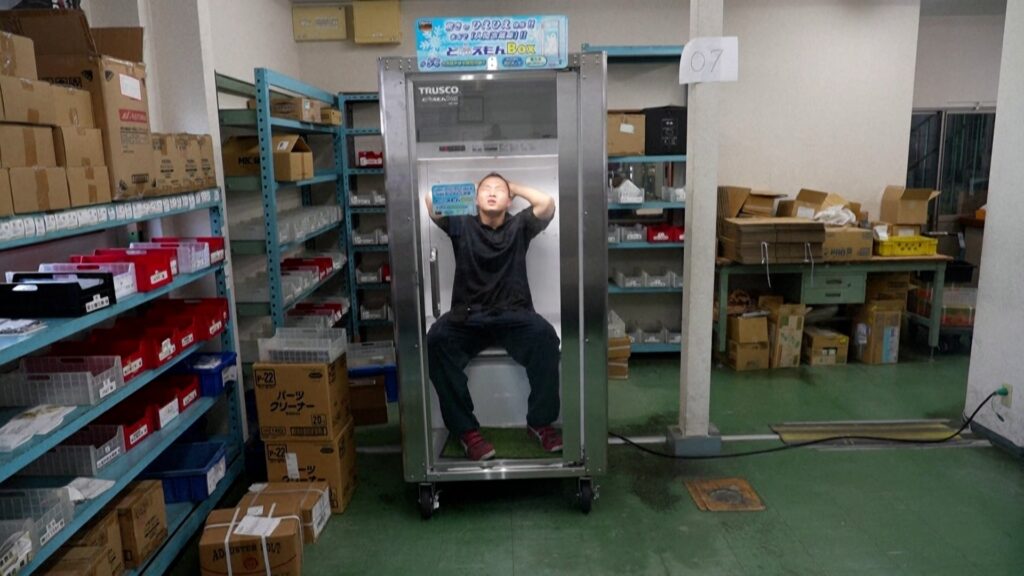
As global temperatures continue to rise and heatwaves become more frequent and severe, Japan has taken a novel approach to combating heatstroke and protecting public health. The country has introduced a cutting-edge solution known as the “Do Hiemon Box,” a walk-in “human fridge” designed to provide rapid and targeted cooling for individuals suffering from extreme heat exposure.
Japan has long been no stranger to hot and humid summers, but recent climate trends have made heatwaves significantly more dangerous. Traditional methods of cooling, including air conditioning and hydration stations, while effective, may not be sufficient during peak heatwave events when emergency intervention is critical to prevent heatstroke and other heat-related illnesses.
The Do Hiemon Box steps in as a new form of emergency cooling. It is essentially a small, walk-in cooling unit where individuals can enter to rapidly lower their core body temperature. Unlike conventional cooling methods that rely on fans or ambient air conditioning, this device targets rapid cooling through a controlled and intensive cold air environment.
How does the Do Hiemon Box work? Upon entering, heatstroke sufferers are enveloped in chilled air that quickly brings down their body temperature. This rapid cooling helps stabilize their condition, providing immediate relief and potentially preventing the serious complications linked to heatstroke, such as organ failure or even death.
Designed with ease of use and accessibility in mind, the Do Hiemon Box is being deployed in public spaces, hospitals, and community centers across heat-prone areas in Japan. Its walk-in design ensures that it can accommodate people with varying levels of mobility, including elderly and disabled individuals who are most vulnerable to heatstroke.
One noteworthy aspect of the Do Hiemon Box is its targeted approach. Rather than cooling an entire room or location, it focuses its cooling power on the individual, maximizing efficacy while minimizing energy consumption. This feature aligns well with Japan’s wider environmental goals, balancing technological innovation with sustainability.
Local officials and healthcare providers have praised the box for its potential to save lives amid increasing heatwave emergencies. Early reports indicate that the device has successfully stabilized numerous patients quickly, reducing the strain on emergency medical services during peak heat events.
Experts see the Do Hiemon Box as a possible blueprint for other countries facing similar climate challenges. As urban areas around the world grapple with rising temperatures and limited access to emergency cooling resources, deploying walk-in human fridges might become a critical part of public health strategies.
In addition to direct health benefits, the introduction of the Do Hiemon Box also sparks awareness about the severity of heat-related health risks. It underlines the importance of preparedness and innovation in the face of climate change.
Looking forward, Japanese engineers and scientists are exploring ways to further enhance the Do Hiemon Box. Future iterations may include integration with biometric monitoring to adapt cooling intensity dynamically or solar-powered options to increase energy efficiency even further.
The advent of the walk-in human fridge represents a step forward in climate adaptation technology. By offering a practical, life-saving tool during heatwaves, Japan sets an example of how technology and public health can converge to meet emerging environmental challenges.
As heatwaves become an increasingly common global phenomenon, solutions like the Do Hiemon Box highlight the importance of innovative thinking to protect vulnerable populations and ensure safety amidst extreme weather. This groundbreaking approach could redefine emergency cooling measures worldwide, marking a significant advancement in public health resilience.