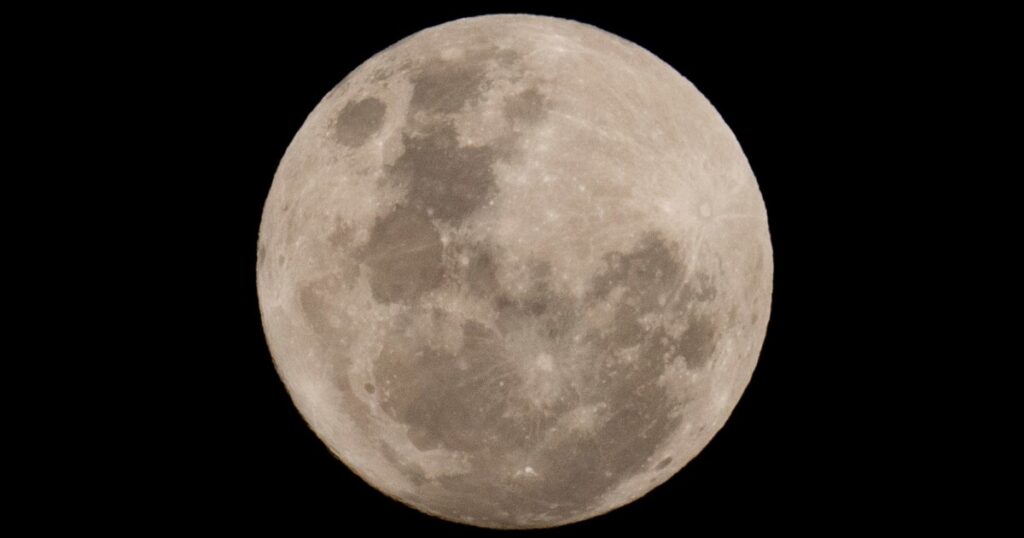
China is preparing to launch its Chang’e-7 lunar mission, a critical step toward uncovering the mysteries of moon’s water ice trapped in shadowed craters. This mission aims to deepen our understanding of the moon’s geology and the origins and distribution of lunar ice, which has profound implications for future space exploration and scientific research.
The presence of water on the moon was first hinted at by earlier missions, but until now, its exact quantity, condition, and location have remained largely unknown. Water ice is believed to be concentrated in permanently shadowed regions of the moon’s poles, where temperatures drop extremely low, preserving ice that may have been deposited over billions of years.
Chang’e-7 is equipped with advanced instruments designed to analyze the lunar surface, including the mineral composition and the presence of volatile substances like water. By landing near the moon’s south pole, a region of particular interest due to its high concentration of shadowed craters, the mission will gather data crucial for understanding how water ice is distributed and whether it can be utilized for sustaining future manned lunar bases.
The significance of lunar ice lies not only in its potential as a resource for astronauts but also in its scientific value. Water on the moon could offer clues to the moon’s origins—whether it came from comet impacts, solar wind interactions, or ancient volcanic activity. This insight will help scientists piece together the moon’s history and the broader dynamics of our solar system.
Furthermore, the ability to extract and use lunar ice could revolutionize space exploration by providing a local source of water for drinking, growing food, and even producing rocket fuel. This could drastically reduce the costs and complexities of lunar missions and serve as a stepping stone for crewed missions to Mars and beyond.
China’s Chang’e-7 is part of a broader vision to establish a sustainable human presence on the moon and pave the way for international cooperation in space exploration. Previous Chang’e missions have successfully mapped the moon and returned valuable samples. Chang’e-7 builds on these achievements with its focus on the lunar south pole’s permanently shadowed regions.
In addition to scientific instruments, the mission also features a rover to explore the terrain and collect samples, along with a lander capable of conducting in-situ experiments on soil and ice. The data gathered will be critical for future lunar base designs and the development of technologies needed to survive and thrive on the moon.
As global interest in the moon intensifies, the Chang’e-7 mission signifies a major milestone in space exploration. Unraveling the secrets of lunar ice not only advances scientific knowledge but also supports humanity’s long-term exploration goals by making the moon a more accessible and sustainable destination.
In conclusion, China’s Chang’e-7 mission to study lunar ice is more than a technological feat; it is a strategic initiative with the potential to transform our approach to space exploration. By unlocking the secrets held in the shadowed craters of the moon, this mission paves the way for a future where humans can live and work on the moon, furthering our reach into the cosmos.