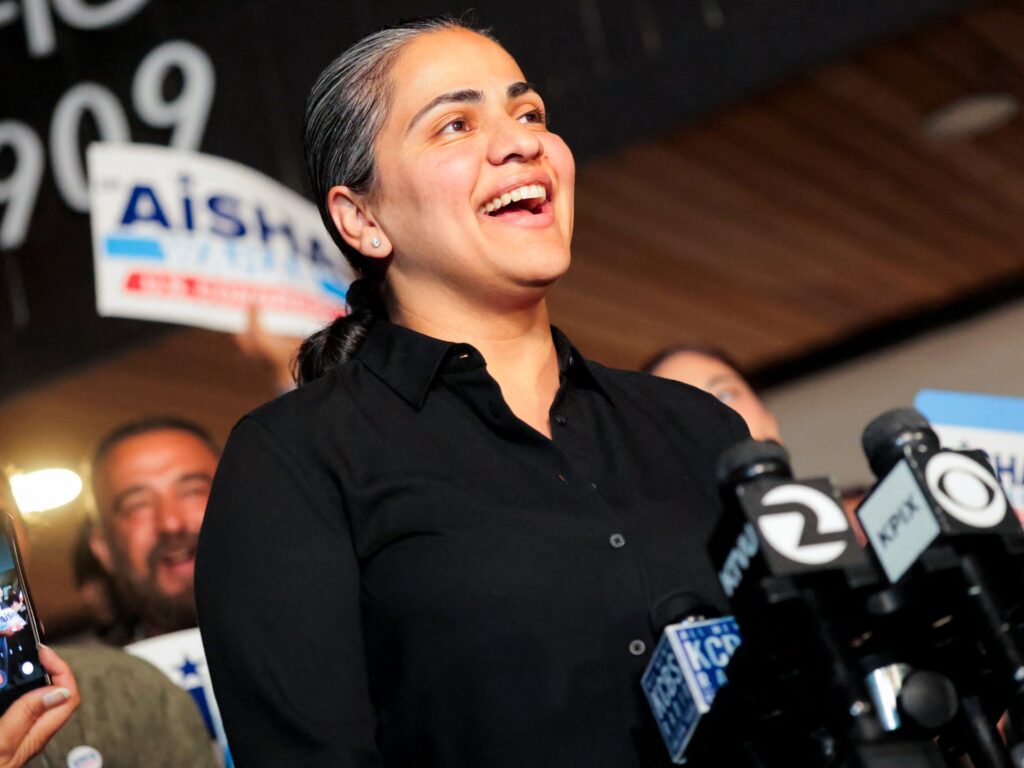
In a significant political development, California State Senator Aisha Wahab secured a remarkable victory in a recent special election, defying the odds and overcoming substantial pro-Israel outside spending. This election result stands as a clear indication of the shifting political landscape and the growing influence of progressive candidates in the state.
Senator Aisha Wahab’s success marks another pivotal moment where a progressive politician has managed to resist the overwhelming financial power invested by pro-Israel interest groups. Despite millions of dollars being spent in attempts to sway the election outcome, Wahab’s grassroots campaign and strong connection with voters ultimately prevailed.
The special election was closely watched by political observers due to the intense outside spending that characterized the race. Opponents of Wahab deployed substantial resources to promote their pro-Israel agenda, aiming to secure a legislative seat aligned with their interests. However, Wahab’s victory highlights the effectiveness of mobilizing local communities and leveraging support through direct voter engagement.
This outcome also underscores a broader trend in California politics, where progressive candidates are increasingly able to overcome the influence of well-funded opposition groups. Wahab’s win sends a powerful message about voters’ desires for representation that reflects their diverse views, including a more balanced or critical approach towards foreign policy issues.
Aisha Wahab, known for her progressive stances on various social and economic issues, campaigned on a platform that resonated with many constituents. By prioritizing healthcare access, housing affordability, and environmental justice, she connected with voters who seek systemic change rather than traditional political alignments.
Moreover, Wahab’s victory might inspire other progressive candidates facing similar financial challenges, demonstrating that well-organized campaigns with strong community backing can overcome even the most substantial spending efforts. It also raises questions about the role and influence of outside money in local and state elections, highlighting the need for transparency and possible reforms.
Political analysts point out that while outside spending can have a significant impact, it is not always decisive. Voter engagement, authenticity, and the ability to address local concerns remain critical factors in electoral success. Wahab’s triumph could signal a turning point, where grassroots movements gain momentum against established political forces.
This election could also have implications for how pro-Israel spending is viewed in the broader context of American politics. As progressive lawmakers gain traction, there may be shifts in discussions about U.S. foreign policy priorities and how monies are allocated to influence elections.
In summary, California State Senator Aisha Wahab’s victory in the special election despite heavy pro-Israel outside spending represents a notable win for progressive politics. It reflects both the resilience of grassroots efforts and a growing shift in voter sentiment. This outcome encourages a reevaluation of campaign finance’s role and suggests an evolving political environment where community-driven campaigns can successfully challenge well-funded opponents.
As California continues to be a bellwether for national trends, this election adds to the narrative that money alone does not guarantee electoral success, and that genuine connection with voters remains paramount. The political future in California and beyond will be closely watched to see if this trend persists and how it influences the balance of power within the state legislature and beyond.