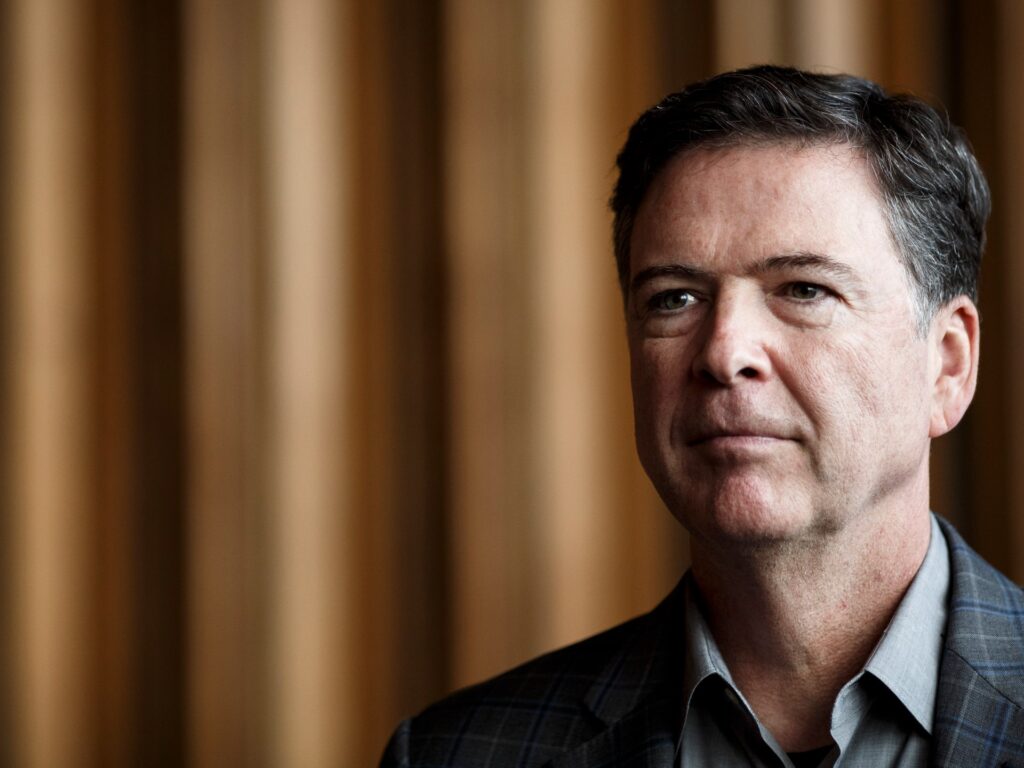
The United States Department of Justice has formally defended its decision to prosecute former FBI Director James Comey in connection with a controversial post featuring a seashell. This unusual case has caught public attention due to its unusual nature and the notable figure involved. Comey is accused of transmitting threats through this post and using the ensuing controversy as a marketing strategy for his upcoming novel.
James Comey, who served as the FBI chief until 2017, posted images of a seashell accompanied by cryptic and allegedly threatening messages on his social media. The post sparked a wave of speculation and a considerable backlash, raising questions about the extent of free speech and the boundaries of social media conduct for public figures.
Authorities argue that the post contained coded threats, potentially endangering public safety, and that Comey exploited the resulting controversy to promote his new book. This claim underlines a complex intersection between legal limits on speech, personal expression, and commercial interests.
The Department of Justice has emphasized that the prosecution is not about silencing dissent or critique but about addressing potential misuse of social media platforms for harmful purposes. They contend that legal consequences are necessary when speech crosses into the territory of threats, regardless of the speaker’s status.
Critics of the prosecution argue that it may set a dangerous precedent for freedom of expression, especially when dealing with public figures whose statements are often scrutinized under a different lens. They caution that this case might open the door to overreach in how authorities interpret ambiguous communications online.
Comey himself has maintained that his post was metaphorical and artistic, not intended to threaten but to provoke thought and dialogue. His legal team is robustly defending against the charges, highlighting constitutional protections and the importance of context.
Legal analysts note that this case raises unprecedented questions about social media expression, the interpretation of symbolic content, and the commercialization of controversy. It challenges existing legal frameworks and could influence future cases involving digital communications by prominent individuals.
Public opinion remains divided, with some viewing the prosecution as a necessary step to prevent misuse of platforms, while others see it as an infringement on personal rights and creative freedom.
This case marks a significant moment in the ongoing discourse about digital communication, legal boundaries, and the role of influential figures in shaping public conversations. The court’s decision is eagerly awaited and will likely have broad implications for social media policies and free speech jurisprudence in the years to come.
As the situation develops, all eyes will be on the legal proceedings and the arguments presented by both the Department of Justice and James Comey’s defense team. The outcome could redefine the balance between security, expression, and commerce in the digital age.