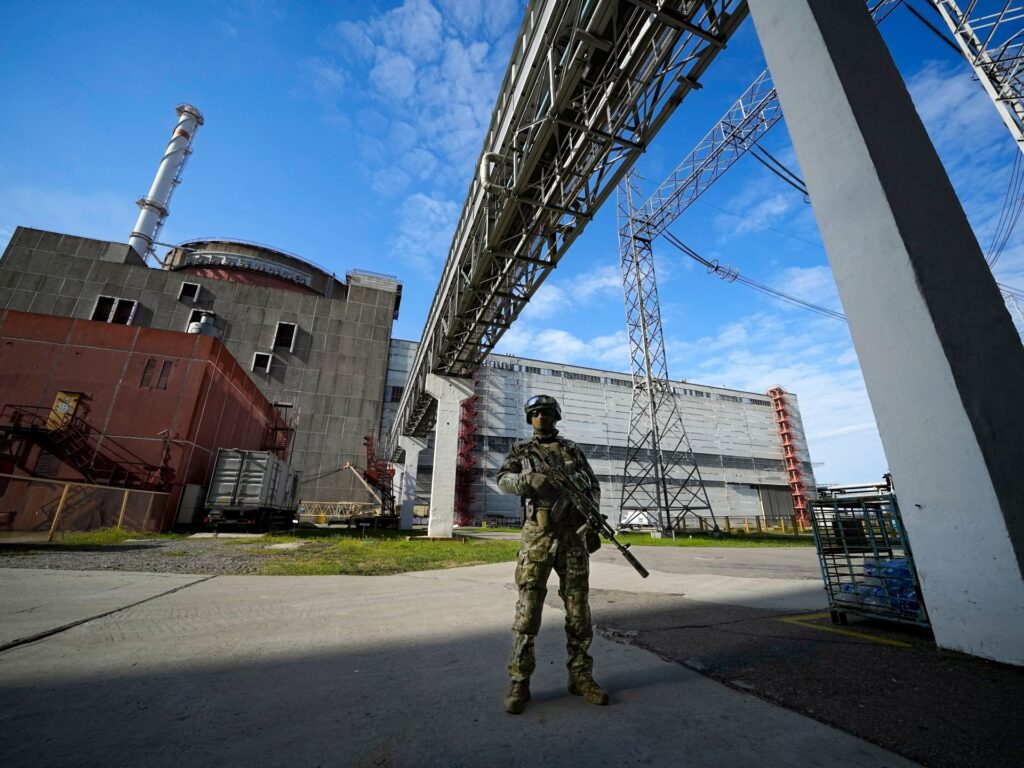
In a recent escalation of tensions in the ongoing conflict between Russia and Ukraine, Russian authorities have reported a Ukrainian drone strike near the Zaporizhzhia nuclear power plant. This incident has raised significant concerns over the safety and security of Europe’s largest nuclear facility.
Since the onset of Russia’s full-scale invasion of Ukraine, the Zaporizhzhia nuclear power plant has been a focal point of international worry. This plant, crucial for energy supply, also poses substantial risks in the event of any military conflict or attack near its premises.
According to Russian reports, the Ukrainian drone attempted to target Russian positions close to the plant, but there have been no immediate confirmations regarding damage or casualties. Russian officials emphasized that the facility’s safety systems remain intact and operational.
The Zaporizhzhia plant, situated in southeastern Ukraine, is the largest nuclear energy station in Europe, making any threat to it a matter of grave international concern. Experts warn that any damage to the plant could result in dangerous radioactive releases, affecting not only Ukraine but the wider European region.
International agencies, including the International Atomic Energy Agency (IAEA), have been monitoring the situation closely. In light of the drone strike, the IAEA has reiterated calls for all parties to ensure the security and safety of nuclear facilities amid military conflicts.
This attack is part of a series of heightened military actions reported in the region, highlighting the fragile security situation around critical infrastructure in Eastern Ukraine. Ukrainian officials have not commented directly on the drone strike reports but have maintained that their operations are targeted at military objectives.
The international community has expressed alarm over any military activity near nuclear sites. The United Nations Secretary-General has called for urgent restraint and dialogue to prevent any incident that could escalate into a nuclear disaster.
The Zaporizhzhia nuclear plant’s situation underscores the broader risks faced by nuclear facilities in conflict zones. The ongoing conflict has seen several incidents where the civilian infrastructure, including energy plants, has become caught in the crossfire.
As the conflict continues, the need for stringent safeguards and neutral zones around nuclear sites becomes ever more critical. Ensuring the plant’s security is not only essential for Ukraine but serves as a vital interest to global nuclear safety and environmental protection.
The Zaporizhzhia plant was taken under Russian control early in the conflict, further complicating the operational management and safety oversight. The presence of military forces in and around the facility increases the risk of accidental damage and radiological hazards.
This recent drone strike near the plant adds to the already tense situation, provoking calls from governments worldwide for de-escalation and the establishment of demilitarized zones around such sensitive sites.
As investigations continue, international observers and nuclear safety experts urge all parties to prioritize humanitarian and environmental safety, putting aside military objectives in favor of preventing a nuclear catastrophe.
The incident highlights the enduring challenges and dangers posed by modern conflicts intersecting with vital nuclear infrastructure, necessitating renewed international efforts for conflict resolution and nuclear security assurance.