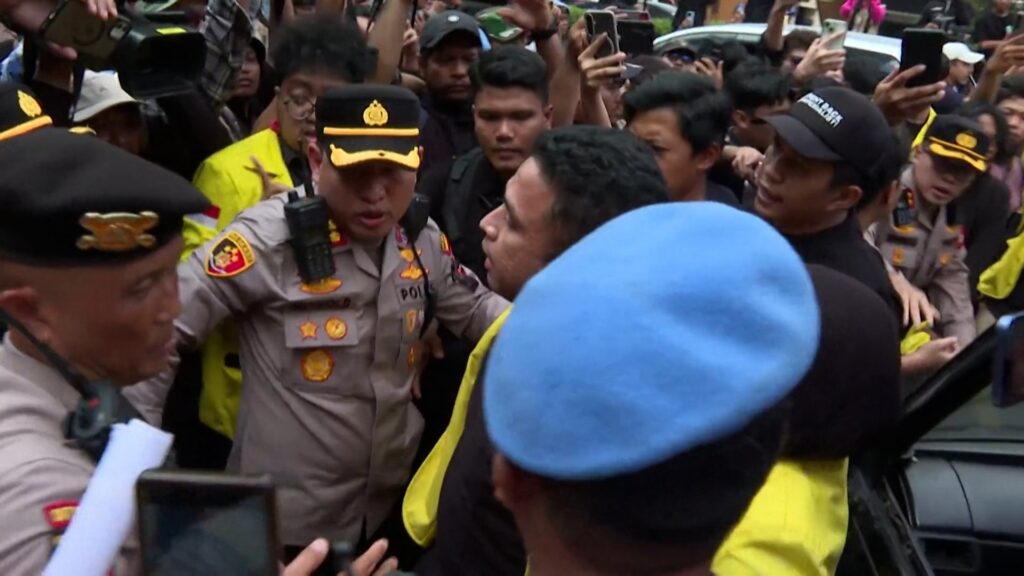
On Tuesday, the streets of Jakarta witnessed a significant student protest that turned confrontational as the police intervened and arrested at least 21 protesters. Hundreds of university students had gathered to express their grievances, but the demonstration escalated as authorities attempted to control the crowd.
The protest, which brought together students from various universities across Indonesia, was reportedly sparked by issues concerning education reforms and governmental policies impacting higher education. Participants demanded greater transparency, improved funding for education, and the protection of student rights.
As the protest gathered momentum, tensions rose between the demonstrators and the police forces deployed to maintain order. Law enforcement officials used crowd-control tactics which led to clashes, resulting in several arrests. Eyewitnesses described scenes of chaos, with some students being forcibly taken into custody. At least 21 individuals were reported detained during the confrontation.
The Indonesian National Police have stated that their actions were aimed at preventing violence and ensuring public safety. They emphasized that they acted in accordance with the law and called for peaceful dialogue to address the students’ concerns.
This incident highlights the ongoing challenge Indonesia faces in balancing civil unrest and the right to protest with maintaining public order. Student protests have a long history in Indonesia, often serving as a catalyst for social and political change, but the recent escalation raises questions about how such demonstrations are managed.
Human rights groups and education advocates have expressed concern over the police response, urging for restraint and the reopening of channels for constructive communication. They argue that engagement with student demands is critical to avoiding future conflicts.
The government has not yet issued a detailed statement regarding the arrests or the issues raised by the students. However, there is widespread anticipation for further developments as the detained students await legal proceedings.
As Indonesia continues to grapple with socio-political challenges, the role of student movements remains pivotal. The events in Jakarta underscore the necessity for dialogue and reform to address the underlying causes of dissent.
The situation remains fluid, with calls from both sides for calm and a return to negotiations that could lead to meaningful solutions.