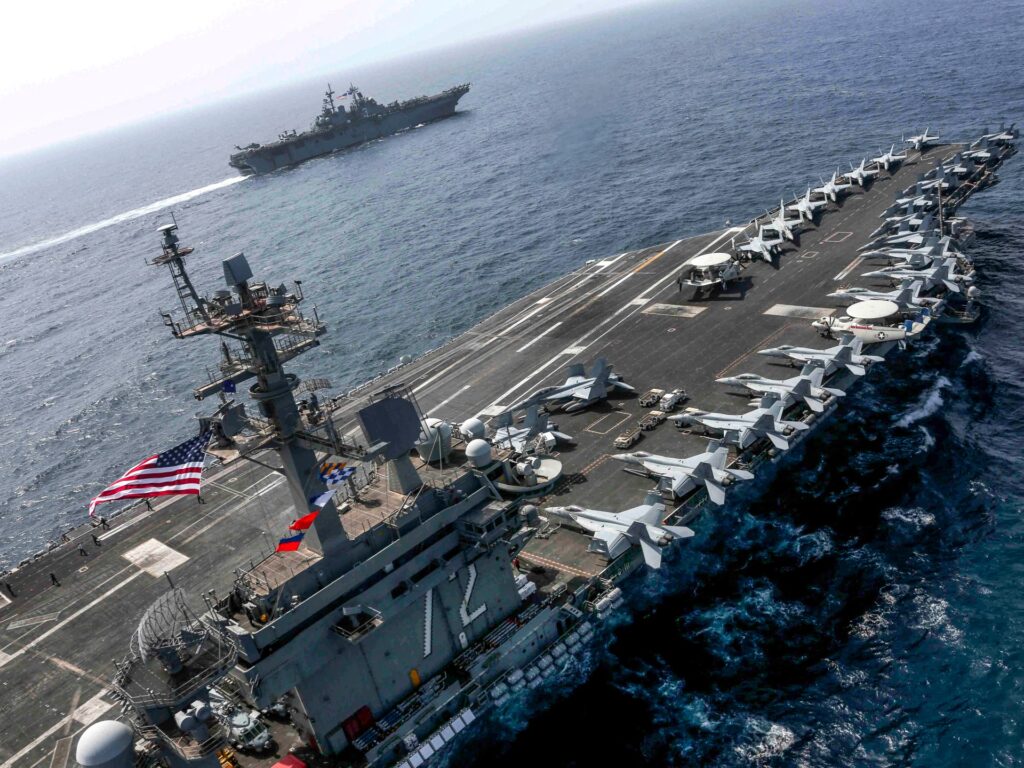
Recent reports have emerged highlighting troubling conditions aboard the USS Abraham Lincoln, a U.S. Navy aircraft carrier, where multiple sailors are said to have attempted to jump ship. These incidents have sparked considerable concern among members of the U.S. Congress, who are now calling for a thorough investigation into the mental health and overall wellbeing of the crew stationed on the vessel.
The USS Lincoln, a Nimitz-class supercarrier, has been a key asset in the U.S. Navy’s operations, often deployed for extended missions across various global hotspots. However, the stressful environment inherent to life at sea, especially in a highly demanding military setting, has raised alarms about the psychological toll on sailors.
Concerns escalated following several reports that sailors were expressing distress and contemplating abandoning their posts, an action referred to as ‘jumping ship.’ Such behavior typically signals deep-rooted issues related to morale, mental health, or working conditions.
Amidst these developments, former President Donald Trump, who remains a prominent figure in American politics, publicly dismissed the mental health concerns raised by officials and members of the military community regarding the USS Lincoln crew. Trump’s statements downplayed the gravity of the reports, suggesting that the issues might be overstated or part of a broader political narrative.
Congressional leaders from both parties, however, have emphasized the necessity of addressing the situation seriously. They argue that the mental health of service members is paramount and fundamental to maintaining operational effectiveness and national security.
Naval experts and mental health professionals have weighed in, underscoring the challenges of prolonged deployments which can exacerbate stress, anxiety, and depression among sailors. They have called for increased support systems, including access to counseling services, better communication channels, and leadership training to identify early signs of mental health problems.
Military families and advocacy groups have also voiced their concerns, highlighting that the wellbeing of sailors affects not only the individuals but also their families and communities. They urge the Department of Defense to take decisive action to improve living conditions and mental health resources aboard naval vessels.
The Pentagon has responded by stating that it is reviewing the situation on the USS Lincoln and is committed to supporting its personnel. It has pledged to conduct an internal inquiry to assess the reported incidents and evaluate current mental health support mechanisms for sailors.
This episode brings to light broader systemic issues within the military related to mental health awareness and stigma. Efforts to destigmatize mental health challenges among service members have made progress, but incidents like those on the USS Lincoln underscore that more work remains.
As investigations unfold, there is hope that lessons learned from this situation will lead to enhanced provisions for the mental health and welfare of all U.S. military personnel, ensuring they are adequately supported to face the demands of service with resilience and strength.