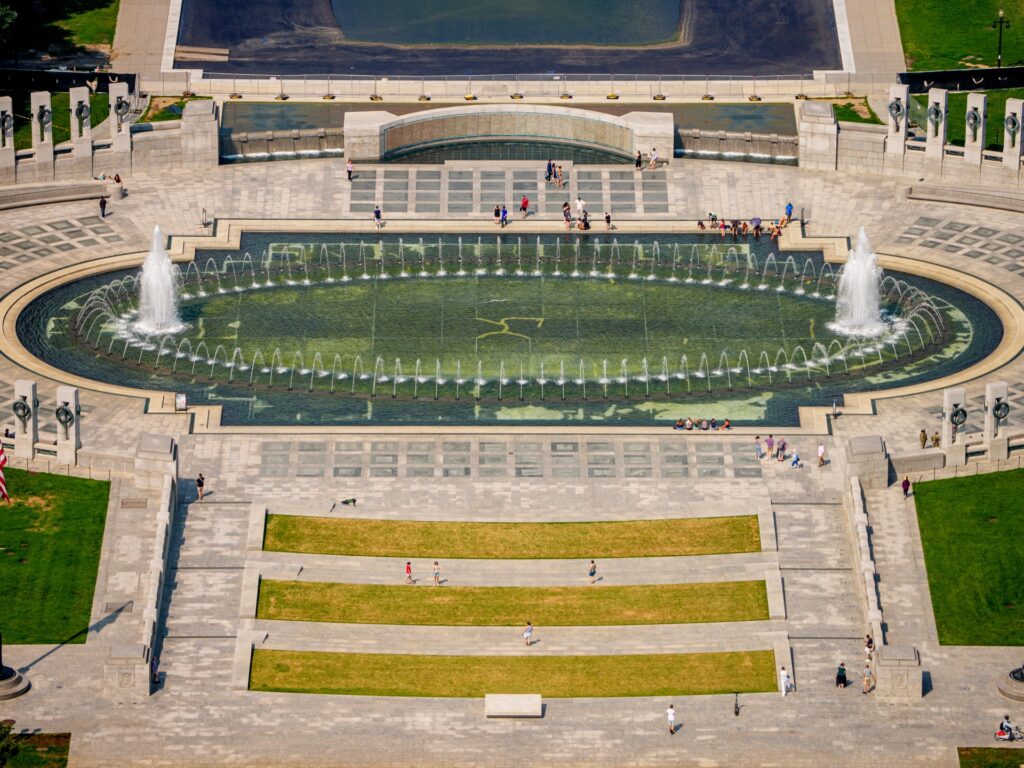
A woman has been charged in connection with the recent vandalism at the World War II Memorial in Washington, DC. This incident has attracted widespread attention and concern given the memorial’s significance as a tribute to the sacrifices made by American servicemen and women during the Second World War.
The arrest follows a tense period of public and political debate over incidents of vandalism at prominent national monuments. Notably, this comes only weeks after former President Donald Trump publicly criticized Jeanine Pirro, a well-known television host and former judge, for deciding to drop charges against individuals who caused damage to the Reflecting Pool near the Lincoln Memorial. Trump’s criticism highlighted the controversial nature of legal decisions related to protests and acts of vandalism at these key historical sites.
The World War II Memorial, located on the National Mall, is a revered site visited by millions of people every year. The recent damage has sparked outrage among veterans’ groups, local authorities, and citizens, all of whom view the memorial as a sacred space deserving of protection and respect.
Authorities have confirmed that the woman charged has been taken into custody and is expected to face legal proceedings soon. While specific details of the charges and the investigation remain under wraps, sources suggest the woman was caught after surveillance footage and witness reports confirmed her involvement.
This event underscores the ongoing challenges faced by law enforcement in protecting public monuments, especially during periods of civil unrest and protests. It also brings to light the tension between upholding public order and respecting lawful expressions of dissent.
The decision to charge the individual contrasts with previous instances where charges related to similar acts were dropped, fueling debate about consistency in law enforcement and prosecutorial decisions. Advocates for veterans and historians have expressed hope that this case will set a precedent for more rigorous protection of national monuments.
In response to the vandalism, local authorities have increased security measures around the World War II Memorial and other significant sites in the capital. There are ongoing discussions about implementing more advanced surveillance and rapid response protocols to prevent future incidents.
Community leaders have called for peaceful dialogue and respect for historical landmarks, emphasizing the importance of these spaces in national memory and identity. They have urged the public to channel their political and social frustrations through lawful and constructive means.
As the case progresses, it is expected to draw national attention and possibly ignite further discourse on the appropriate balance between security, justice, and civil liberties. The incident serves as a stark reminder of the fragile nature of public symbols and the societal efforts required to preserve them for future generations.