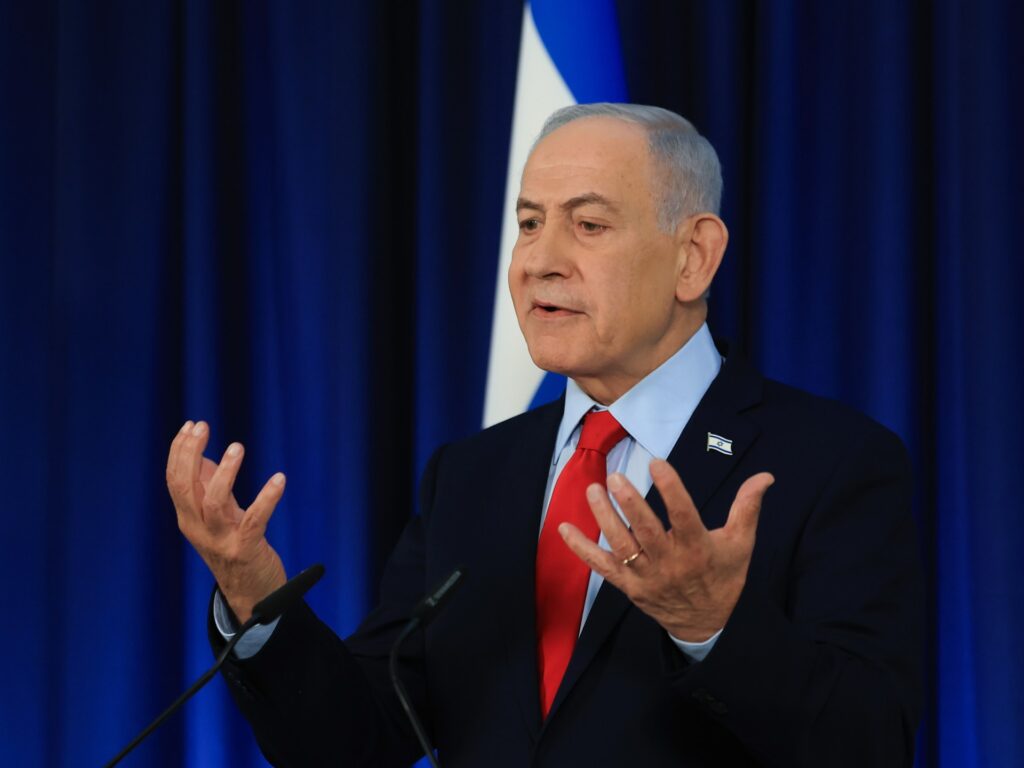
In a striking and controversial statement, Israeli Prime Minister Benjamin Netanyahu referred to the United Kingdom as ‘the Islamic Republic of Britain,’ highlighting the escalating tension between Israel and the UK’s Labour government. This comment reflects growing unease and diplomatic strain that has surfaced in recent interactions between the two nations.
The remark by Netanyahu comes amid a backdrop of increasingly critical discourse and political disagreements between Israel and the UK, particularly since the Labour Party, led by its current government, has shown a more cautious and sometimes critical stance towards Israeli policies. This has been perceived in some quarters as a shift in the UK’s foreign policy dynamics under the Labour administration.
Netanyahu’s choice of words has drawn sharp reactions both within the UK and internationally. Many view the phrase as provocative and inflammatory, stirring concerns about the potential impact on diplomatic relations. The phrase ‘Islamic Republic’ typically refers to states with a theocratic government guided by Islamic law, a label far from the UK’s secular and pluralistic political system, which makes the statement particularly contentious.
Analysts suggest that Netanyahu’s comment may be aimed at highlighting what he perceives as the Labour government’s increasing accommodation or sympathy towards Muslim and Islamic communities within the UK, and by extension, criticism of Israel. The statement could be interpreted as an attempt to rally domestic support in Israel by signaling a tough stance against what he regards as hostile foreign governments.
The Labour government has been carefully navigating its foreign relations with Israel, often advocating for dialogue and negotiations but also affirming the UK’s commitment to Israel’s security. Tensions have escalated over issues such as the Israeli-Palestinian conflict, settlement policies, and allegations of bias or discrimination.
British officials have responded with measured statements emphasizing the longstanding partnership and alliance between the UK and Israel, while expressing regret over the Israeli Prime Minister’s remarks. The UK government reiterated its dedication to combating anti-Semitism and ensuring the safety and rights of all communities within its borders.
This incident reflects a broader trend of complex international relations where domestic political shifts influence diplomatic language and engagement. As political landscapes evolve, leaders often use strong rhetoric to communicate grievances or project political strength.
In summary, Israeli PM Netanyahu’s characterization of the UK as ‘the Islamic Republic of Britain’ marks a significant moment of diplomatic friction. It underscores the challenges of maintaining bilateral relations amid diverging political viewpoints and societal changes in both countries. Observers will be watching closely to see how this verbal spat might affect future cooperation between Israel and the UK, as well as broader geopolitical alignments in the region.