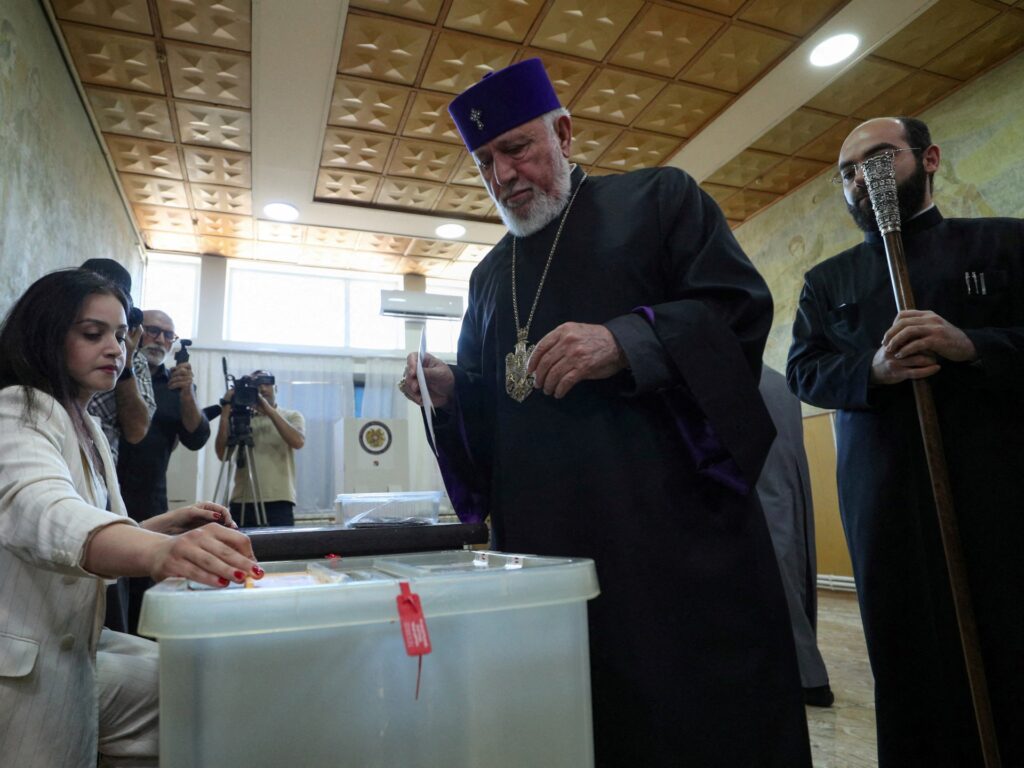
The ongoing feud between the Armenian Apostolic Church and the country’s Prime Minister has escalated further with the church’s leader, Catholicos Karekin II, and six other clerics facing trial. They are accused of failing to reinstate a bishop who was defrocked, a case that has added fuel to existing tensions between the religious institution and the government.
Catholicos Karekin II, as the spiritual head of the Armenian Apostolic Church, holds significant influence over the country’s religious and cultural affairs. The conflict stems from the church’s decision to defrock a bishop, a move that has sparked controversy and legal scrutiny.
The defrocking and subsequent refusal to reinstate the bishop have led to accusations against the church leadership of breaching ecclesiastical laws and possibly overstepping their authority. This has prompted legal proceedings that now put several high-ranking clerics, including the Catholicos, in the spotlight.
The trial is seen not only as a legal matter but also as a reflection of deeper political and social fissures in Armenia. Critics argue that the government may be leveraging the legal system to exert control over the church, while supporters claim that the church must be accountable to both its congregation and national law.
Relations between the Armenian Apostolic Church and the Prime Minister have been strained for some time, with the latest developments highlighting the complexity of church-state relations in Armenia. The church, a cornerstone of Armenian identity and tradition, often finds itself navigating delicate balances between religious authority and political influence.
Observers note that the outcome of this trial could have significant implications for the autonomy of the church and its role within Armenian society. A ruling against the church leadership could set a precedent for increased governmental oversight or intervention in religious affairs.
Meanwhile, supporters of the Catholicos argue that the charges are unfounded and represent an unjust attack on religious freedom. They contend that the church’s decision regarding the bishop was made in accordance with its own internal regulations and spiritual considerations.
This tense standoff between religious and political leaders highlights the broader challenges faced by institutions in Armenia as they assert power and authority in a changing social landscape. The trial is being closely watched locally and internationally as an indicator of the balance between church independence and state governance.
As the legal process unfolds, both sides continue to rally support: the church from its faithful followers and allies, and the government from those advocating for law and order. The situation remains fluid, with potential repercussions for the country’s religious harmony and political stability.