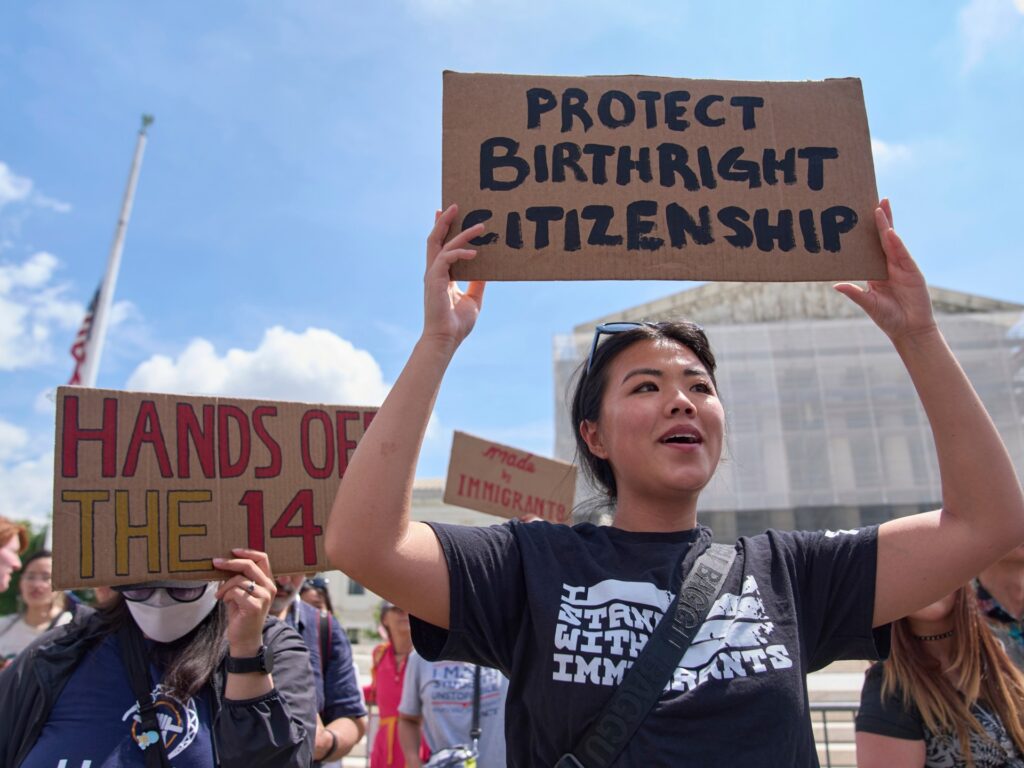
In a bold and controversial move, former US President Donald Trump has signed new executive orders with the aim of curbing birthright citizenship in the United States. This latest effort by Trump follows the Supreme Court’s rejection of his previous push to reinterpret the constitutional guarantee of birthright citizenship, a provision enshrined in the 14th Amendment.
Birthright citizenship has long been a contentious issue in American politics, particularly among conservative policymakers who argue that the policy incentivizes illegal immigration. Trump has been a vocal critic, asserting that the interpretation of the 14th Amendment allowing anyone born on US soil—regardless of parental citizenship status—to claim citizenship has led to exploitation of the system.
The Supreme Court recently ruled against efforts to modify this interpretation, affirming the traditional understanding that birthright citizenship remains a constitutional right. Undeterred, Trump’s new executive orders seek to impose limits on this principle through administrative measures rather than legal reinterpretation.
The orders propose stricter guidelines for granting citizenship to children born to non-citizens in the US, potentially requiring proof of parental legal status or other documentation. Supporters argue that these measures will strengthen immigration enforcement and address loopholes in the current system.
Critics, however, contend that the executive orders overstep presidential authority and undermine fundamental constitutional rights. Legal experts warn that such actions could lead to prolonged court battles and further politicize immigration policy.
The move has reignited debates about the scope and limits of executive power in shaping immigration laws. While Congress holds the power to amend laws, presidents have sometimes used executive orders to advance policy goals in the absence of legislative action.
Advocates for immigrant rights caution that restricting birthright citizenship could create a class of stateless individuals, complicating social services, education, and legal protections for affected children.
The Trump administration’s initiative reflects ongoing tensions in US immigration policy, balancing national security concerns, economic considerations, and humanitarian obligations.
As the nation watches closely, stakeholders from various sectors—including civil rights groups, legal scholars, and political leaders—are weighing in on the implications of these executive orders.
The ultimate impact of Trump’s directives remains uncertain as legal challenges are anticipated, and the broader conversation about immigration and citizenship continues to evolve in the American political landscape.