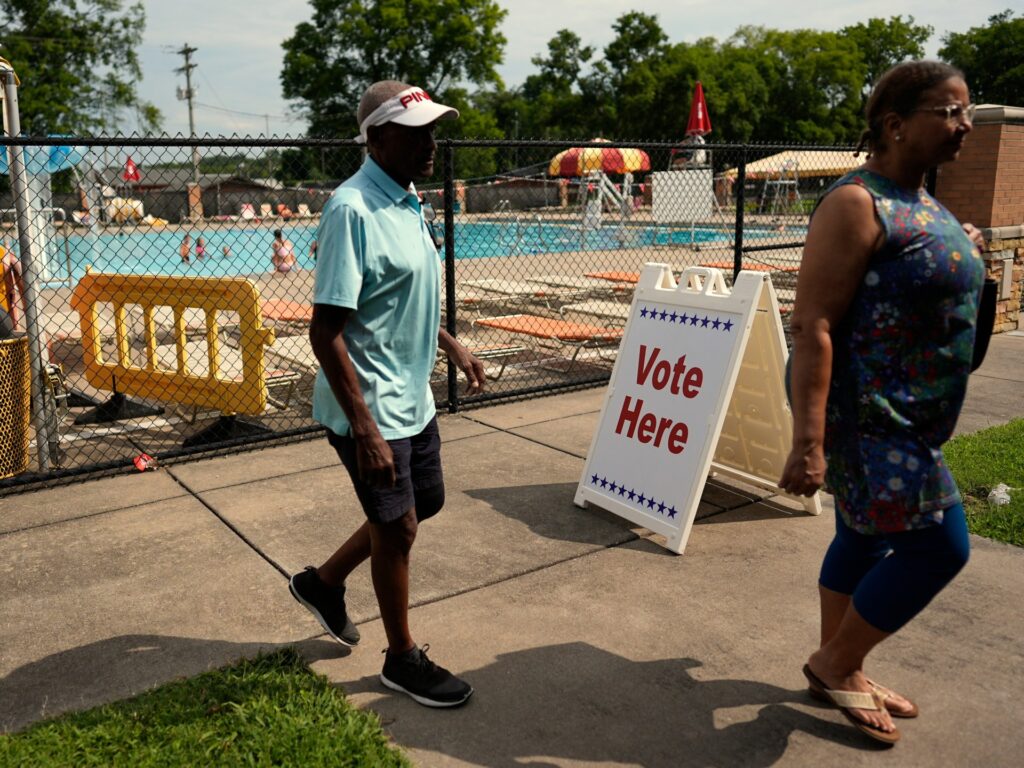
This week marks a significant moment in the US political landscape with primary elections taking place in Tennessee and Hawaii, states that highlight intriguing electoral dynamics ahead of the general election.
In Tennessee, the Republican Party is strategically positioned to potentially achieve a congressional sweep. This confidence arises from recent redistricting changes where only the Democratic-dominated district was redrawn. This redrawing has shifted the electoral map, favoring Republican candidates by consolidating their influence across other districts. The redistricting has been a critical factor, reshaping political boundaries and impacting voter demographics, thereby influencing primary outcomes.
The GOP’s ambition to secure all congressional seats is fueled by both the national party’s momentum and local electoral strategies. Republican candidates are campaigning vigorously, capitalizing on unified support within their party, and appealing to broader conservative voters motivated by recent political developments. Observers suggest that these primaries could set the tone for the upcoming midterm elections, reflecting broader national trends.
Meanwhile, in Hawaii, the primary elections present a contrasting scenario. Known for its Democratic leanings, Hawaii’s electoral dynamics focus predominantly on intra-party contests within the Democratic Party. Candidates are striving to distinguish themselves on local issues such as environmental policies, indigenous rights, and economic development that resonate strongly with Hawaiian constituents.
Both states’ elections underscore the diversity of the American political process. Tennessee’s Republican sweep potential portrays a competitive and shifting political environment, while Hawaii’s Democratic primary highlights localized electoral engagement under a dominant-party system. Voter turnout and candidates’ appeal to emerging social and economic concerns will be pivotal in shaping final outcomes.
These primaries also offer insights into how redistricting and local issues impact electoral strategies and voter behavior differently across the country. For political analysts and voters alike, this week’s elections serve as a crucial barometer for understanding evolving partisan landscapes and voter priorities ahead of the national elections.
Overall, as voting concludes, the results from Tennessee and Hawaii will provide critical indicators of party strength, candidate viability, and the effectiveness of campaign strategies that could influence US politics in the near future.