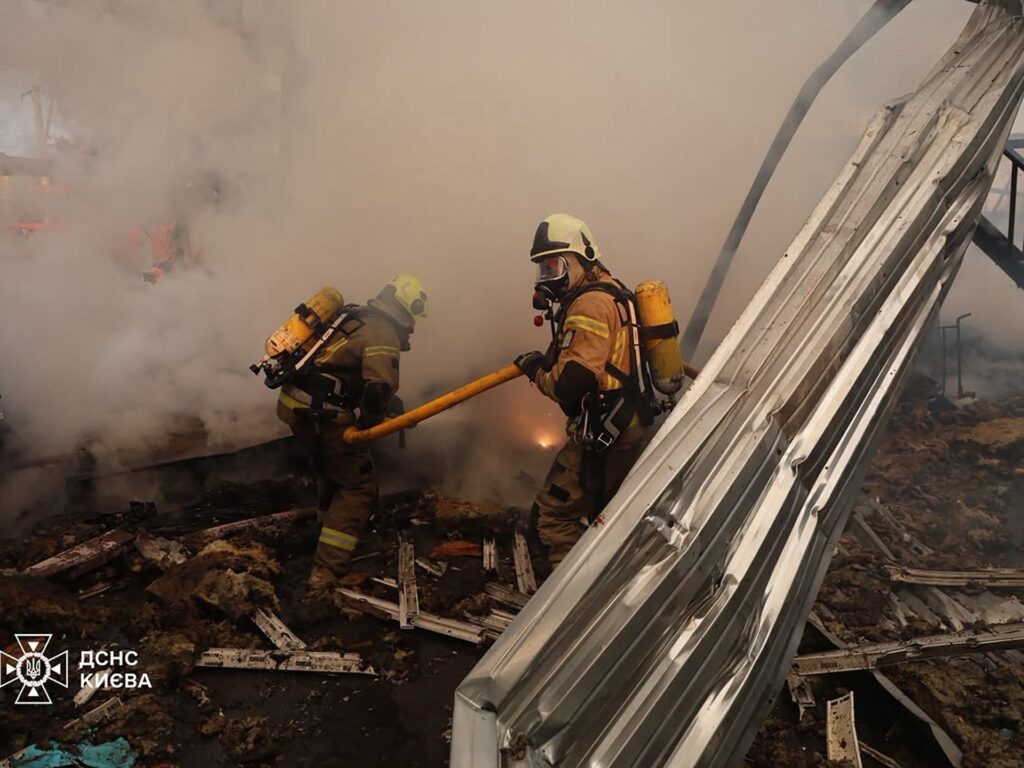
In a recent escalation during one of the deadliest months of the ongoing conflict, Russian forces launched a devastating missile attack on Kyiv, Ukraine’s capital. The offensive involved the use of ballistic missiles coupled with an unprecedented deployment of 121 drones, marking a significant intensification of hostilities.
The missile strikes and drone barrage have resulted in at least 11 people wounded, highlighting the human cost of the continuing violence. The attacks targeted various strategic locations across Kyiv, aiming to disrupt the city’s stability and infrastructure.
Officials reported that the coordinated assault was among the largest seen in recent weeks, demonstrating a shift towards more aggressive tactics by Russian military forces. The use of ballistic missiles, which can travel long distances and cause substantial destruction, combined with the swarm tactic of deploying numerous drones, represents a formidable challenge to Ukraine’s air defense systems.
Despite the damage and casualties, Ukrainian authorities have emphasized their resilience and determination to defend the capital. Emergency services responded swiftly to aid the injured and secure affected areas, minimizing further harm to civilians.
The attacks come during a period of heightened conflict intensity, as both sides have endured significant losses and continue to engage in fierce battles. International observers have expressed concern over the rising civilian toll and the potential for escalation into wider hostilities.
Kyiv, the political and cultural heart of Ukraine, has been targeted multiple times since the conflict began. Each assault not only endangers lives but also undermines efforts towards peace and stability in the region.
In response to the attacks, global leaders have condemned the aggression and called for immediate ceasefire negotiations. Humanitarian organizations are mobilizing to provide assistance to those affected, underscoring the urgent need for a resolution to the violence.
As the conflict continues, the situation remains volatile with the potential for further attacks posing a serious risk to civilians and infrastructure. The international community watches closely, hoping for de-escalation but preparing for all possible outcomes.
This latest attack in Kyiv is a stark reminder of the fragile security situation and the profound impact of sustained military operations on urban populations. Efforts toward diplomatic solutions remain critical to prevent more bloodshed and rebuild the war-torn regions.
The resilience of Kyiv’s residents amid these attacks reflects the broader determination of the Ukrainian people to withstand aggression. However, the urgent need for international support and peace negotiations is more apparent than ever to safeguard the future of Ukraine and its citizens.