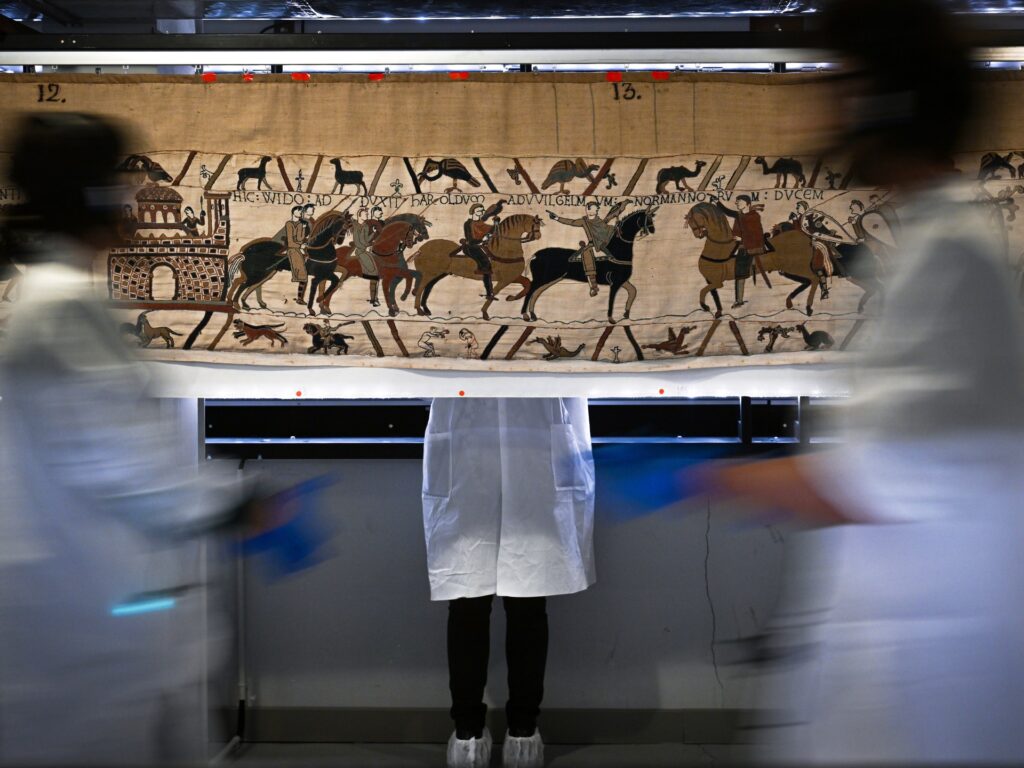
The Bayeux Tapestry, a masterpiece of medieval embroidery and an invaluable historical artifact, has been smuggled into Britain for its first visit in over 1,000 years. This extraordinary event marks a significant moment in the cultural and diplomatic relationships between France and Britain, especially at a time when political ties are undergoing transformation post-Brexit.
The tapestry, which depicts the events leading up to the Norman conquest of England in 1066, has traditionally been held in Bayeux, France. Its journey to London has been shrouded in secrecy, given the tapestry’s delicate condition and immense cultural importance.
Experts and historians see the loan of the tapestry as a potent symbol of reconciliation and cooperation between the two nations. As Britain seeks to rebuild and redefine its international relationships after Brexit, this generous act by France illustrates a willingness to bolster cultural exchange and mutual respect.
The exhibition in London will showcase the tapestry alongside newly discovered scholarly interpretations and advanced visual aids to enhance public understanding of the historic narrative and detailed artistry. It provides a rare opportunity for the British public to view one of the most important artifacts related to their own heritage without crossing the English Channel.
Security measures have been heightened to protect the tapestry, considering its value and the sensitive nature of its transport. Specialists have been involved in discreetly moving the artifact under strict conditions to prevent any potential damage.
The tapestry itself is nearly 70 meters long and intricately narrates the story of William the Conqueror’s invasion of England. It’s significant not only as an artistic treasure but also as a crucial document chronicling the political and military upheaval of the 11th century.
Cultural ministers from both countries have expressed optimism that the tapestry’s visit will deepen cultural ties and promote greater understanding. They hope it will pave the way for further cooperative projects and lend a positive momentum to the diplomatic relationship.
Public exhibitions will also feature educational programs, workshops, and seminars aimed at students and researchers in medieval studies, art history, and international relations, illustrating the tapestry’s relevance beyond mere visual magnificence.
Historically, the Bayeux Tapestry has stood as a testament to a shared history fraught with conflict yet bound by rich cultural ties. Its presence in Britain after a millennium serves as a reminder that art and heritage can bridge gaps that politics sometimes deepen.
This unprecedented loan arrives at an opportune moment, as cultural diplomacy becomes an increasingly important tool in healing political rifts and fostering unity. It reflects a commitment to collaborative heritage preservation and cross-channel friendship.
Visitors to the exhibition will have the chance to engage with an artifact that has silently witnessed centuries of history. Its threads weave stories not only of conquest but also of resilience, identity, and transformation.
The Bayeux Tapestry’s journey across the English Channel is thus more than just a logistical and artistic feat—it is a powerful gesture of goodwill and a testament to the enduring power of shared history to inspire and connect continents and peoples.