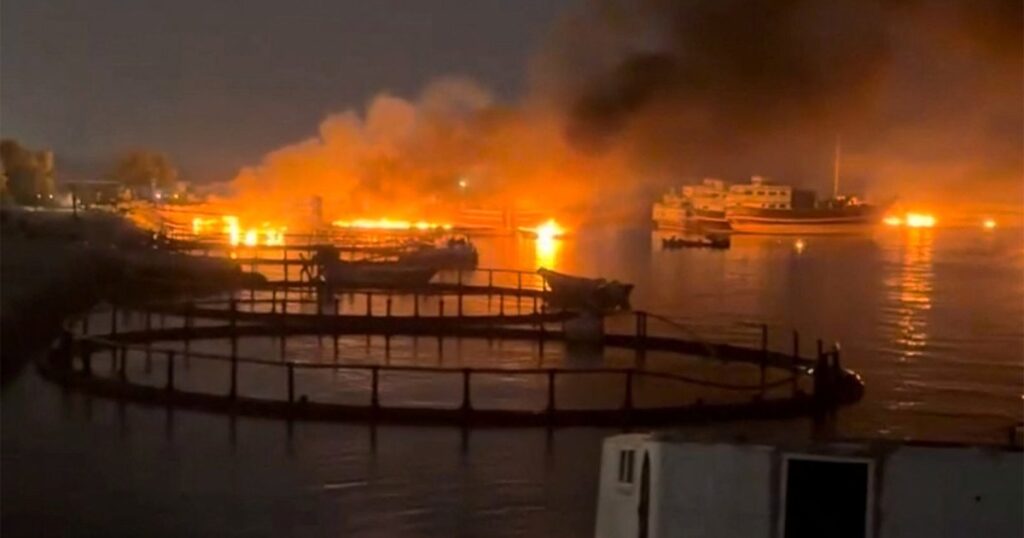
In a significant escalation of tensions in the Middle East, Tehran has reportedly launched attacks on Bahrain, Kuwait, and Qatar in retaliation for recent US military actions. The Iranian government has confirmed that US attacks over the past two days have resulted in at least 14 fatalities and 78 injuries, further exacerbating the volatile regional situation.
The deadly US raids targeted key locations believed to be associated with Iranian-backed militias and strategic interests, aiming to weaken Tehran’s influence in the area. The strikes were met with strong condemnation from Iranian officials, who have vowed to respond decisively to protect their sovereignty and regional allies.
Following these statements, Iranian forces reportedly initiated missile and drone attacks against military and strategic facilities in Bahrain, Kuwait, and Qatar, all of which host significant US military presence. These Gulf states have historically been part of a fragile geopolitical balance, and the recent events threaten to destabilize the region further.
The conflict highlights the complex and ongoing struggle for influence between the US and Iran in the Middle East. Analysts warn that the recent escalation could trigger a wider conflict, drawing in multiple actors and potentially disrupting global energy supplies given the strategic importance of the Persian Gulf.
International calls for de-escalation and diplomatic engagement have increased as the possibility of a broader war looms. The United Nations and key global powers are reportedly urging both sides to exercise restraint and return to dialogue.
The humanitarian impact of the conflict is also becoming apparent, with civilians in the affected countries facing uncertainties, casualties, and potential displacement amid the hostilities. Medical facilities report an increased number of wounded, stretching the capacities of local healthcare systems.
Experts underscore the need for concerted international efforts to mediate peace and prevent further deterioration. The situation remains fluid, and developments are being closely monitored by governments and organizations worldwide.
As this conflict unfolds, its implications on regional security, international relations, and global economic stability remain profound. The coming days will be critical in determining whether diplomatic avenues can be pursued to halt the escalation or if the region will face an intensified military confrontation.