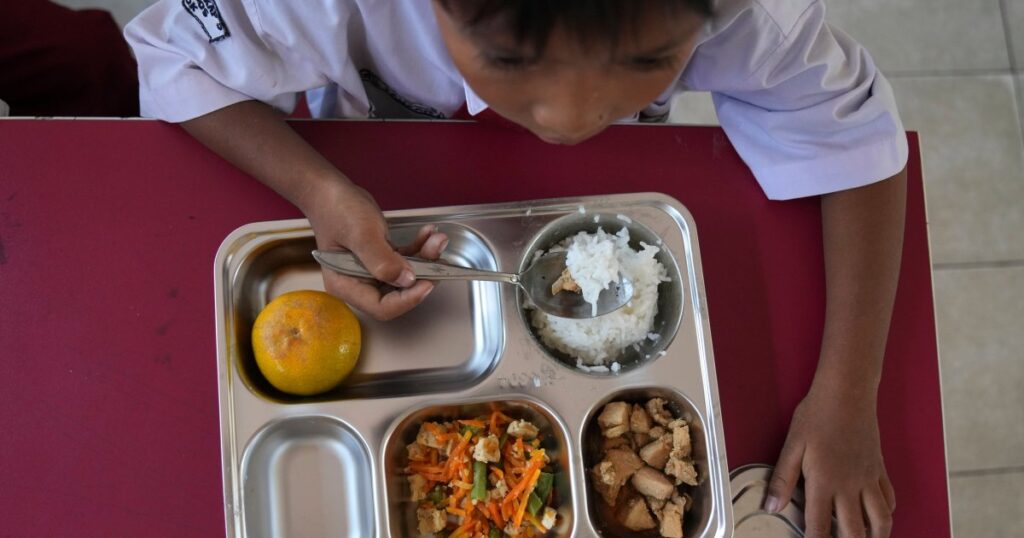
Indonesia’s ambitious free meals programme, initiated by President Prabowo Subianto, has come under fire amid allegations of corruption and inefficient use of resources. Despite the government’s intent to provide free meals to underprivileged communities, critics argue that the programme disproportionately benefits affluent regions, raising serious concerns about the equitable distribution of aid.
The free meals initiative was designed to address food insecurity and malnutrition among Indonesia’s vulnerable populations, particularly in impoverished and rural areas. However, investigative reports and watchdog groups indicate that substantial portions of the resources allocated to the programme have been diverted or misused, undermining its primary objectives.
One of the main points of contention is the apparent misdirection of funds and food supplies towards wealthier areas, where the demand for such assistance is comparatively low. This has not only limited the reach of the programme to those who need it most but also prompted accusations of favoritism and inefficiency within the government.
Corruption allegations include inflated contracts for food procurement, kickbacks, and involvement of local officials who may have exploited the programme for personal gain. Such practices have raised doubts about the transparency and accountability mechanisms within the programme’s management structure.
Public dissatisfaction has grown, fueled by reports of meals being delivered late, of poor quality, or not reaching intended recipients at all. Community leaders and advocacy groups have called for more rigorous monitoring, better targeting strategies, and increased involvement of independent bodies to ensure the programme’s integrity.
President Prabowo Subianto has acknowledged the challenges and pledged to enhance oversight and reform processes to correct these deficiencies. The government is reportedly undertaking audits and revising protocols to tighten control over procurement and distribution channels.
Experts emphasize the critical role of social assistance programmes like Indonesia’s free meals scheme in reducing poverty and improving public health. Yet, they stress that without solid governance and transparent execution, such efforts risk deepening inequality and breeding public mistrust.
The controversy surrounding the free meals initiative highlights broader issues in Indonesia’s social welfare administration, including the need for systemic reforms to prevent corruption and ensure that aid genuinely reaches marginalized populations.
As the government works to salvage the programme, stakeholders urge the adoption of technology-driven solutions, community engagement, and improved accountability to restore faith in social support initiatives.
The free meals programme’s future depends on decisive action to address current shortcomings and a renewed commitment to equitable and effective public service delivery. The outcome will be a test of Indonesia’s ability to balance ambitious social goals with the realities of governance challenges.