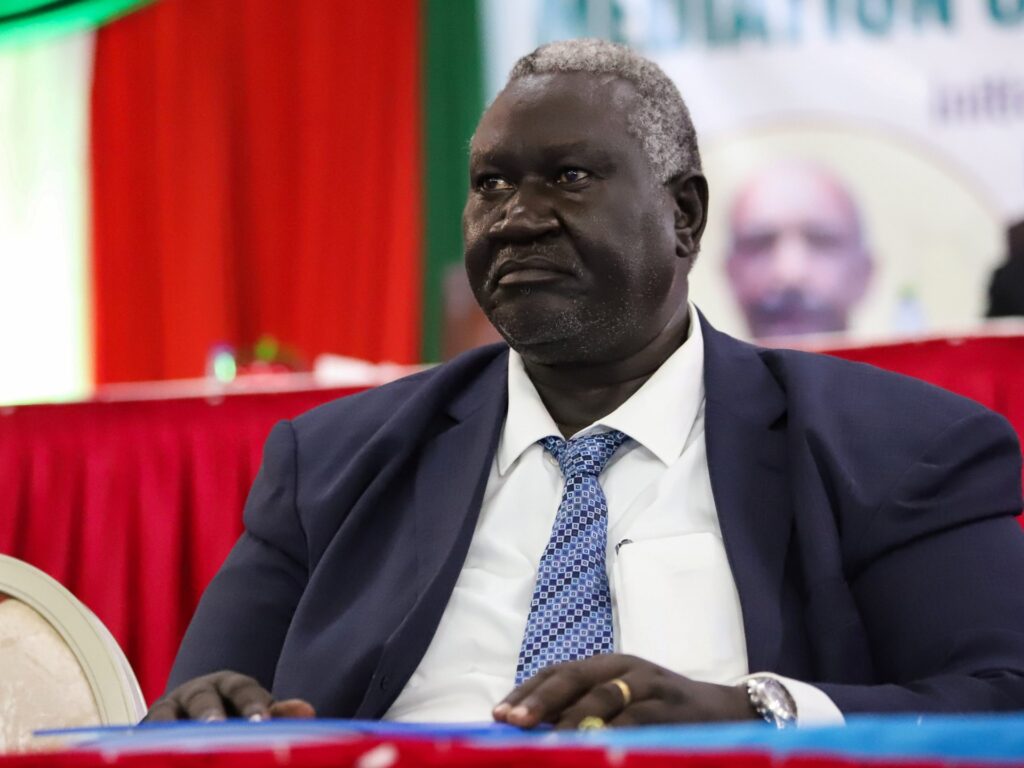
Malik Agar Ayyir, a former rebel leader turned government ally, has taken a significant step towards peace in Sudan by proposing a comprehensive national dialogue. This initiative aims to address the ongoing civil war that has plagued the country and work towards a sustainable democratic civilian government.
Sudan has been embroiled in civil conflict for years, with various factions fighting for control and influence, leading to widespread instability and suffering among the civilian population. Malik Agar, leveraging his unique position as both a former rebel and now a government supporter, has called for an inclusive dialogue that brings together all stakeholders in the country.
According to Agar, the civil war cannot be resolved through military means alone. He believes that a national dialogue, encompassing different ethnic groups, political factions, and civil society representatives, is essential to create a unified vision for Sudan’s future. This process is intended to foster reconciliation and trust among parties with historically opposing views.
The proposal outlines key objectives such as ending hostilities, establishing a clear roadmap for democratic elections, and forming transitional institutions tasked with overseeing the peace process. Agar emphasizes the importance of civilian leadership in this transition, recognizing the need to move away from military dominance in politics.
Agar’s call for dialogue has received cautious optimism from international observers and humanitarian organizations, who stress the urgency of peace for the millions affected by the conflict. They support efforts that prioritize dialogue and reconciliation as opposed to prolonged violence.
The former rebel’s journey from armed resistance to political engagement demonstrates a broader trend in Sudanese politics, where former combatants seek peaceful solutions to longstanding grievances. Agar’s initiative could serve as a blueprint for resolving not only the ongoing civil war but also other conflicts within Sudan.
However, challenges remain. Deep mistrust between rival factions and the complexity of Sudan’s socio-political landscape could hinder the dialogue process. It will require sustained commitment from all parties, as well as support from regional and international stakeholders.
Experts advise that for the dialogue to succeed, it must be inclusive and transparent, allowing marginalized groups to voice their concerns and participate meaningfully. Additionally, mechanisms for implementing agreements and monitoring progress will be crucial.
Malik Agar’s proposal marks a hopeful moment for Sudan, signaling a potential shift from conflict to cooperation. If embraced, this national dialogue could pave the way for lasting peace and democratic governance, transforming the lives of millions and stabilizing the region.
The international community has expressed willingness to facilitate and support such initiatives, underscoring the global interest in Sudan’s stability. Aid agencies and peacekeeping operations are prepared to back the transition, provided that all Sudanese parties commit to peaceful resolution.
As Sudan stands at this crossroads, the success of Malik Agar’s vision will largely depend on the ability of its people and leaders to come together and prioritize national unity over division. The road to peace is undoubtedly challenging, but with determined leadership and broad-based dialogue, there is hope for a better future for Sudan.