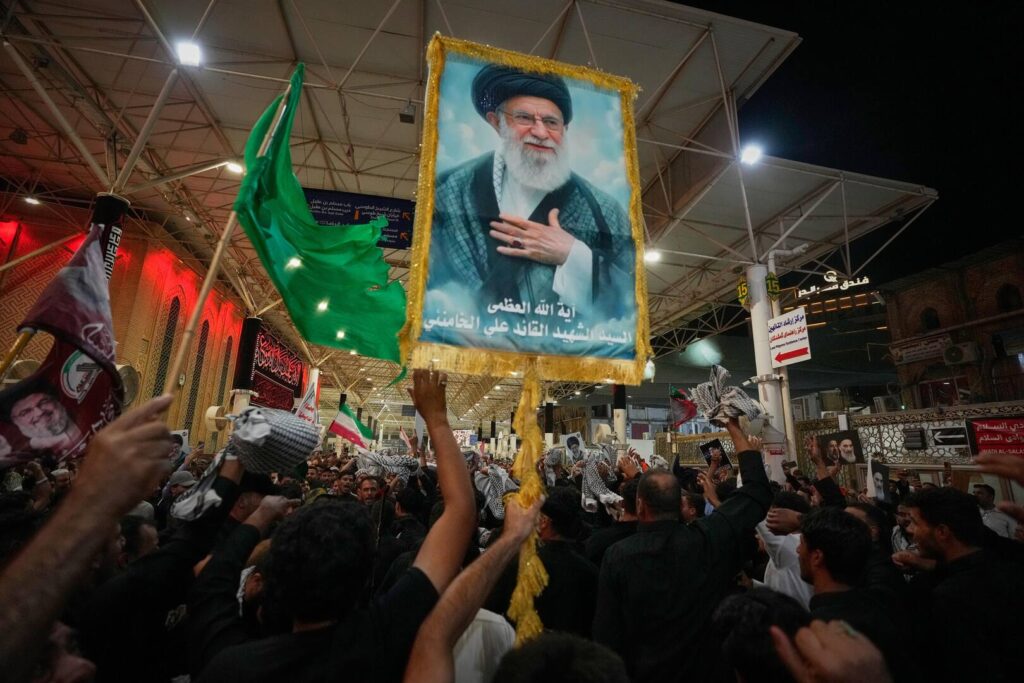
Mourners wave Shiite religious flags and carry a portrait of the late Iranian Supreme Leader Ayatollah Ali Khamenei outside the Imam Ali Shrine on the eve of funeral ceremonies in Najaf, Iraq, Tuesday, July 7, 2026. (AP Photo/Hadi Mizban)
In a significant and somber moment for Shia Islam, the coffin carrying Iran’s late Supreme Leader Ali Khamenei has arrived in Najaf, one of the holiest cities for Shia Muslims. This event is unfolding at a time when the region is witnessing heightened tensions, particularly with the United States carrying out strikes that have targeted Iranian interests.
Najaf, revered for its religious significance and as the burial place of Imam Ali, the first Shia Imam, holds a pivotal place for millions of Shia followers worldwide. The arrival of Khamenei’s coffin here underscores the deep religious and cultural ties that transcend national borders within the Shia community.
Ali Khamenei, who served as Iran’s Supreme Leader for several decades, was a towering figure in Iranian politics and Shia religious leadership. His death signals a potential shift in Iran’s future political landscape amid ongoing regional instability.
Concurrent with the coffin’s arrival, the United States has intensified its military actions in the region. Recent strikes purportedly aimed at curbing Iranian influence have escalated fears of broader conflict between the US and Iran, potentially drawing in other regional and global powers.
These US strikes have hit various locations associated with Iranian proxy groups, demonstrating Washington’s commitment to counter Iran’s strategic reach in the Middle East. The timing of these strikes, coinciding with the funeral proceedings in Najaf, highlights the complex interplay of religion, politics, and military strategy currently shaping the region.
The funeral procession in Najaf has attracted significant attention, with large gatherings of mourners and religious clerics paying their respects. This event not only marks a moment of mourning but also a demonstration of Shia solidarity in the face of external pressures.
Iran’s leadership transition following Khamenei’s death is closely watched by both allies and adversaries. The new leadership will have to navigate internal challenges, including economic issues and external pressures from Western sanctions and military threats.
Analysts suggest that the confluence of Khamenei’s funeral and escalating US strikes may lead to increased volatility in the Middle East. The potential for protests, retaliations, or even armed clashes remains high as different factions react to these unfolding events.
In summary, the arrival of Ali Khamenei’s coffin in Najaf amidst ongoing US military strikes underscores a period of uncertainty and potential upheaval in the Middle East. The interplay of religious symbolism and geopolitical conflict highlights the intricate dynamics at play as the region stands at a crossroads.