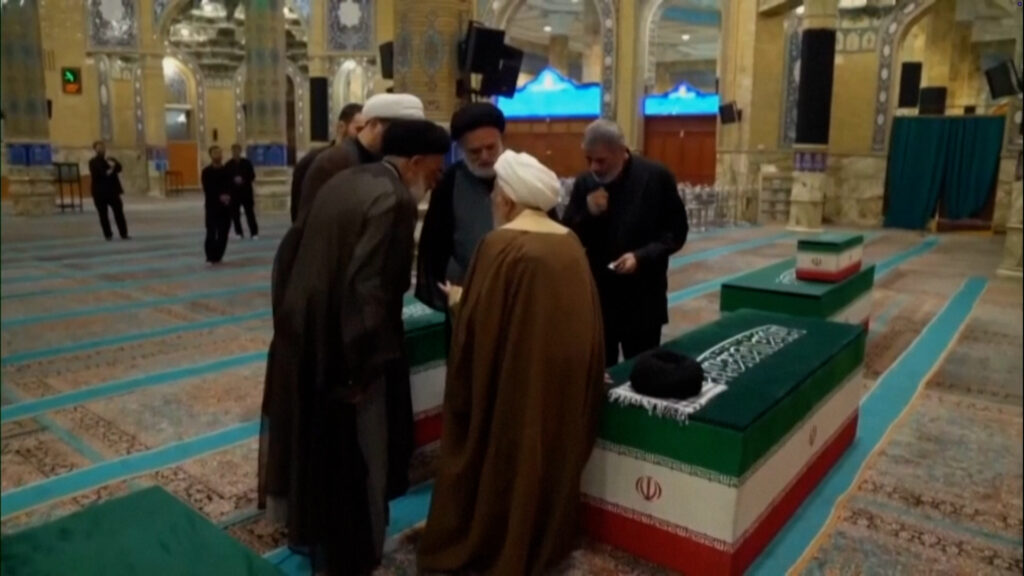
In a historic and somber event, the coffin of Iran’s late Supreme Leader Ali Khamenei has arrived in the holy city of Qom, drawing tens of thousands of mourners from across the nation. Qom, known as a spiritual center for Shiite Muslims in Iran, was transformed into a massive gathering ground as people congregated to pay their respects to a leader who shaped much of Iran’s recent history.
The atmosphere in Qom was filled with grief and reverence, with mourners chanting slogans and waving flags, expressing their sorrow and solidarity. The funeral service was marked by several religious and political dignitaries who delivered eulogies reflecting on Khamenei’s influential role in the Islamic Republic of Iran.
Ali Khamenei, who served as the Supreme Leader for decades, had a profound impact on Iran’s domestic policies and foreign affairs. His leadership was characterized by a staunch resistance to Western influence and a firm adherence to the principles of the Islamic Revolution.
The funeral procession witnessed an enormous turnout, showcasing the deep-rooted loyalty and respect he commanded among a significant segment of the population. Pilgrims and citizens alike traveled from distant provinces to be part of this historic event, highlighting Khamenei’s stature within the religious and political fabric of Iran.
The ceremony in Qom featured traditional Shiite funeral rites, with prayers and recitations from the Quran, creating a deeply spiritual ambiance. Clerics emphasized Khamenei’s legacy, portraying him as a guardian of Islamic values and a symbol of resistance.
Officials have announced a series of mourning events across Iran in the upcoming days, reflecting the significance of Khamenei’s passing. The government has also declared a period of national mourning, underscoring the magnitude of the loss felt by the country.
While the nation mourns, discussions have begun regarding the future leadership of Iran. The Assembly of Experts, responsible for selecting the next Supreme Leader, is expected to convene soon, intensifying political interest and speculation.
The arrival of Khamenei’s coffin in Qom serves not only as a moment of collective mourning but also as a critical juncture in Iranian politics and society. It marks the end of an era while opening a new chapter in the country’s complex political landscape.
Amidst the grief, many mourners expressed hope for continuity of Khamenei’s vision and for stability in a region marked by turmoil and uncertainty. The city of Qom, bathed in an atmosphere of solemn devotion, stood as a testament to the lasting imprint of a leader whose influence transcended his lifetime.
The funeral gatherings in Qom not only commemorate Khamenei’s life and leadership but also highlight the profound connection between religion, politics, and identity in the Islamic Republic of Iran. As the nation navigates this pivotal moment, the memory of Ali Khamenei continues to shape the discourse and direction of the country’s future.