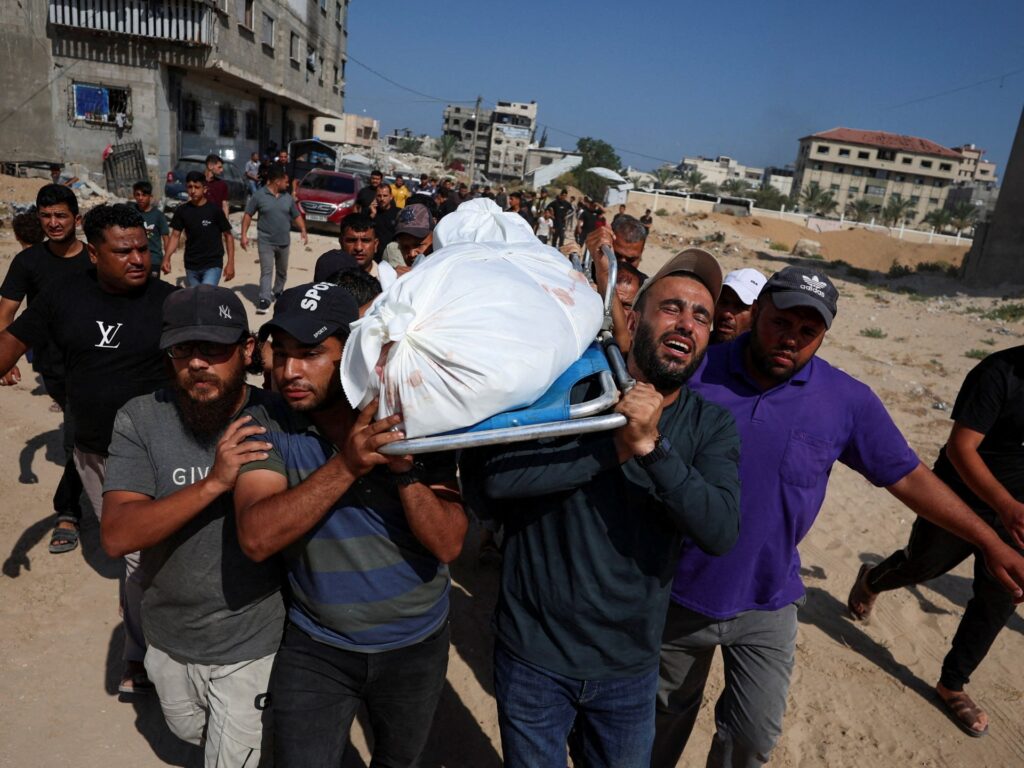
In a significant development in the ongoing Middle Eastern dynamics, the body of Iran’s Supreme Leader Ayatollah Ali Khamenei has arrived in the holy city of Qom. This event marks a crucial moment for Iran, as Qom is a central hub for Shia religious scholarship and political conservatism. The arrival is likely part of the ceremonial preparations preceding his burial, underscoring his importance to Iran’s leadership and its religious establishment.
Parallelly, a key political shift has taken place in Gaza, where Hamas, the Islamist political and militant group that has controlled the Gaza Strip since 2007, has announced the dissolution of its governing body. This unprecedented move opens the door for a technocratic committee to oversee the administration of Gaza, signaling a potential recalibration of governance amid ongoing conflicts in the region.
Hamas’ decision to dissolve its governing committee suggests increasing internal and external pressures. The technocratic administration may aim to stabilize governance and provide a more pragmatic approach to address the dire humanitarian and political issues facing Gaza. This change could pave the way for new governance focused on effective management and potentially improved relationships with external actors.
The background to these events is rooted deeply in the ongoing conflict involving Israel, Gaza, and the broader Middle Eastern political landscape. Hamas, as a militant and political entity, has wielded power in Gaza for over a decade, combining governance with military resistance against Israel. The changeover to a technocratic committee could indicate a significant shift in strategy by Hamas or a response to pressures from within Gaza or the international community.
Iran’s role in the region remains pivotal. The death and funeral of Supreme Leader Khamenei is a moment of reflection and transition in Tehran. His leadership style and policies have had a profound impact on Iran’s foreign policy and its support for groups like Hamas and Hezbollah across the Middle East. The arrival of his body in Qom for burial rituals is not only a religious act but may also signal upcoming political shifts within Iran’s clerical hierarchy.
The interplay between these two events highlights the volatile and complex nature of Middle Eastern politics. The changes in Gaza’s governance structure amid Iran’s leadership transition could influence regional alliances, the balance of power, and the ongoing conflicts that continue to affect millions of people.
Analysts suggest that the technocratic governance in Gaza might focus more on administration, infrastructure, and humanitarian needs, reflecting the urgent needs triggered by repeated conflicts and economic blockades. This might also affect how Gaza interacts with international aid agencies and neighboring states.
Meanwhile, in Iran, the mourning period and subsequent political developments following Khamenei’s death are intensively watched by global powers. The leadership succession could alter Iran’s domestic and foreign policy trajectory, particularly towards Israel, Syria, Lebanon, and the Palestinian territories.
Overall, the arrival of Khamenei’s body in Qom and the ceding of Gaza’s governance by Hamas mark a momentous period of transition. These events may reshape the political landscape of the Middle East, affecting peace prospects, security arrangements, and humanitarian conditions across the region.