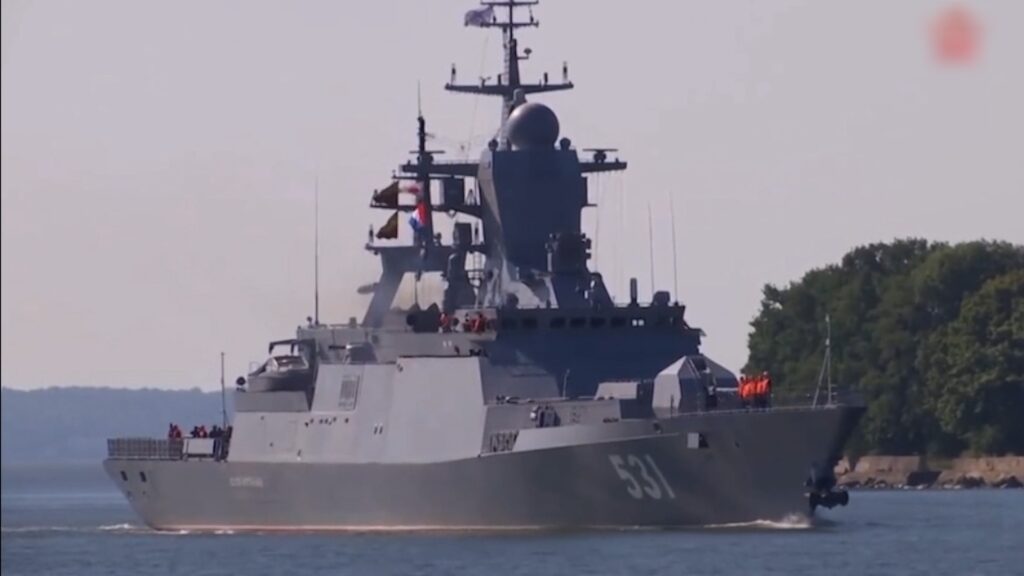
In a move that underscores the growing geopolitical complexities in West Africa, the Russian navy is transporting a shipment of weapons to Mali to assist the government in fending off an escalating rebel siege. This development marks a significant escalation in Russia’s involvement in the region and highlights the ongoing conflict that threatens Mali’s stability.
Mali, a landlocked country in West Africa, has been grappling with internal strife fueled by various armed rebel groups for years. These groups, often linked to ethnic tensions and political unrest, have challenged the authority of the central government, leading to frequent clashes and insecurity.
The rebel advance, which prompted this shipment of arms, has been reported as one of the most severe threats to the Malian government’s control in recent times. The rebels have been encircling key towns and strategic locations, aiming to destabilize the government and assert control over significant territories.
Russia’s decision to send military aid comes weeks after heightened calls for international support from the Malian government, which has struggled to maintain order amid insurgency and terrorism threats. The delivery by the Russian navy signifies a strategic partnership and an expansion of Russian influence in the Sahel region, which has traditionally seen French and Western involvement.
This shipment includes a variety of arms and ammunition designed to bolster the Malian military’s defensive and offensive capabilities. Military experts note that this infusion of weapons could temporarily strengthen Mali’s ability to resist rebel incursions and protect civilian populations caught in conflict zones.
However, the move has raised concerns among international observers about the long-term implications for peace and security in Mali. The introduction of more weapons into an already volatile conflict zone could escalate violence and complicate diplomatic efforts aimed at achieving a political resolution.
Analysts point out that Russia’s growing role aligns with its broader strategy to increase influence in Africa through military and economic partnerships. This aligns with Russia’s desire to establish itself as a key power broker on the global stage, often positioning itself as an alternative to Western diplomatic and military support.
The Malian government has welcomed the assistance, stating that it is crucial for preserving national sovereignty and protecting its people from rebel aggression. Government officials emphasize their commitment to combating terrorism and restoring peace throughout the country.
Meanwhile, rebel factions have condemned the arms shipment, warning that it signals an escalation that could lead to prolonged conflict. Some groups have expressed willingness to negotiate, but only under conditions that exclude foreign military involvement.
International bodies including the United Nations and the African Union have called for restraint and encouraged dialogue to resolve the crisis. They caution that military solutions alone cannot address the underlying political and social issues driving the conflict.
The situation in Mali remains fluid, with both government forces and rebel groups preparing for potentially intensified clashes. The arrival of Russian weapons is likely to shift the balance on the battlefield, but it also places additional pressure on diplomatic channels to seek a sustainable ceasefire and inclusive peace talks.
As Mali navigates this critical juncture, the international community watches closely, hoping for a peaceful resolution that ensures stability and development in the region. The involvement of Russia adds a new dimension to the complex dynamics, emphasizing the interconnectedness of local conflicts and global geopolitical agendas.