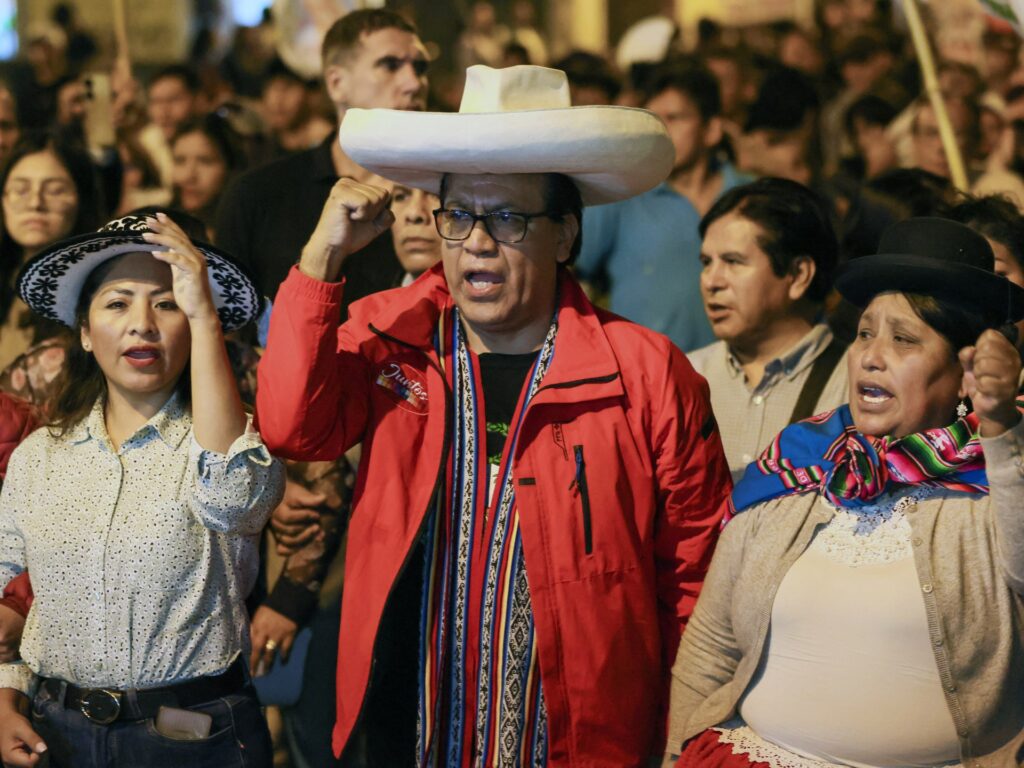
In a significant development in Peru’s political landscape, left-wing candidate Roberto Sanchez has officially conceded defeat in the recent presidential election to right-wing candidate Keiko Fujimori. This announcement follows the certification of the election results by Peru’s electoral agency, which declared Fujimori the winner in a closely contested and razor-thin race.
The concession by Sanchez marks the end of an intense electoral battle that held the nation’s attention for several weeks. The election was characterized by high voter turnout and widespread political engagement, reflecting Peru’s vibrant democratic process. Both candidates ran spirited campaigns that polarized the electorate along ideological lines, with Sanchez representing progressive, left-wing policies, while Fujimori advocated conservative, right-wing agendas.
The official certification by the electoral agency was a crucial step in confirming the legitimacy of the election results. The agency conducted thorough reviews and audits to ensure that the vote count was accurate and free from irregularities. The narrow margin of victory for Fujimori underscored the deeply divided nature of Peru’s electorate, illustrating the challenges the country faces in achieving political consensus.
Roberto Sanchez, acknowledging the official results, emphasized the importance of respecting democratic institutions and the will of the people. In his concession statement, he called for national unity and expressed hope that the incoming administration will address the pressing issues facing Peru, such as economic inequality, social justice, and sustainable development.
Keiko Fujimori’s victory represents a continuation of her family’s political legacy in Peru, as she is the daughter of former President Alberto Fujimori. Her ascendance to the presidency is likely to shape the country’s policies in the coming years, particularly in areas related to economic reform, security, and international relations.
The election’s outcome has elicited mixed reactions both domestically and internationally. Supporters of Sanchez have voiced concerns about potential policy shifts under a Fujimori administration, particularly regarding social programs and human rights. Conversely, Fujimori’s backers see her leadership as a pathway to stability and economic growth.
As Peru transitions to its new government, the focus will be on overcoming the political polarization that characterized the campaign. Analysts suggest that fostering dialogue between different political factions and addressing the root causes of societal divisions will be critical for the country’s future.
The international community has expressed interest in Peru’s peaceful transfer of power, highlighting it as an example of democratic resilience in a region often challenged by political turbulence. Observers note that the successful completion of the electoral process strengthens Peru’s standing as a democratic nation committed to upholding the rule of law.
In conclusion, Roberto Sanchez’s concession to Keiko Fujimori following the electoral agency’s certification signals a pivotal moment in Peru’s democracy. The coming months will be crucial as the nation navigates the complexities of political transition and strives to build a cohesive and prosperous future for all its citizens.