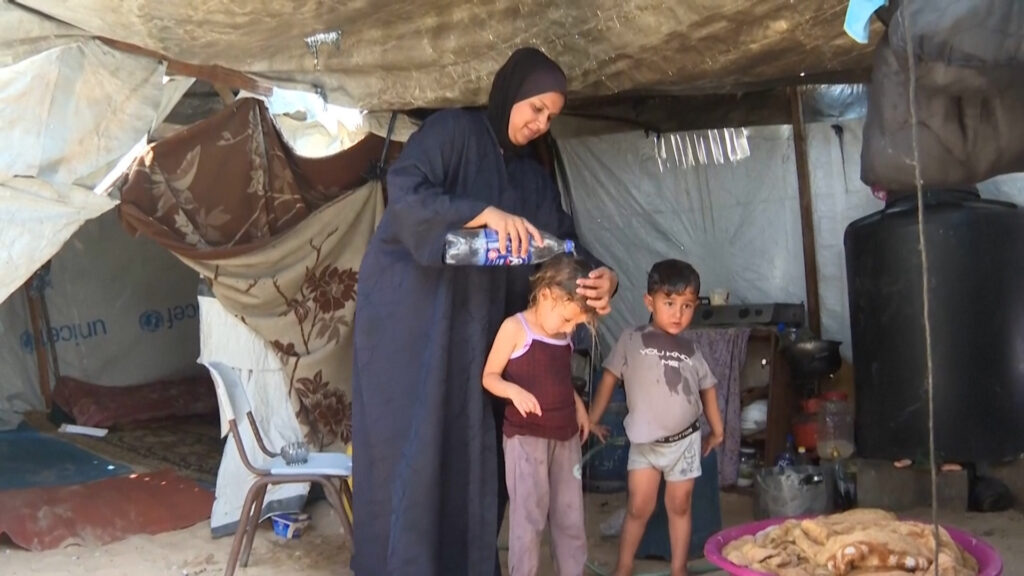
The displacement camps in Gaza are enduring an intensifying humanitarian crisis as scorching heat waves exacerbate the already dire living conditions of the residents. Gaza, a region plagued by conflict and restricted resources, is struggling to cope with the severe weather that magnifies the daily hardships faced by thousands of displaced families.
Temperatures have been soaring to unprecedented levels, creating an environment that is not only uncomfortable but also dangerous for vulnerable populations, especially children, the elderly, and those with pre-existing health conditions. Many displacement camps are makeshift settlements that lack adequate infrastructure, such as ventilation or cooling systems, making the heat unbearable.
The combination of overcrowding and limited access to clean water and electricity further compounds the suffering. In many camps, electricity is scarce or completely absent, leaving residents without fans or air conditioning during the peak heat hours. Water shortages are also critical, which hinders efforts to maintain hygiene and stay hydrated.
Health services in Gaza are stretched thin due to ongoing conflicts and resource constraints. The rising temperatures have led to an increase in heat-related illnesses, including dehydration, heat strokes, and exacerbation of chronic conditions. Medical facilities struggle to accommodate the surge of patients requiring urgent care.
Humanitarian organizations have raised alarms, calling for urgent international assistance to provide relief measures such as water supplies, medical aid, and means to mitigate the heat’s impact. Aid agencies emphasize the importance of establishing cooling centers and distributing supplies like fans and water bottles.
Residents express feelings of despair and fatigue, describing the relentless heat as a new layer of suffering piled onto the trauma of displacement and conflict. Many families have been forced to relocate multiple times, and the lack of stable shelter makes coping with extreme weather conditions even more challenging.
Efforts to improve the situation are hindered by ongoing political tensions and blockades that restrict the movement of goods and aid into the region. The blockade on Gaza limits fuel imports, affecting the operation of generators and water pumps that are essential for cooling and water supply.
Experts warn that without swift intervention, the situation could escalate into a severe humanitarian disaster. They urge international stakeholders to prioritize funding and logistical support to address the immediate heat crisis while also working on long-term solutions to improve living conditions in Gaza.
The scorching heat serves as a harsh reminder of the vulnerability of displaced populations in conflict zones. It underscores the urgent need for comprehensive humanitarian strategies that address both the immediate and systemic issues contributing to the suffering in Gaza’s displacement camps.