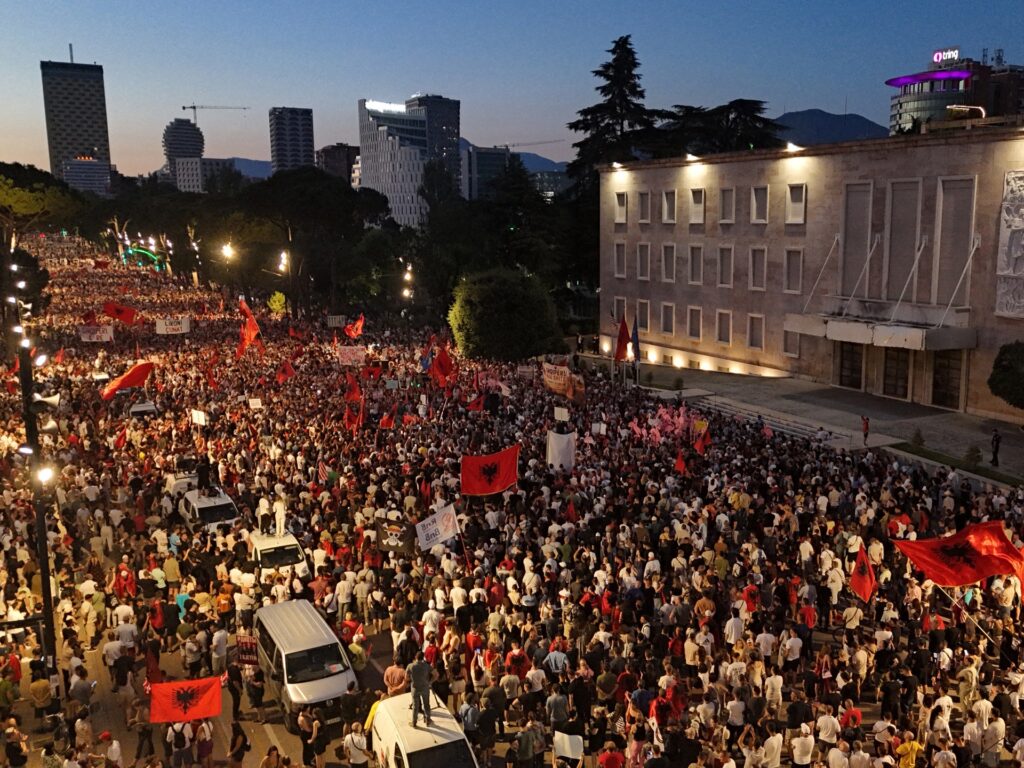
In a recent development in Albania, a group of protesters who rallied against a controversial resort project linked to Jared Kushner, son-in-law of former U.S. President Donald Trump, have been released by the courts. The resort, which has garnered significant attention and backlash, was seen by many as a symbol of corruption and government favoritism, sparking widespread anti-government demonstrations.
The protests erupted in response to plans for a large-scale resort development that authorities believe is connected to Kushner’s business interests. Critics argue that the project epitomizes opaque dealings between foreign investors and Albanian officials, raising concerns over environmental damage and the socio-economic impacts on local communities.
The court’s decision to free the protesters has been hailed as a positive step towards upholding civil liberties and the right to peaceful assembly in the country. It comes amid growing public frustration over perceived corruption and a lack of transparency in government dealings.
Activists and opposition groups had called for the release of those detained during the protests, emphasizing that the demonstrations were peaceful and a legitimate expression of dissent. The court ruling is also viewed as an attempt to ease tensions and prevent further unrest as the government faces mounting pressure to address public concerns.
The Kushner-linked resort project had been planned to boost tourism and economic growth in the region, but its association with political figures and allegations of unfair practices have overshadowed its potential benefits. Environmental groups have also voiced fears about the resort’s impact on the natural landscape and local biodiversity.
This case highlights the growing sensitivity around foreign investments in Albania, especially those involving politically connected individuals. It underscores the challenge the country faces in balancing economic development with the protection of democratic principles and environmental sustainability.
Albanian authorities have yet to clarify the future of the resort project following the protests and court ruling. Meanwhile, the released protesters continue to advocate for greater transparency and accountability from their government.
The situation remains fluid, but the court’s decision to free the protesters represents a notable moment in Albania’s ongoing struggle with governance, foreign investment, and citizen rights. It also sends a message about the power of collective action and the importance of judicial independence in maintaining democratic norms.