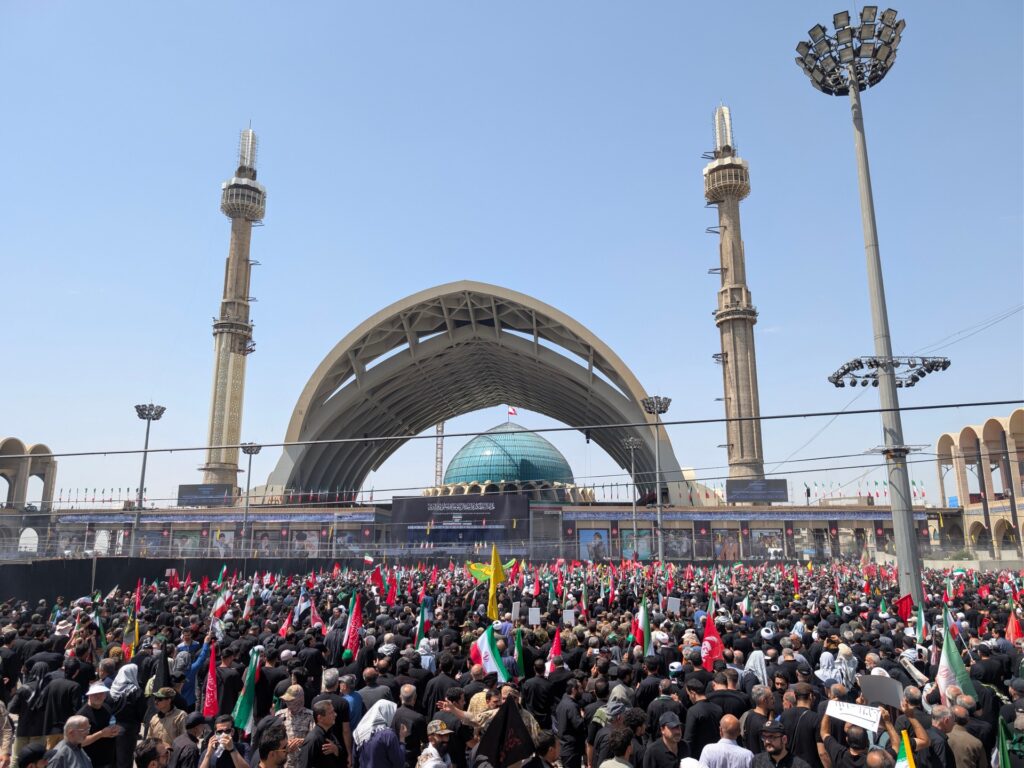
Iran is preparing for a significant commemoration event honoring the Supreme Leader Ali Khamenei, marked by messages emphasizing the themes of continuity and revenge. To facilitate widespread participation in the funeral procession and related ceremonies, the government has announced a nationwide shutdown on Sunday and Monday. This closure is intended to encourage more mourners to join the public expressions of grief and solidarity.
The commemoration serves as a potent reminder of Iran’s political and ideological stance, focusing on the persistence of its revolutionary spirit and the resolve to seek retribution against its adversaries. The event underscores the continued influence of Khamenei’s leadership on the nation’s policies and the collective sentiment among the Iranian people.
Shutting down the country for two full days underscores the importance attributed to this occasion by the Iranian authorities. Such measures are meant to allow citizens from all walks of life to participate in the ceremonies, which are expected to include large funeral processions, public gatherings, and official speeches reinforcing the government’s messaging.
The themes of continuity and revenge resonate deeply within the Iranian political narrative, where maintaining the legacy of the Islamic Revolution and responding decisively to perceived threats are central tenets. The funeral procession is not only a moment of mourning but also a demonstration of national unity and defiance.
By promoting these messages during the commemoration, Iran is signaling both to its domestic audience and the international community that the leadership’s death will not weaken the ideological resolve or disrupt the country’s strategic direction. Instead, it is portrayed as a catalyst for further strengthening and retaliation.
This event reflects broader geopolitical tensions in the region, where Iran’s leadership asserts its position amidst ongoing conflicts and pressures. The emphasis on revenge points to potential future actions in response to longstanding grievances, impacting regional security dynamics.
The nationwide shutdown and the anticipated large-scale participation indicate the state’s mobilization capacity and the importance of collective memory in shaping public sentiment. Such events serve as both political theater and a means of reinforcing the legitimacy of Iran’s ruling establishment.
In summary, the commemoration of Khamenei in Iran is a critical event marked by powerful symbolism of enduring leadership and promised retaliation. The two-day closure of the country aims to maximize engagement in mourning and demonstrate the nation’s unity in the face of loss and external challenges.