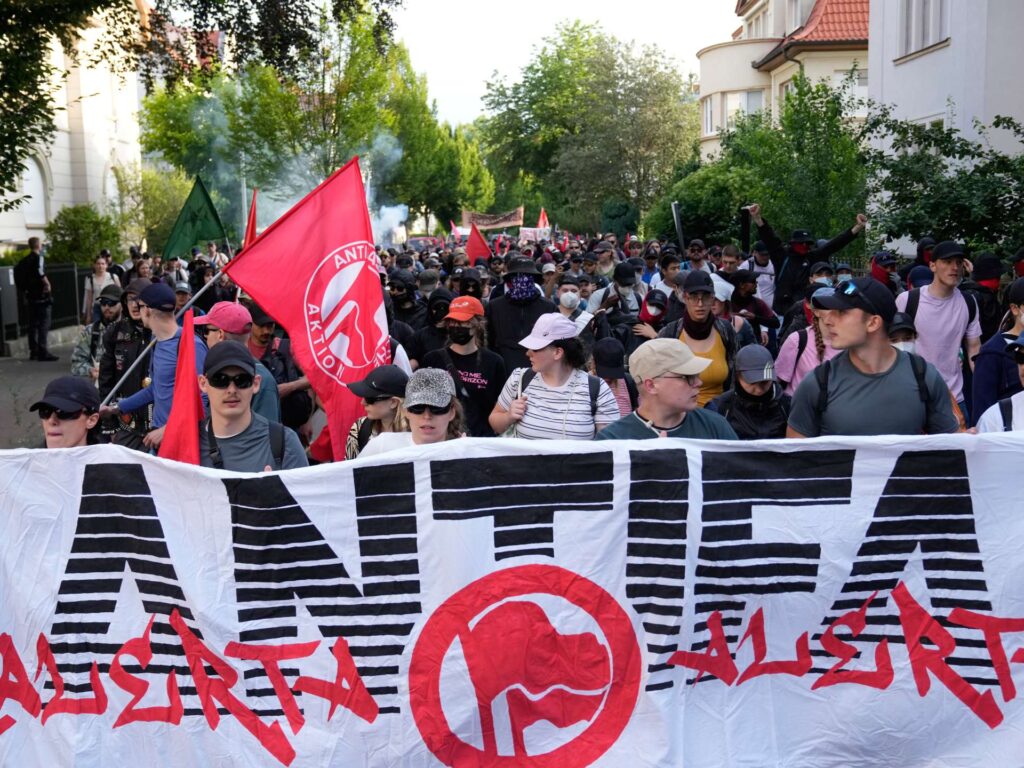
Thousands of protesters gathered in Erfurt, Germany, to take a stand against the far-right Alternative for Germany (AfD) party as it held its annual conference. The protest attracted a diverse coalition including members from trade unions, civil society groups, and left-wing political parties. Their primary goal was to disrupt the gathering and voice opposition to the AfD’s policies and ideology.
The AfD, known for its nationalist and anti-immigration stances, has been a polarizing force in German politics. Critics argue that the party fosters division and discrimination, particularly targeting immigrants and minority communities. The annual conference serves as a platform for the party to discuss their strategies and set priorities for the coming year.
Protesters organized rallies and demonstrations around the conference venue, carrying banners and chanting slogans demanding tolerance, diversity, and social justice. Union representatives spoke out against what they described as the AfD’s threat to workers’ rights and social cohesion.
Civil society activists emphasized the importance of standing up against extremism and protecting democratic values. Left-wing parties also called for solidarity among the public, urging citizens to resist the normalization of far-right rhetoric.
Security measures were heightened throughout Erfurt to manage the large crowds and prevent violence. Police presence was significant, and several protesters were briefly detained for attempting to breach restricted areas near the conference.
Despite the disruptions, the AfD conference proceeded, with party leaders reaffirming their commitment to their controversial policies. The event highlighted the ongoing tension between far-right movements and their opponents in Germany.
The protests in Erfurt exemplify the wider European challenge of addressing rising nationalist sentiments and the societal divisions they provoke. Observers note that such demonstrations reflect a robust democratic response to intolerance and extremism.
As Germany continues to grapple with these issues, the protest in Erfurt underscores the active engagement of citizens in defending democratic principles and promoting inclusive discourse.
Overall, the large-scale protest illustrates the significant resistance the AfD faces from various segments of German society and the continuous debate over the country’s political future.