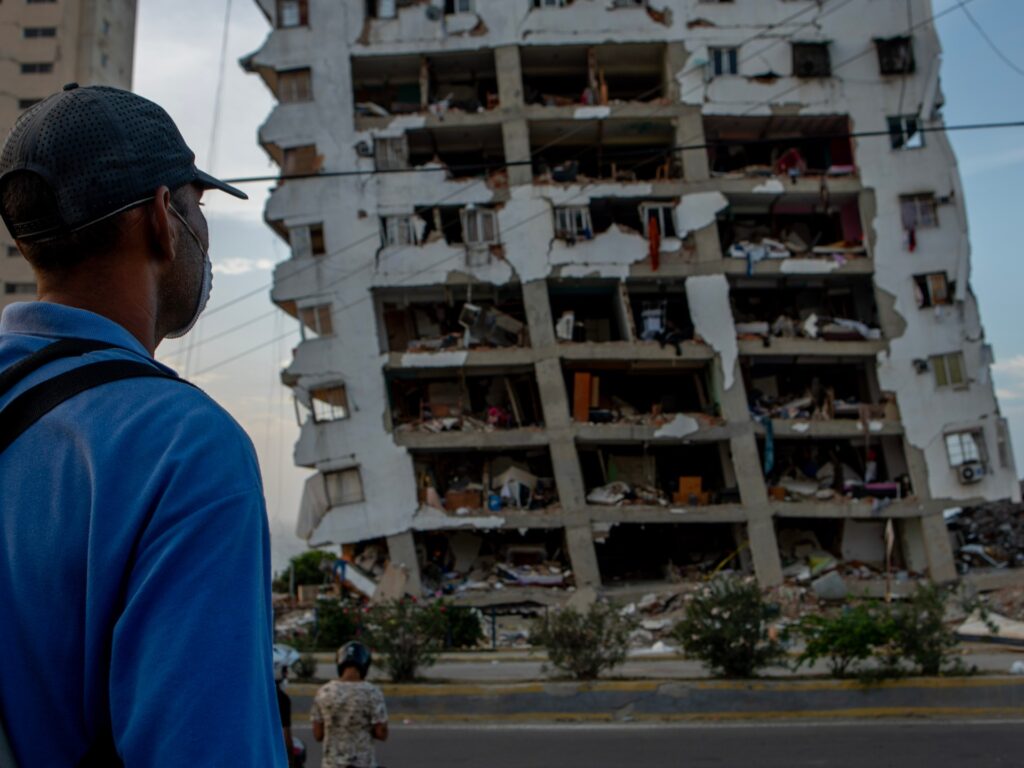
Venezuela is currently grappling with the devastating aftermath of twin earthquakes that have wreaked havoc across several regions of the country. The seismic events struck without much warning, causing widespread destruction and leaving many communities in distress. Rows of buildings were either severely damaged or completely destroyed, rendering many people homeless and forcing survivors to seek immediate shelter in makeshift accommodations.
In the hardest-hit areas, public parks have been transformed into temporary tent cities, where displaced families huddle under tarps and tents to shield themselves from the elements. These improvised shelters lack basic amenities, exposing survivors to difficult living conditions. The situation is dire, with limited access to clean water, food, and medical supplies further exacerbating the crisis.
Local authorities, along with national and international aid organizations, have mobilized to provide emergency relief. However, the scale of devastation has overwhelmed available resources, making the response effort challenging. Emergency teams are working tirelessly to search for survivors trapped under rubble and to restore essential services where possible.
Eyewitnesses describe the scene as a “nightmare,” recounting the chaos and fear experienced during the tremors and the subsequent uncertainty about safety and shelter. Many residents expressed concerns over aftershocks and the structural integrity of remaining buildings, causing a reluctance to return to their homes.
Venezuela’s government has declared a state of emergency in affected zones, enabling the mobilization of specialized rescue units and the allocation of funds for disaster relief and rebuilding. Efforts are underway to establish more permanent housing solutions to replace the temporary tents and to gradually restore normalcy.
The earthquakes have also highlighted the vulnerabilities in Venezuela’s infrastructure and emergency preparedness systems. Experts advocate for increased investment in earthquake-resistant construction and community education to mitigate the impact of future seismic events.
Communities affected by the disaster are rallying together, offering support through local networks and voluntary efforts to aid those most in need. Despite the challenges, there is a spirit of resilience and hope among the survivors, who remain determined to rebuild their lives.
The international community is paying close attention, with several countries pledging humanitarian aid and technical assistance. Coordination among various aid agencies is critical to ensure efficient distribution of relief supplies and to avoid duplication of efforts.
As recovery efforts continue, the focus remains on safeguarding displaced families, restoring infrastructure, and preparing for potential aftershocks. The situation in Venezuela serves as a stark reminder of the devastating power of natural disasters and the essential need for effective preparedness and resilience strategies.
This natural catastrophe has left a profound impact on the Venezuelan people, underscoring the urgent need for comprehensive support and sustainable development initiatives to rebuild stronger communities. The road to recovery will be long and arduous, but with coordinated efforts, hope remains for a safer and more resilient future for those affected.