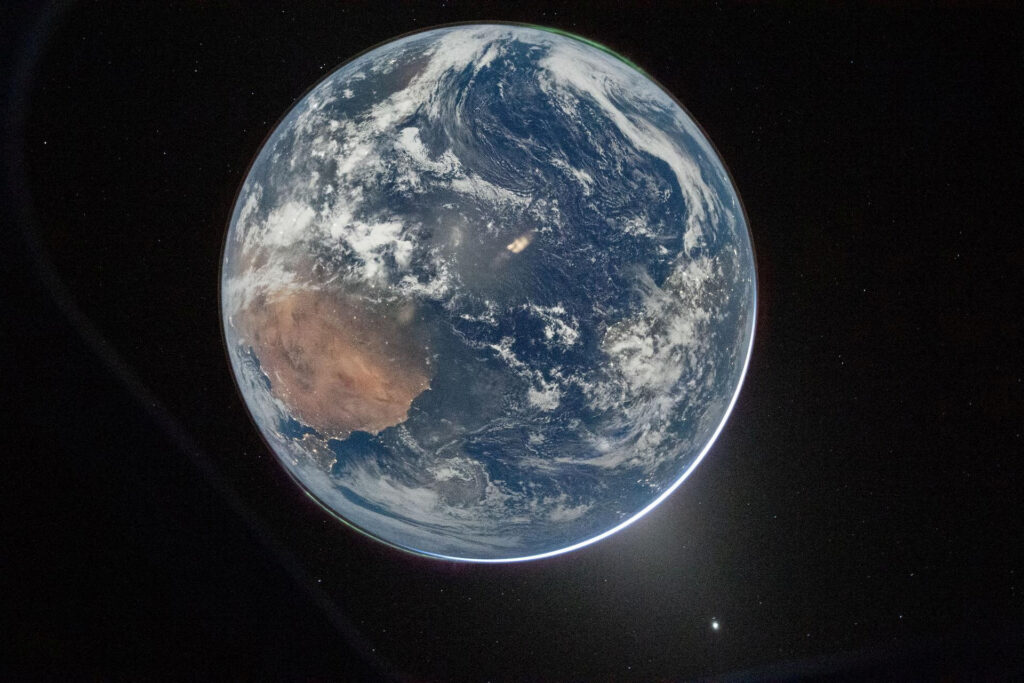
A view of Earth taken by NASA astronaut and Artemis II Commander Reid Wiseman from one of the Orion spacecraft’s window after completing the translunar injection burn on April 2, 2026. The image features two auroras (top right and bottom left) and zodiacal light (bottom right) is visible as the Earth eclipses the Sun. NASA/Handout via REUTERS THIS IMAGE HAS BEEN SUPPLIED BY A THIRD PARTY TPX IMAGES OF THE DAY
NASA has embarked on a groundbreaking mission to save a valuable telescope that is at risk of crashing back to Earth. The mission involves the launch of a sophisticated three-armed robotic spacecraft designed to dock with, stabilize, and potentially extend the life of the endangered space telescope.
The robotic spacecraft, equipped with advanced technology and precision maneuvering capabilities, was successfully blasted into orbit in a highly anticipated launch event. The primary objective is to rendezvous with the telescope, which is currently losing altitude due to orbital decay and atmospheric drag.
This mission is significant in several ways. Firstly, it demonstrates NASA’s growing capabilities in robotic servicing and on-orbit maintenance, which could revolutionize how space assets are managed in the future. Instead of losing expensive telescopes and satellites to re-entry and destruction, these robotic rescuers can extend their operational lives and enhance scientific output.
The three-armed design of the spacecraft allows it to securely grasp the telescope and perform complex maneuvers to stabilize it. Once docked, the spacecraft will conduct assessments and carry out necessary repairs or adjustments. Engineers hope this mission will pave the way for routine robotic servicing missions to various satellites and space equipment.
The telescope in question has been a vital tool for astronomers, providing invaluable data on cosmic phenomena and our universe. Its premature loss would be a major setback for the scientific community.
NASA’s innovative approach reduces the risk of debris generation by preventing an uncontrolled crash into Earth’s atmosphere. The spacecraft’s operations are being closely monitored from mission control, where teams are prepared to handle any contingencies.
This mission also highlights the importance of sustainable space operations, emphasizing maintenance and longevity over discarding aging assets. It marks a significant step forward in space technology and mission planning.
As the robotic spacecraft approaches the telescope, excitement builds in the aerospace community. Successful docking and servicing could demonstrate new standards of remote robotic intervention in space.
The mission is expected to last several months, during which NASA will evaluate the performance of the robotic arms, the effectiveness of the stabilization maneuvers, and the overall benefits of this pioneering approach.
Experts anticipate that the lessons learned will apply to future missions, including potential servicing of the International Space Station, other telescopes, and deep-space probes.
In conclusion, NASA’s launch of this robotic rescue mission is a milestone in space exploration and technology. It shows a commitment to preserving critical scientific instruments and advancing the capabilities of on-orbit servicing, which could fundamentally change how we maintain and extend the life of space assets in the years to come.