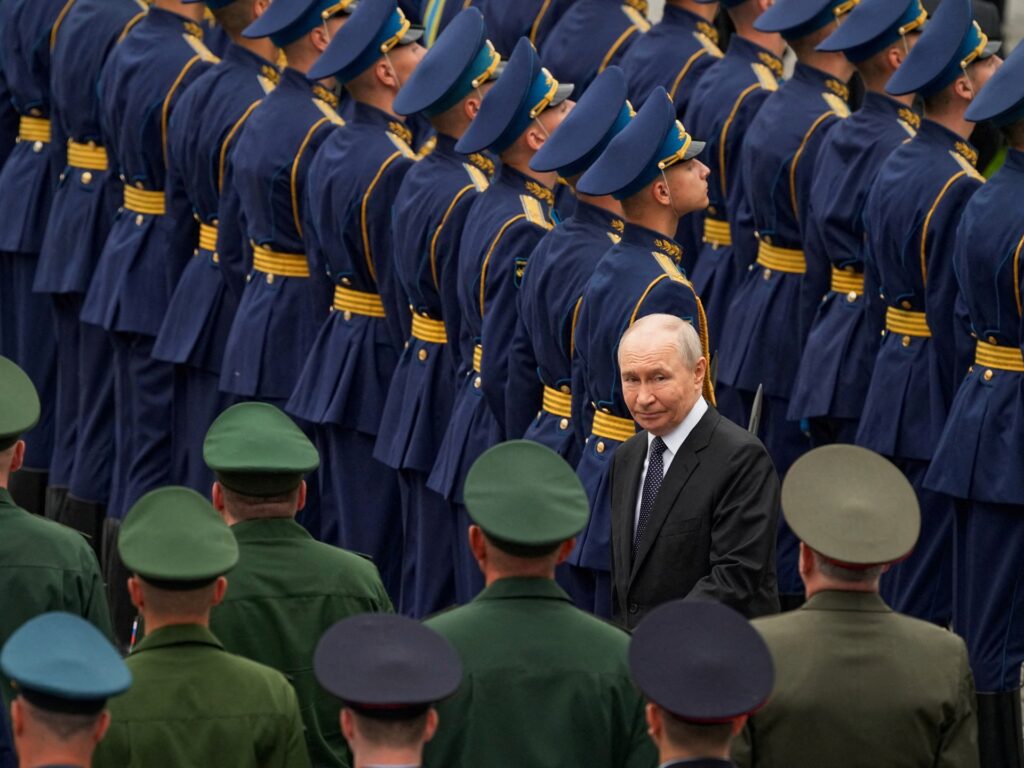
In the latest developments of the ongoing conflict between Russia and Ukraine, a notable shift has been observed in Russia’s public posture and military communications. Once marked by triumphant rhetoric, Russian President Vladimir Putin and the nation’s top military brass have adopted a more subdued stance as Ukraine escalates its use of asymmetrical tactics, particularly with the employment of long-range strikes deep into Russian-held territories.
For months, Russia projected confidence in its military advances and the stability of its strategic positions within Ukraine. However, recent strikes by Ukrainian forces targeting critical infrastructure and military assets have challenged this narrative. Analysts point out that Ukraine’s deployment of these long-range strikes is a strategic move aimed at disrupting Russian supply lines, command centers, and logistical hubs, thereby eroding Russia’s operational capabilities over time.
Putin’s public communications have noticeably tempered, with fewer bold proclamations about imminent victory. Simultaneously, senior Russian military officials have remained notably quiet, avoiding detailed commentary on the security breaches and impacts of Kyiv’s missile and drone strikes, which contrasts sharply with earlier, more frequent updates.
Experts believe this silence may signal internal concerns within the Russian command about the effectiveness and sustainability of their current military approach. The asymmetrical tactics employed by Ukraine, including the use of advanced drones, precision-guided missiles, and guerrilla-style engagements, represent a shift from conventional warfare, designed to exploit vulnerabilities in Russia’s extended supply and command networks.
The strategic implications of these developments are significant. By forcing Russian forces to divert resources to defend against continual long-range attacks, Ukraine potentially weakens the frontlines where ground combat persists. Moreover, the psychological effect of striking deep within Russian-controlled areas serves to undermine morale among Russian troops and supporters.
Meanwhile, the global community watches closely as the conflict evolves. Western intelligence and defense analysts highlight that Ukraine’s ability to maintain and increase these strikes is likely supported by continued international military aid and intelligence sharing.
In summary, Russia’s initially triumphant tone has shifted as Ukraine’s asymmetrical warfare gains momentum. The muted response from Putin and Russia’s military leadership underscores the challenges Moscow faces in countering these tactics. As Ukraine continues to innovate its military strategy, the trajectory of the conflict remains dynamic, with implications for regional stability and international diplomatic efforts moving forward.