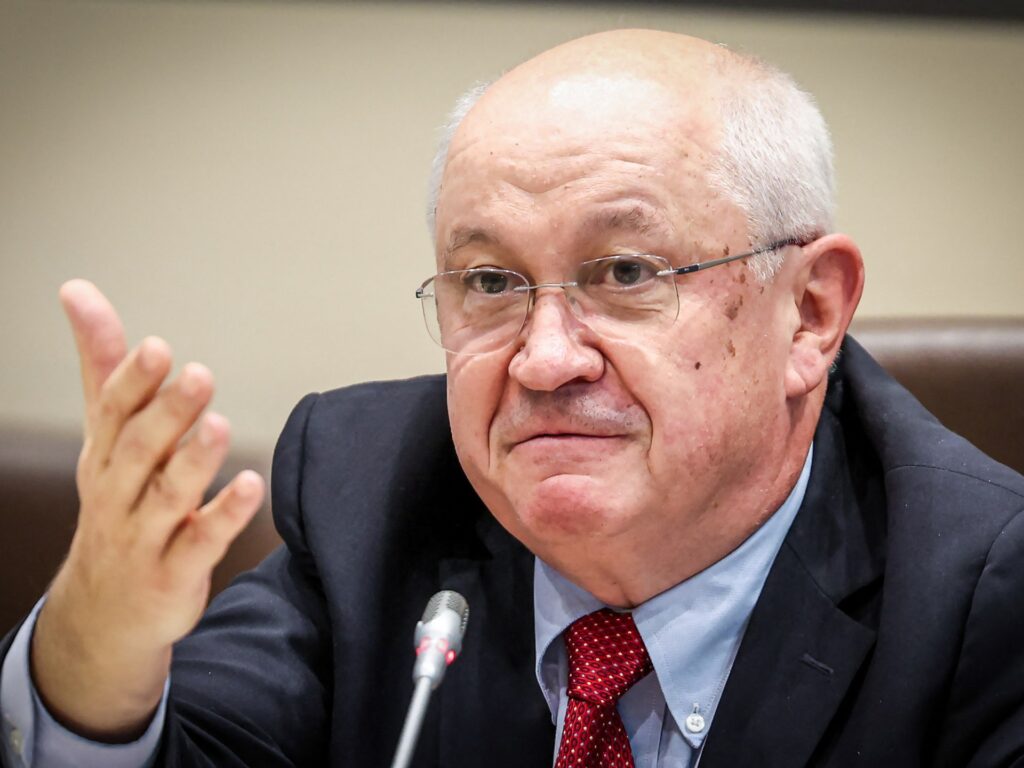
In a significant political development, Moldova’s Prime Minister Alexandru Munteanu has announced his resignation, a move that has triggered the resignation of the entire government. This decision comes amid increasing pressure and scrutiny over alleged corruption within a state-owned company, which has dominated the political discourse in recent weeks.
The allegations point to systemic corruption practices that have undermined public trust in governmental institutions. The prime minister’s resignation is seen as an attempt to take accountability and possibly pave the way for reforms within the administration.
Munteanu’s tenure had been marked by efforts to address economic challenges and improve governance, but the corruption scandal has overshadowed these achievements. The opposition parties and civil society groups have been vocal in demanding transparency and accountability, calling for a thorough investigation into the state-owned enterprise.
The resignation has sparked political uncertainty in Moldova, raising questions about the future leadership and the direction the government will take moving forward. Analysts suggest that this moment could either lead to political instability or serve as a catalyst for much-needed reforms.
President Maia Sandu is now tasked with the challenge of appointing a new prime minister who can restore confidence and steer the country through this turbulent period. Discussions are already underway among political factions to form a new coalition government.
The international community has expressed concern over the developments, emphasizing the importance of upholding democratic principles and combating corruption. Moldova’s strategic partners have pledged support to help strengthen institutional frameworks and ensure a transparent transition.
This episode highlights the ongoing struggle against corruption in Moldova and the complex interplay between political leadership and public accountability. The coming weeks will be critical in determining whether Moldova can overcome this crisis and implement effective measures to prevent similar incidents in the future.
Citizens have demonstrated mixed reactions, with some calling for swift action and others urging patience as the political processes unfold. The resignation has undoubtedly set the stage for a potential turning point in Moldova’s political landscape.
As the government steps down, the focus shifts to the mechanisms of appointing interim leadership and organizing new elections. The constitutional provisions stipulate a specific timeline within which these processes must occur to maintain governmental continuity.
Observers note that the resignation could have implications for regional stability, given Moldova’s geopolitical significance. The country’s trajectory is closely watched by neighboring states and the broader European community.
In conclusion, the resignation of Prime Minister Alexandru Munteanu and the subsequent government collapse underscore the critical need for transparency and ethical governance in Moldova. The political developments serve as a reminder of the challenges that come with managing public institutions and the imperative of maintaining public trust through accountability and reform.