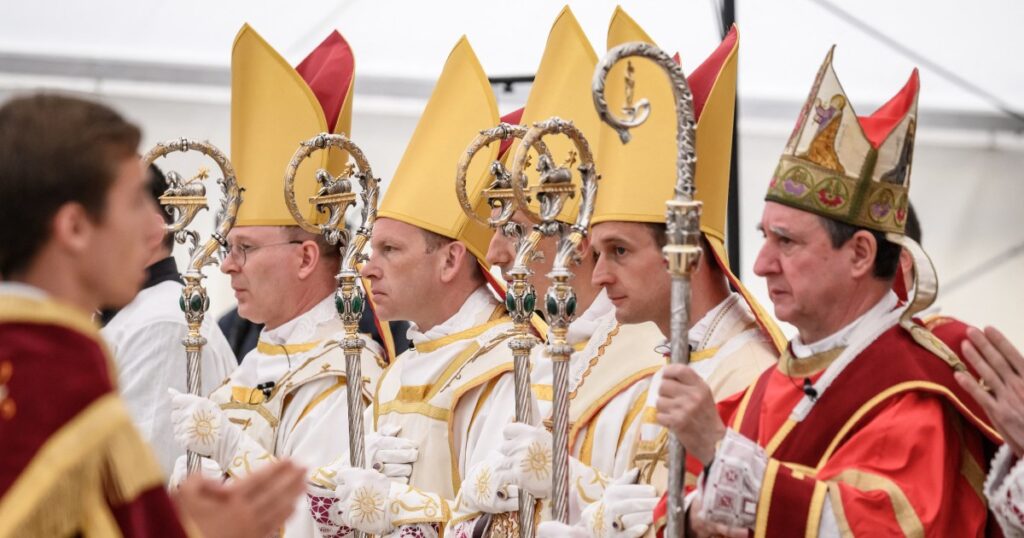
The Society of St. Pius X (SSPX) is a traditionalist Catholic priestly fraternity established in 1970 by Archbishop Marcel Lefebvre. This group was founded in reaction to certain changes in the Roman Catholic Church following the Second Vatican Council (1962–1965), which introduced modernizing reforms in liturgy, church governance, and engagement with the contemporary world. The SSPX is particularly known for upholding the Tridentine Mass (Latin Mass) and rejecting some of the Council’s reforms, which they view as a departure from true Catholic tradition.
Archbishop Lefebvre and members of the SSPX believe that the reforms threatened the essential doctrines and practices of the Catholic Church. They sought to preserve the traditional teachings and liturgical practices that had been in place prior to Vatican II, advocating for continuity with the pre-council Church.
The tension between the SSPX and the Vatican escalated significantly in the late 20th century, culminating in a major ecclesiastical conflict. In 1988, Archbishop Lefebvre consecrated four bishops without the approval or mandate of the Pope, a direct violation of Church law. This action was undertaken because Lefebvre was concerned about the lack of traditional bishops to continue the SSPX’s mission and maintain traditional Catholic practices.
Pope John Paul II responded decisively, declaring the consecrations unauthorized and issuing a decree of automatic excommunication (latae sententiae) against Lefebvre, the consecrated bishops, and those who participated. The Vatican declared this act a schism, meaning a rupture in communion with the Pope and the Catholic Church’s central authority.
It is important to clarify that Pope Leo XIV is not related to this specific event, as the excommunications and schism related to SSPX occurred during the papacy of John Paul II. The confusion in the report likely arises from a misidentification of the Pope involved. Pope Leo XIII was Pope from 1878 to 1903, well before the establishment of the SSPX.
The Vatican’s declaration of schism highlighted the seriousness of the ecclesiastical breach caused by unauthorized episcopal ordinations, which undermined the unity of the Church. While the SSPX considers itself Catholic and loyal to traditional doctrine, the unauthorized consecrations and rejection of Vatican II reforms created significant conflict.
Since the 1988 excommunications, there have been ongoing attempts at reconciliation between the SSPX and the Holy See, with occasional doctrinal and pastoral discussions aiming to restore full communion. Popes Benedict XVI and Francis have both engaged in dialogue and have offered limited recognition and concessions, such as allowing SSPX priests to validly hear confessions or celebrate the sacraments in certain cases.
Despite these efforts, full canonical regularization of the SSPX remains incomplete, mainly due to persistent theological disagreements over the interpretation of Vatican II and the authority of the current Popes.
In summary, the Society of St. Pius X is a traditionalist Catholic group dissenting against post-Vatican II reforms, whose unauthorized episcopal ordinations prompted Pope John Paul II to excommunicate key members and declare a schism within the Church. This event underscored deep divisions over doctrine, authority, and tradition within contemporary Catholicism.