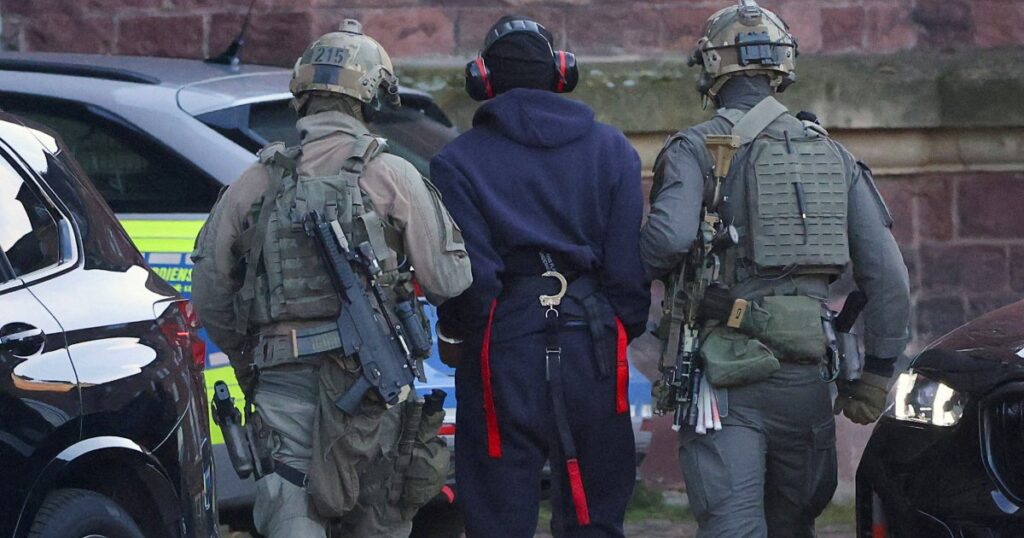
In a significant development in the investigation of the Nord Stream pipeline explosions, German prosecutors have alleged that Ukraine ordered the attack. The prosecutors claim that a former Ukrainian soldier is accused of committing a ‘war crime’ by leading a team of divers to sabotage the Nord Stream pipelines, which are crucial gas conduits supplying Russian natural gas to Europe.
The accusation hinges on the activities of this former soldier, who allegedly spearheaded the operation to damage the Nord Stream 1 and 2 pipelines. The attack caused massive leaks and disrupted energy supplies, raising geopolitical tensions and prompting an international outcry. This claim marks a pivotal point in understanding the circumstances behind the explosions, which have been subject to intense scrutiny since their occurrence.
German authorities have been investigating the blasts that took place in the Baltic Sea, searching for evidence to pinpoint the perpetrators and motivations. The Nord Stream pipelines have been central to Europe’s energy security, linking Russian gas fields to European markets. The explosions not only affected the immediate gas flow but have had wider implications for energy policy, international relations, and security among NATO members and other European countries.
The alleged involvement of Ukraine introduces a new dimension to the incident, as Ukraine has been engaged in ongoing conflict with Russia. If proven true, this accusation could impact diplomatic and military dynamics in the region, potentially escalating tensions further. Critics argue that this development could complicate Ukraine’s position internationally, especially in relation to Western allies.
The former soldier’s role, as detailed by prosecutors, involved organizing and leading a team equipped for underwater sabotage. Such operations require specialized skills and resources, which prosecutors suggest were directed under orders from Ukrainian authorities. However, Ukrainian officials have yet to comment officially on these allegations, and the veracity of the claims remains subject to further investigation and legal proceedings.
The Nord Stream attack had a considerable economic and environmental impact. The sudden release of natural gas harmed marine ecosystems and raised concerns about the safety and vulnerability of critical energy infrastructures in the region. Governments around the world have condemned the sabotage, emphasizing the need for increased security and cooperation to protect vital energy networks.
Analysts point out that the accusations add a complex layer to the geopolitical situation around the Russian-Ukrainian conflict, highlighting the intersection between military actions and energy security. The damaged pipelines had been a significant source of revenue for Russia and a key supplier for European nations, thus the attack disrupted multiple strategic interests.
The investigation by German prosecutors is ongoing, with efforts focusing on gathering concrete evidence and corroborating intelligence to build a case. Experts expect that the outcome will influence international relations and future policy decisions regarding energy security and regional stability.
As the case unfolds, the international community watches closely for repercussions. The situation underscores the fragility of energy infrastructure in conflict zones and the heightened risks associated with geopolitical rivalries. Depending on the legal outcomes, this case could set precedents for handling similar acts of sabotage in the future.
In summary, the allegations that Ukraine ordered the Nord Stream pipeline attack, spearheaded by a former Ukrainian soldier accused of war crimes, represent a major development in the investigation. It illuminates the intersection of military conflict and energy security, with significant implications for regional and global geopolitics, environmental concerns, and international law enforcement efforts.