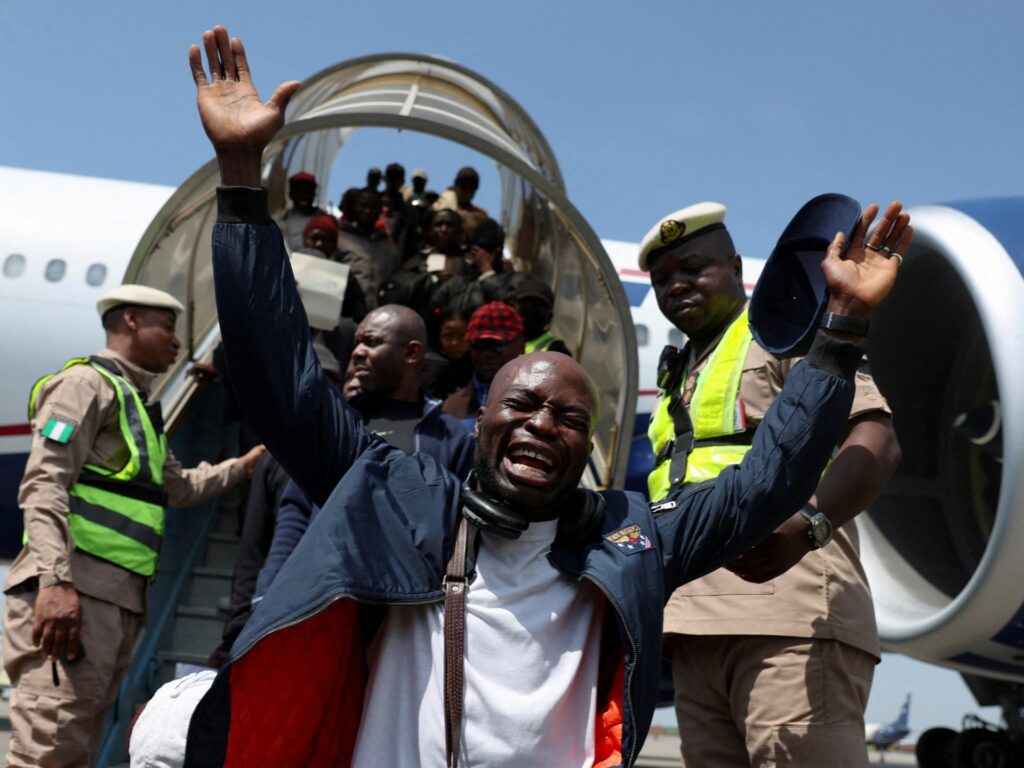
In recent weeks, a distressing surge of xenophobic violence in South Africa has forced many Nigerians to flee and return to their homeland. This wave of violence, targeting foreign nationals, has led to heightened tensions and fears among Nigerian communities residing in South Africa.
Reports indicate that numerous Nigerians have left the country, seeking safety and security back in Nigeria. The South African xenophobic attacks have included violent assaults, looting, and destruction of property, primarily aimed at foreign nationals who are perceived as competitors for jobs and resources.
The Nigerian government has expressed deep concern over the safety of its citizens abroad and has been actively working to facilitate their return. Nigerian diplomatic missions in South Africa have been coordinating efforts to provide assistance, including travel documentation and temporary shelter for returnees.
The violence reflects longstanding issues of economic disparity, unemployment, and social tensions within South Africa. Many South Africans view foreign immigrants as threats to their livelihoods, which has fueled these attacks and deteriorated relations between the nations’ communities.
Upon arrival in Nigeria, many returnees have shared harrowing accounts of their experiences, highlighting the urgent need for international attention and intervention. Community leaders and officials have called for increased dialogue and cooperation between South African and Nigerian authorities to address the root causes of the violence.
International organizations and human rights groups have condemned the attacks and urged the South African government to take decisive action to protect foreign nationals. The incidents underscore the challenges faced by immigrants across the globe who often encounter hostility in their host countries.
Efforts to rebuild trust and ensure safer environments for all residents in South Africa are underway, but progress remains slow. Nigerian returnees are now focusing on reintegration into their home communities, receiving support from governmental and non-governmental agencies.
This situation serves as a stark reminder of the complexities surrounding migration, economic challenges, and social cohesion in multicultural societies. Both Nigeria and South Africa are being called upon to engage in more robust dialogue and implement measures to prevent such violent outbreaks in the future.
The return of Nigerians from South Africa due to xenophobic attacks is not just a humanitarian issue but also a significant diplomatic challenge. It highlights the importance of addressing xenophobia, promoting mutual respect, and fostering peaceful coexistence among diverse populations. Continued attention and action are necessary to ensure safety, dignity, and human rights for all individuals regardless of nationality.