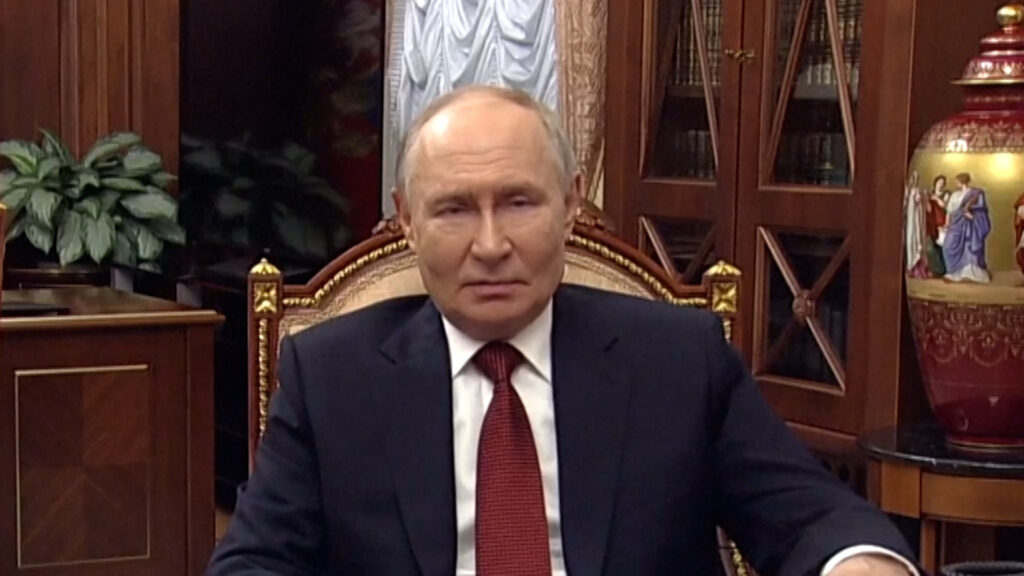
In a recent statement, Russian President Vladimir Putin revealed that Ukraine has proposed a mutual halt to long-range strikes as part of ongoing efforts to de-escalate tensions between the two nations. This proposition focuses on ceasing deep strikes, which have been a significant aspect of the conflict dynamics.
Putin’s announcement marks a notable development in the conflict that has persisted for years. Both nations have engaged in extensive military operations, including long-range missile and artillery strikes targeting strategic locations deep within each other’s territories. These strikes have caused considerable damage and have been a point of contention in diplomatic dialogues.
The proposal by Ukraine suggests a willingness to negotiate terms aimed at reducing hostilities and possibly paving the way for more comprehensive peace talks. By seeking a mutual halt to such strikes, Ukraine appears to be signaling its interest in curbing the intensity of the conflict without necessarily conceding key battlefield positions.
Analysts view this move as significant, as long-range strikes have often escalated the conflict, bringing in international concern over civilian casualties and infrastructure damage. A mutual ceasefire on such attacks could help stabilize the situation and create a conducive environment for dialogue.
Details on how this mutual halt would be monitored or enforced have not been fully disclosed. The success of such an agreement would depend heavily on trust and verification mechanisms, which historically have been challenging to establish between the two countries.
Putin’s statement also serves as a reminder of the complex and fluctuating nature of the conflict. While there have been numerous negotiations and attempted ceasefires in the past, lasting peace has remained elusive.
Ukraine’s response to this statement has not yet been detailed publicly. Observers are closely monitoring the situation to see if this proposal leads to actionable steps or remains a rhetorical gesture.
International actors, including Western governments and organizations, are likely to view this development cautiously. They have consistently called for de-escalation and respect for international norms but are aware of the difficulties in achieving sustainable peace in the region.
In summary, Putin’s announcement about Ukraine’s proposal to halt deep strikes could represent a pivotal moment in the conflict’s trajectory. While optimism should be tempered by the realities of past negotiations, the possibility of a mutual agreement on reducing high-impact military actions offers a glimmer of hope for progress toward peace.