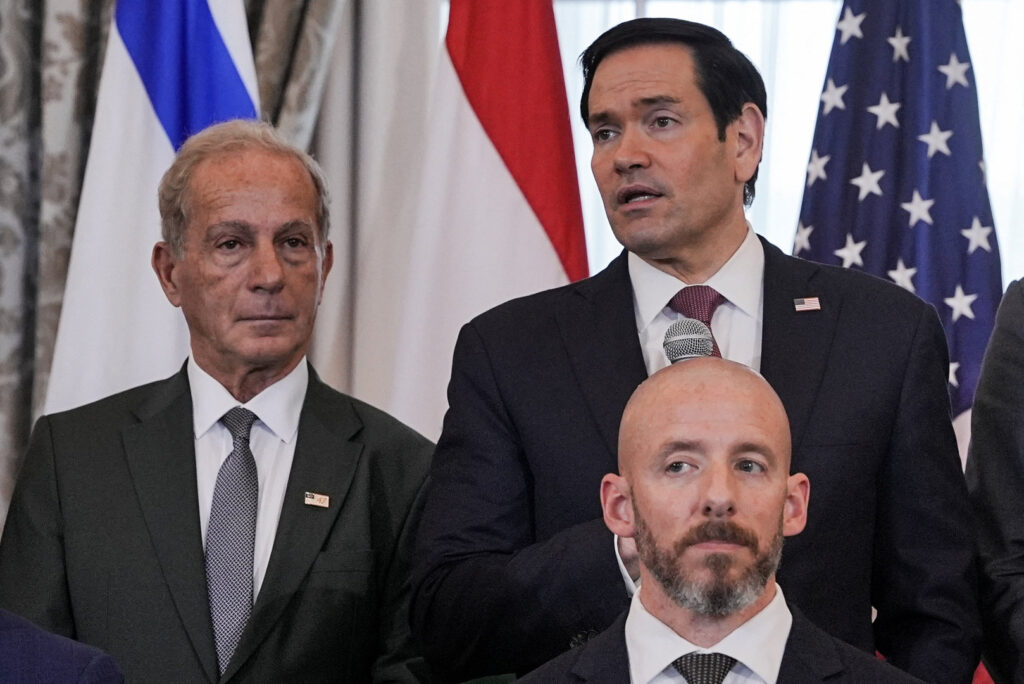
U.S. Secretary of State Marco Rubio speaks during a meeting with State Department Counselor Daniel Holler, U.S. Ambassador to Lebanon Michel Issa, Israel's Ambassador to the U.S. Yechiel Leiter and Lebanon's Ambassador to the U.S. Nada Hamadeh, at the State Department in Washington, D.C., U.S., June 26, 2026. REUTERS/Ken Cedeno
In a significant development aimed at easing tensions in the Middle East, Israel and Lebanon have signed a framework agreement following US-mediated talks. The deal was announced by US Secretary of State Marco Rubio, underscoring the active role the United States played in facilitating the negotiations. This framework agreement marks a pivotal step toward resolving long-standing disputes between the two neighboring countries. While details of the agreement have not been fully disclosed, the discussions involved key issues that have strained Israel-Lebanon relations for years.
The framework is expected to pave the way for further diplomatic engagement and cooperation on contentious matters such as border demarcation, resource sharing, and security arrangements. Historically, Israel and Lebanon have had a complex and often hostile relationship, fueled by territorial conflicts, political differences, and the involvement of various armed groups. The involvement of the US highlights Washington’s intent to stabilize the region through diplomatic efforts.
Secretary Rubio’s announcement emphasized the positive impact of dialogue and mediation, stating that the agreement demonstrates a commitment from both Israel and Lebanon toward peaceful coexistence and mutual respect. This breakthrough came after intense negotiations, reflecting a shared recognition of the benefits of peaceful resolution over confrontation.
The international community has welcomed the news, with many expressing hope that this framework deal could serve as a foundation for broader peace efforts in the region. Analysts believe that this agreement could lead to increased cooperation on economic development, security cooperation, and humanitarian aid, benefiting both nations and contributing to regional stability.
Despite the positive signs, challenges remain. Stakeholders in Lebanon and Israel must navigate domestic political pressures and build trust to successfully implement the terms of the framework. However, the agreement represents a hopeful shift toward reducing hostilities and fostering dialogue.
Moving forward, the United States has pledged continued support for both parties to ensure the framework’s success and to encourage further negotiations. The deal is seen as a model for how sustained diplomacy and external mediation can help resolve complex geopolitical conflicts.
In summary, the signing of the Israel-Lebanon framework agreement, brokered by the US, is a landmark effort to address decades of discord. It signals a new chapter in Middle Eastern diplomacy aimed at achieving lasting peace and stability in a historically volatile region.