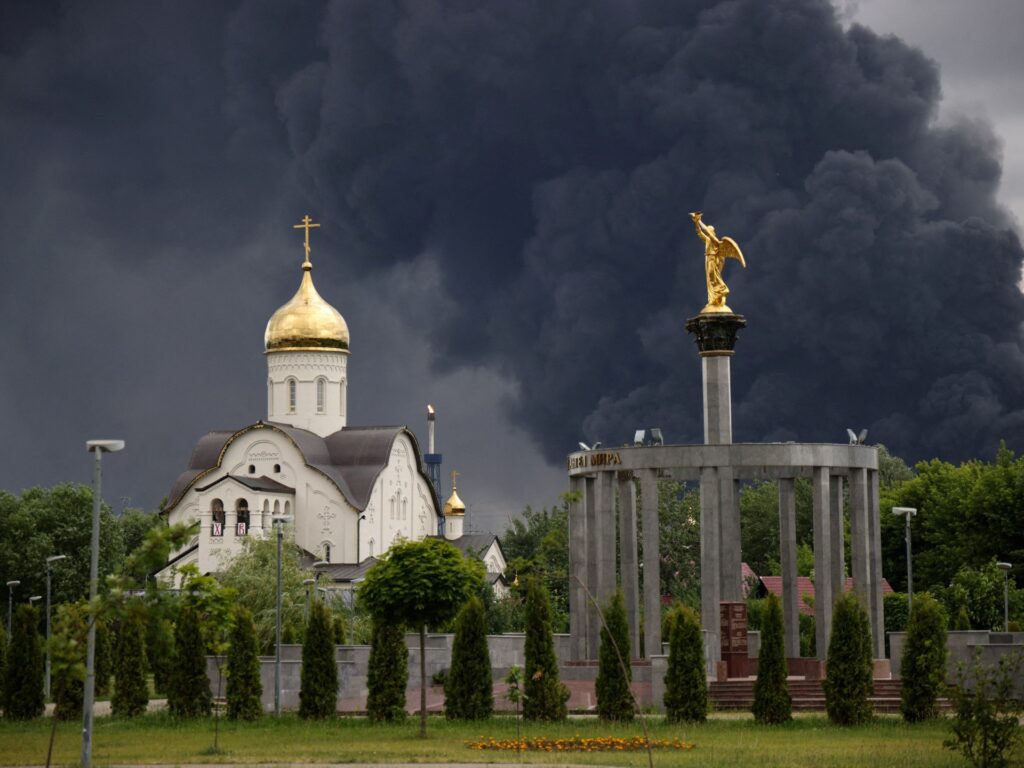
In one of the most significant drone confrontations of the ongoing conflict, Russia has reported the successful interception and downing of 660 Ukrainian drones. This development comes amid escalating hostilities where Kyiv has intensified its drone attacks, aiming to exert sustained pressure on Russian forces.
The increased drone activity signals a tactical shift from Ukraine, utilizing unmanned aerial vehicles to target Russian military assets more aggressively. These drone strikes are occurring as Russia grapples with critical shortages of fuel, adding to the strategic challenges faced on the battlefield.
Despite the scale of the drone offensive, Russian officials have publicly denied requests for military assistance or reinforcements from neighboring Belarus. This dismissal contradicts speculation from various intelligence sources suggesting that Russia might seek help from its ally amid mounting logistical constraints.
The drone warfare marks an important facet of the ongoing conflict, showcasing how modern combat increasingly leverages technology and unmanned systems. The use of drones by Kyiv not only disrupts Russian supply lines and equipment but also attempts to erode the morale and operational capabilities of Russian troops.
Fuel shortages reported by Russian forces exacerbate their operational difficulties, limiting mobility and reducing the effectiveness of conventional military hardware. These shortages have made drones an even more attractive tactic for Ukrainian forces, as they require less logistical support and can deliver precise strikes.
Belarus’s role remains ambiguous, with Russian denials contrasting against previous reports of cross-border coordination. The Kremlin’s rejection of war aid claims may be aimed at projecting strength and self-sufficiency in the face of international scrutiny and sanctions.
Analysts observe that the sustained drone campaign could mark a new phase in the conflict, intensifying the technological dimension of warfare and potentially influencing future military tactics in the region. As drone technology evolves, both Ukraine and Russia are likely to adapt their strategies accordingly.
In summary, Russia’s claim of downing 660 Ukrainian drones highlights the scale of the current drone engagements, reflecting the broader dynamics of the war where technological innovation and resource scarcity are critical factors. The denial of Belarusian assistance underscores the complex geopolitical narratives surrounding the conflict, as both sides strive to maintain strategic advantage.