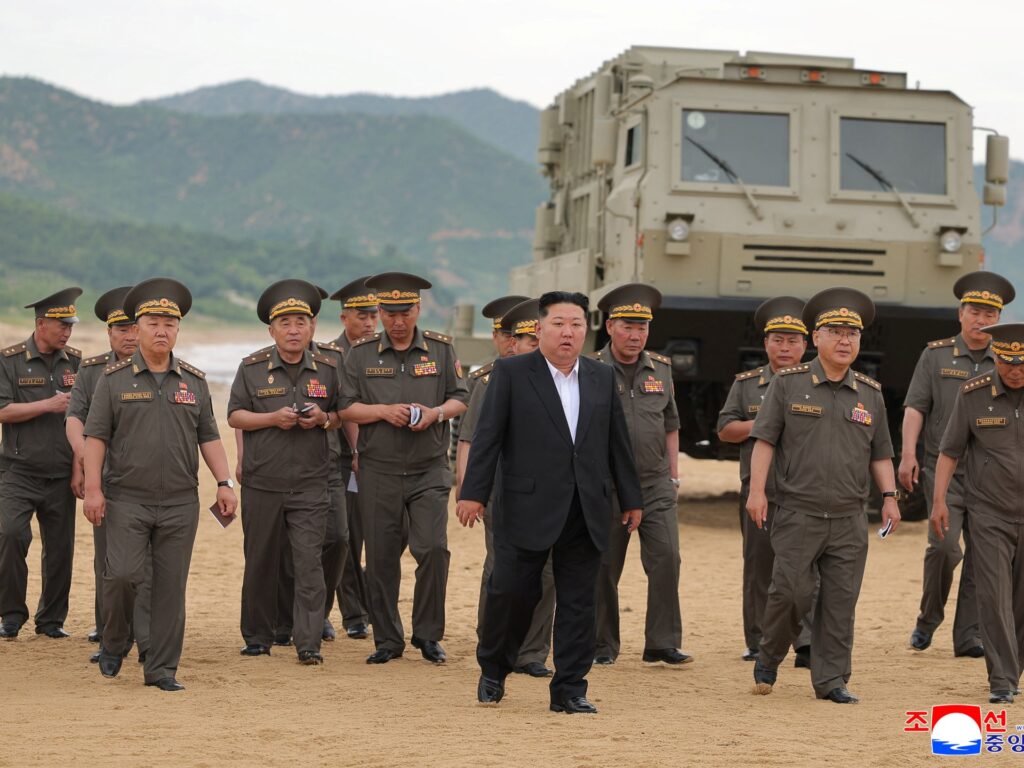
North Korea has recently conducted a series of major weapons tests, signaling a significant escalation in its military capabilities. Under the leadership of Kim Jong Un, the regime demands a “deadly and destructive offensive posture,” intensifying efforts to enhance its arsenal. This move reflects North Korea’s determination to upgrade its missile and weapons systems to reach every part of South Korea, raising concerns about regional security and stability.
The tests included advanced missile launches and possibly new weapon systems, demonstrating Pyongyang’s capability and intent to expand its strike range. The emphasis on upgrading the arsenal highlights North Korea’s strategic goal of deterring perceived threats and asserting power in the region.
In response to these developments, South Korea is advancing its military preparations, focusing on modern warfare tactics. A notable initiative is the training of specialized forces dubbed ‘drone warriors,’ designed to counteract North Korea’s growing missile threat.
These drone warriors are being equipped with advanced drone technology geared towards reconnaissance, targeting, and potentially offensive operations, leveraging technology to offset conventional asymmetries. The South Korean military views drone technology as critical to maintaining a strategic advantage under increasingly complex threat conditions.
Experts warn that the heightened defense postures on both sides could lead to increased tensions on the Korean Peninsula. The ongoing arms developments are part of a broader rapid militarization trend in the region, driven by security dilemmas and longstanding political conflicts.
International observers have called for diplomatic efforts to reduce military escalations, urging dialogue between the Koreas and involvement from global powers to de-escalate the situation.
The North’s new weapons tests and South Korea’s pivot to innovative defense units underline a growing arms race in Northeast Asia. This dynamic complicates prospects for peace and raises the stakes for any potential conflict scenario.
As both countries proceed with their military enhancements, regional allies and security analysts continue to monitor the situation closely to understand potential implications and formulate responses.
In summary, North Korea’s recent weapons tests under Kim Jong Un’s directive and South Korea’s investment in drone warfare capabilities represent a significant development in the security landscape of the Korean Peninsula. These changes necessitate careful international attention to prevent further destabilization and ensure stability in the region.