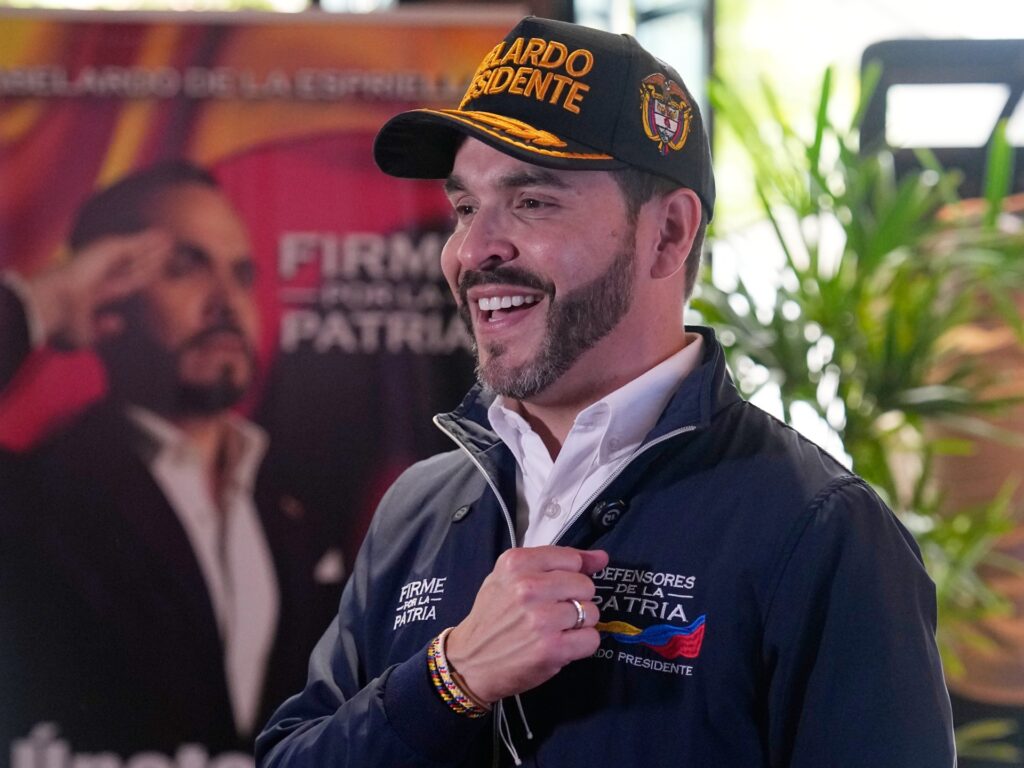
In a remarkable political shift, political newcomer Diego de la Espriella has surged to the final round of Colombia’s presidential race, captivating the nation with his outsider appeal and unconventional campaign strategy. Traditionally dominated by seasoned politicians and established parties, Colombia’s political landscape now faces a transformative moment as de la Espriella, a figure from outside the traditional political elite, vies for leadership of the country.
De la Espriella’s rise symbolizes a broader trend in Latin America, where voters increasingly express disillusionment with the status quo and hunger for new voices to address persistent issues such as corruption, violence, and economic inequality. His campaign, which heavily leverages social media and direct engagement with young voters, has resonated particularly well with younger demographics who feel neglected by established political figures.
Born into a middle-class family in Bogotá, de la Espriella’s background is markedly different from many of his rivals. Before entering politics, he was involved in various entrepreneurial ventures and social activism, focusing on education reform and environmental sustainability. This blend of business acumen and grassroots activism has helped craft an image of a pragmatic yet compassionate leader.
Throughout the campaign, de la Espriella has emphasized transparency, accountability, and innovation. His policy proposals include strengthening anti-corruption measures, investing in renewable energy, and reforming the education system to make it more accessible and relevant to Colombia’s economic needs.
Critics, however, point to his lack of political experience and question whether his outsider status can translate into effective governance in Colombia’s complex political environment. Analysts warn that navigating Colombia’s entrenched political institutions and balancing diverse regional interests will pose significant challenges for de la Espriella if he wins.
Despite these concerns, many voters see his candidacy as a fresh start and a chance to break free from politics as usual. His supporters argue that Colombia’s traditional leaders have failed to deliver meaningful change, and de la Espriella represents hope for a more inclusive and dynamic future.
The potential implications of de la Espriella’s victory extend beyond domestic politics. Colombia plays a critical role in regional geopolitics, and a new leadership direction could shift alliances and priorities, particularly regarding trade, security cooperation, and immigration policies.
International observers are watching closely, recognizing that Colombia’s political trajectory influences broader efforts to stabilize and develop Latin America. Should de la Espriella win, it could inspire similar political movements in neighboring countries, encouraging more outsiders to challenge established power structures.
As the final vote approaches, Colombia faces a pivotal choice. A win for de la Espriella would mark a dramatic shift from conventional politics to a new era of leadership defined by innovation and responsiveness to citizen concerns. Conversely, electing a traditional politician might signal a desire for continuity amid uncertainty.
Ultimately, de la Espriella’s campaign taps into a powerful narrative of hope and change. It invites Colombians to reflect on what kind of future they want and whether an outsider can indeed transform their country’s destiny. The outcome will be a defining moment, shaping Colombia’s path for years to come and potentially redefining the nature of political leadership in the 21st century.