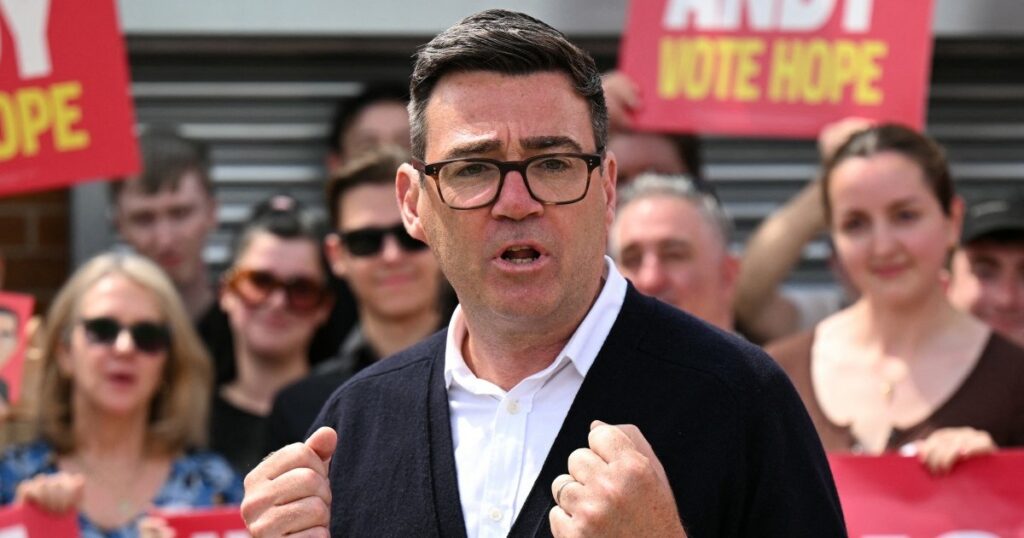
In a significant political development, Andy Burnham, the Mayor of Greater Manchester, has won a crucial by-election in the Makerfield constituency. This victory is seen as a pivotal moment in UK politics, as it potentially clears the path for Burnham to challenge Keir Starmer, the current Labour Party leader, for the position of prime minister.
The by-election, held to fill a vacant parliamentary seat, was closely watched as a barometer of public sentiment towards the Labour Party’s leadership and its direction under Starmer. Burnham’s success in this contest not only reinforces his political standing but also signals a shift in the party’s internal dynamics.
Andy Burnham, who has been a prominent figure in regional politics as the Mayor of Greater Manchester, has cultivated a reputation for addressing local issues effectively and promoting policies focused on economic growth and social welfare. His win in Makerfield adds to his political capital and national profile.
Keir Starmer, who succeeded Jeremy Corbyn as Labour leader, has faced various challenges in uniting the party and carving a clear path to government. Burnham’s victory represents a significant blow to Starmer, suggesting that some members and voters might be looking for alternate leadership within the Labour ranks.
Political analysts note that the by-election outcome could influence forthcoming strategies within the Labour Party. With Burnham’s renewed visibility and momentum, he may be positioned to mount a credible challenge for the party leadership, adding a new dynamic to the race for prime minister.
The by-election result in Makerfield also reflects broader political undercurrents in the UK, including voter dissatisfaction with the current government and a desire for more localized, pragmatic governance approaches. Burnham’s campaign capitalized on these sentiments, contrasting his hands-on approach with what some perceive as the more centralized leadership style of Starmer.
As the Labour Party prepares for its next leadership contests and general elections, the implications of Burnham’s win extend beyond Makerfield. It signals potential fractures and a recalibration of political alliances within the party, highlighting the importance of local leadership as a stepping stone to national influence.
Burnham’s victory has energized his supporters and has started conversations about the future direction of the Labour Party. Supporters argue that his leadership could bring a new vigor and focus to the party’s policy agenda, potentially improving its electoral prospects.
Critics of Burnham warn that a leadership challenge could create divisions within Labour at a crucial time. Nevertheless, the by-election outcome undeniably shifts the political landscape, introducing a new layer of competition and debate.
In conclusion, Andy Burnham’s win in the Makerfield by-election is a landmark event that not only impacts local representation but also reverberates through the national political sphere. It challenges the current Labour leadership, energizes opposition, and foreshadows a potentially competitive and transformative period for the party and the UK’s political future.