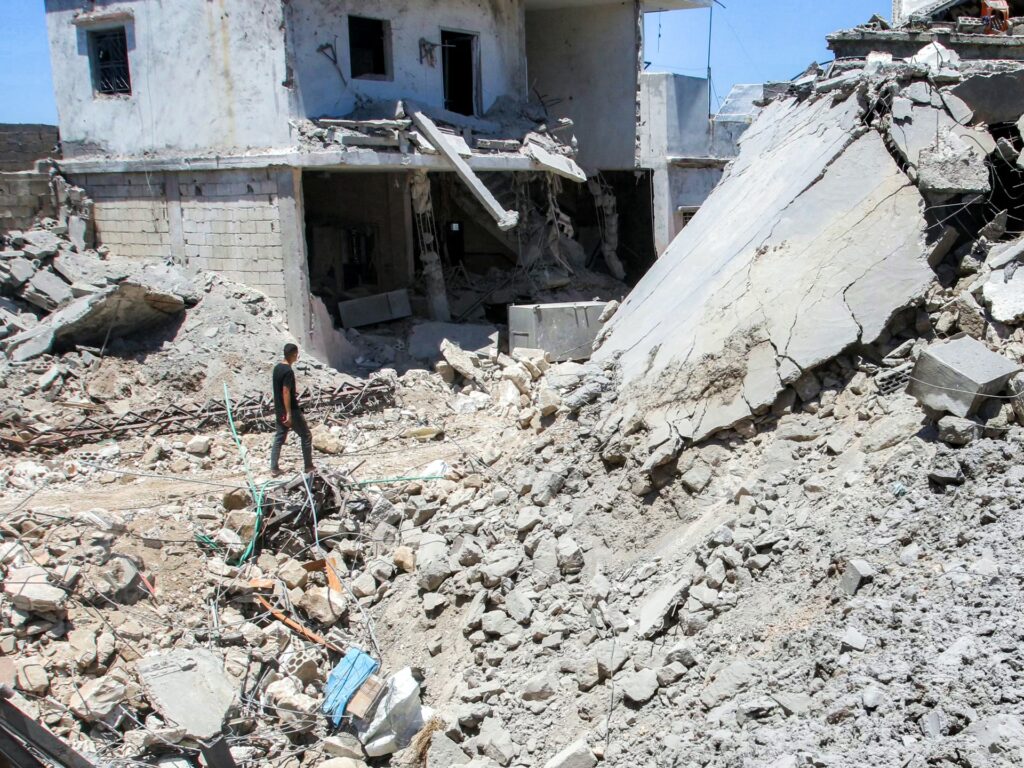
Israeli air strikes on Lebanon have continued unabated despite the recent US-Iran agreement that promised to ease regional tensions. While the announcement of the US-Iran deal brought a noticeable reduction in violence across the Middle East, it has not led to a complete halt in military operations, particularly Israeli strikes on Lebanese territory.
The conflict dynamics in the region remain complex and multifaceted, involving various state and non-state actors, each with distinct interests and agendas. Israel’s continued air assaults are reportedly aimed at targeting militant groups based in Lebanon, notably Hezbollah and other affiliated factions, which Israel considers direct threats to its national security.
Since the US-Iran accord was unveiled, there has been a marked decrease in the scale and frequency of hostilities throughout the region. However, key flashpoints such as the Israel-Lebanon border have yet to witness a cessation of airbags or military exchanges.
Experts suggest that while the US-Iran deal focuses primarily on nuclear initiatives and economic sanctions, it does not address the myriad of proxy conflicts fueled by longstanding political rivalries and strategic imperatives. As a result, the military landscape remains volatile with sporadic clashes continuing.
Lebanese officials have condemned the Israeli strikes as violations of Lebanese sovereignty and called for international intervention to enforce peace and stability. At the same time, Israel maintains that its actions are defensive measures necessitated by ongoing threats from armed groups operating from Lebanese soil.
International diplomatic channels continue to urge restraint and dialogue, emphasizing the importance of preserving the broader détente initiated by the nuclear agreement. Meanwhile, local populations along the Israel-Lebanon border endure the consequences of these military operations, facing disruptions to daily life and heightened security concerns.
Humanitarian organizations have highlighted the urgent need for aid and support to communities affected by the violence, stressing that continued hostilities risk undermining fragile social cohesion in Lebanon.
Analysts warn that without a more comprehensive framework addressing the underlying causes of regional hostilities, sporadic violence and military strikes like those seen in Lebanon are likely to persist. The situation underscores the difficulties in translating high-level international agreements into lasting peace on the ground.
In summary, while the US-Iran deal marks a significant diplomatic achievement, it has not yet translated into a cessation of Israeli air strikes on Lebanon. The ongoing conflict highlights the complex interplay of regional security concerns, national interests, and geopolitical rivalries that continue to challenge the prospect of sustained peace in the Middle East.