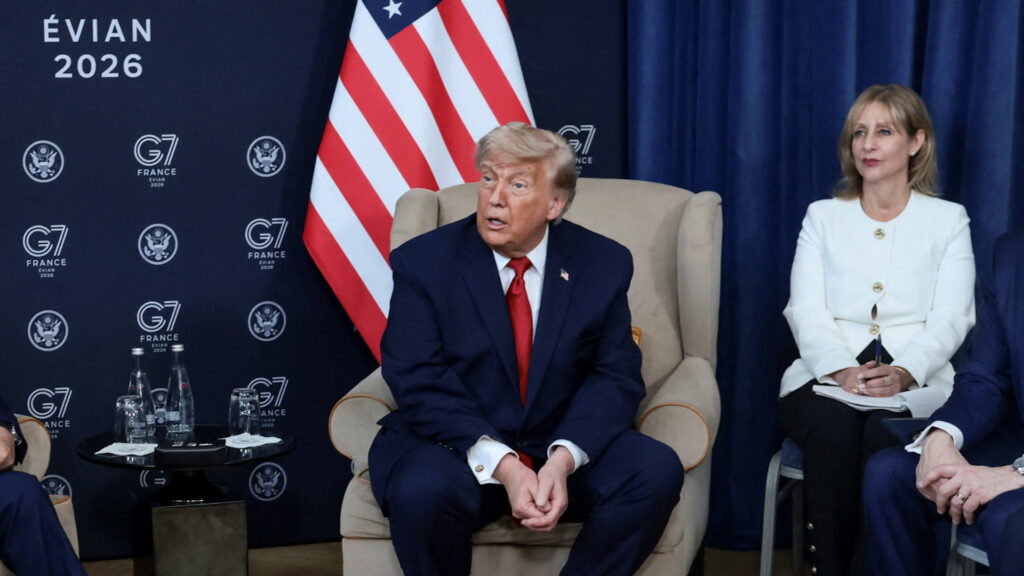
At the recent G7 summit, US President Donald Trump made a controversial statement accusing former President Barack Obama of ‘bribing’ Iran in the 2015 nuclear deal. The nuclear agreement, formally known as the Joint Comprehensive Plan of Action (JCPOA), was an international accord aimed at curbing Iran’s nuclear program in exchange for lifting economic sanctions.
Trump’s comments came as part of a broader critique of the Obama administration’s foreign policy, particularly regarding Iran. He alleged that the financial incentives and sanctions relief provided to Iran under the deal were tantamount to a bribe intended to secure Iran’s compliance.
The 2015 deal was brokered by the Obama administration alongside other world powers, including the UK, France, Germany, China, and Russia. It was lauded by supporters as a diplomatic breakthrough to prevent nuclear proliferation and promote stability in the Middle East.
However, critics, including Trump, have argued that the agreement was flawed. They contend that the deal provided Iran with billions of dollars, which they allege were used to fund regional militias and destabilize allied nations.
Trump has been vocal about his disapproval of the JCPOA since his campaign days, asserting that it undermined US national security and rewarded a regime with a history of hostility toward the United States.
The Trump administration officially withdrew the US from the agreement in 2018, reinstating harsh sanctions intended to pressure Iran into negotiating a new deal with stricter terms.
Supporters of the original deal argue that the sanctions relief was a necessary incentive for Iran to limit its nuclear capabilities and that the agreement included extensive monitoring and verification mechanisms.
They also highlight that the deal was endorsed by the International Atomic Energy Agency (IAEA), which confirmed Iran’s compliance during the agreement’s active period.
Trump’s use of the term ‘bribing’ is seen by many as inflammatory and has reignited debates over US policy toward Iran and the efficacy of diplomatic versus coercive measures.
At the G7 summit, the issue drew attention amid ongoing tensions with Iran and concerns about nuclear proliferation globally.
The conversation about the 2015 nuclear deal remains a contentious topic in US politics, reflecting broader divides about how to handle adversarial states.
Experts note that the post-deal period has been complex, with Iran’s nuclear activities and regional behaviors challenging the assumptions of the agreement.
While some advocate for renewed diplomatic engagement and revisions to the JCPOA framework, others support maintaining or increasing sanctions to curtail Iran’s influence.
Trump’s remarks have also sparked reactions from former Obama officials and political allies, who maintain that the deal was a legitimate diplomatic effort rather than a bribe.
They argue that framing it as a bribe attempts to delegitimize multilateral diplomacy and undermine international cooperation.
The debate underscores the challenges in balancing national security interests, regional stability, and diplomatic solutions in dealing with Iran.
As discussions continue globally, the legacy of the 2015 nuclear deal remains a pivotal issue with implications for future US foreign policy and international relations.
In summary, President Trump’s accusation that Obama ‘bribed’ Iran highlights ongoing divisions over the nuclear deal and reflects broader disagreements on how best to approach Iran’s nuclear ambitions and Middle Eastern security.